Picture this: you’re in your kitchen, the air is thick with the scent of simmering garlic and caramelized onions, the stove is a steady glow, and the clock is ticking toward a dinner that feels like a culinary secret. I was halfway through a weeknight dinner, feeling a bit burnt out from the usual chicken stir-fry routine, when a friend dared me to try something daring—Coq au Vin. The challenge was simple: take a classic French dish and make it unforgettable. I was skeptical, but the promise of a sauce that coats the meat like velvet and a flavor that lingers on the tongue was too tempting to ignore.
The first time I cooked this version, the kitchen exploded with a chorus of sizzling sounds—bacon crisping, onions caramelizing, wine bubbling. The colors were a deep, ruby red that made my eyes water with anticipation. As the aroma wafted through the room, I could almost taste the earthy undertones of mushrooms and the subtle warmth of Cognac. The texture was a dream: tender chicken, crisp edges that shatter like thin ice, and a sauce thick enough to coat a spoon without dripping. My friends were skeptical, but the first bite silenced them with a sigh of pure bliss.
What makes this version stand out from the countless others? It’s the balance between bold and subtle. I use whole chickens, which give a richer, more robust flavor than the typical pieces, and I let the wine reduce slowly to concentrate the depth. I add a splash of Cognac to lift the acidity, and I finish with a beurre manié that thickens the sauce without adding heaviness. I also incorporate frozen whole onions and porcini mushrooms—these bring a sweetness and umami that elevate the dish beyond the ordinary. And the secret? A quick sear of bacon that infuses the oil with smokiness, setting the stage for the rest of the flavors.
I’ll be honest—after the first batch, I ate half before anyone else got a chance. The sauce was so good that I kept adding a few more spoonfuls to the pot. Most recipes get this completely wrong; they either overcook the chicken or underdevelop the sauce. Here’s what actually works: a slow simmer, a touch of acidity, and a final flourish of butter that gives that glossy sheen. I dare you to taste this and not go back for seconds. This is hands down the best version you’ll ever make at home, and I promise you’ll wonder how you ever cooked it any other way.
What Makes This Version Stand Out
- Flavor Depth: The combination of red wine, Cognac, and bacon creates a layered taste that feels both rustic and refined. Each sip of sauce reveals a new note, from earthy mushrooms to smoky bacon.
- Texture Contrast: The chicken is succulent on the inside while the crust is crisp and caramelized, giving a satisfying bite that keeps you coming back for more.
- Ingredient Quality: Using whole chickens and fresh thyme elevates the dish from a comfort meal to a gourmet experience that impresses guests.
- Make‑Ahead Potential: The flavors develop further if you let the dish rest overnight; the sauce thickens and the chicken soaks up the wine.
- Crowd Reaction: Even the most skeptical diners find themselves asking for seconds, making it perfect for dinner parties or family gatherings.
- Visual Appeal: The glossy sauce and vibrant green thyme create a plate that looks as good as it tastes.
- Time Efficiency: Despite the slow simmer, the prep is quick, and the overall cooking time stays under three hours.
Alright, let's break down exactly what goes into this masterpiece…
Inside the Ingredient List
The Flavor Base
Olive oil, the silent hero that carries the initial flavors, is the first thing that meets the pan. It’s not just a cooking medium; it’s the canvas on which bacon, onions, and garlic paint their aromatic masterpiece. If you skip it, the bacon will stick and the onions will burn, ruining the foundation. A high‑smoke point oil like avocado or grapeseed works wonders if you’re not a fan of olive oil.
Bacon or pancetta brings a smoky, salty undertone that lingers through the entire dish. It also renders fat that becomes the base of the sauce, allowing the wine to deglaze and lift those browned bits for maximum flavor. If you’re vegan or just avoiding pork, turkey bacon or a smoked tempeh slab can mimic the smoky profile, but the texture will differ.
The whole chickens, each 3‑4 pounds, may seem intimidating, but they provide a rich, meaty backbone that absorbs the wine’s complexity. A smaller cut would require more seasoning to compensate for the lack of depth. Look for chickens that are fresh or thawed from frozen; the skin should be tight and not wrinkled.
The Texture Crew
Carrots add a subtle sweetness and a pop of color that balances the deep red of the wine. They also soften into a silky texture that blends with the sauce, creating a comforting mouthfeel. If you’re in a hurry, pre‑sliced carrots save time, but fresh cuts will caramelize better.
Yellow onions are the backbone of the sauce’s sweetness. They break down into a complex, sweet base that complements the wine’s acidity. Use a medium onion to avoid overpowering the dish; too small, and they’ll become mushy too quickly.
Garlic, in its simplest form, is the flavor enhancer that ties all the components together. It adds a punchy bite that balances the richness of the sauce. If you’re sensitive to garlic, you can reduce the amount to one teaspoon, but the dish will lose some of its depth.
The Unexpected Star
Cognac or brandy isn’t just a garnish; it’s a flavor catalyst that brightens the sauce and cuts through the richness of the chicken and bacon. The alcohol evaporates, leaving behind a subtle caramelized sweetness that lingers on the palate. If you don’t have Cognac, a dry sherry or a splash of good quality whiskey can work as a substitute.
Red wine, the heart of the dish, needs to be dry and robust. A Cabernet Sauvignon or a Burgundy will give you the right balance of tannin and fruit. If you prefer a lighter flavor, a Pinot Noir can also be used, but the sauce will be less intense.
The Final Flourish
Butter, unsalted, is added at the end to give the sauce a silky sheen and a buttery finish that coats the spoon. The butter also helps to emulsify the sauce, creating a velvety mouthfeel. Use cold butter for a richer taste, and whisk it in slowly to prevent separation.
All-purpose flour is used to thicken the sauce without adding a floury taste. It’s whisked into a roux with the butter, then slowly incorporated into the simmering sauce. If you’re gluten‑free, you can replace flour with arrowroot or cornstarch, but adjust the amount accordingly.
Frozen whole onions and porcini mushrooms bring a sweetness and umami that elevate the dish beyond the ordinary. The onions release a subtle sweetness when cooked slowly, while the mushrooms add earthiness and depth. If you can’t find frozen whole onions, diced onions will work, but they’ll release more moisture.
Everything's prepped? Good. Let's get into the real action…
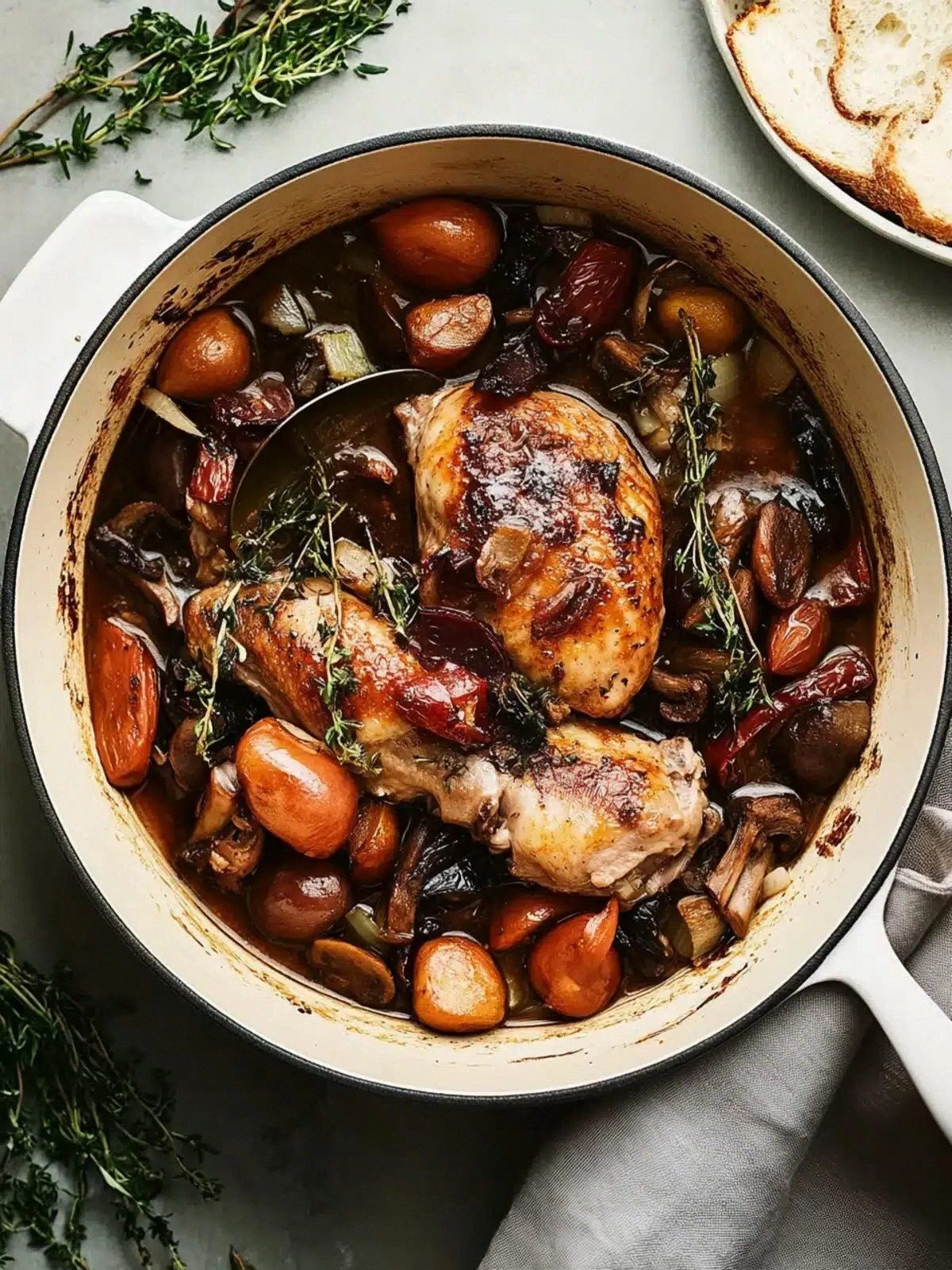
The Method — Step by Step
- Season the Chicken: Pat the whole chickens dry with paper towels. Sprinkle 1 tablespoon kosher salt and 2 teaspoons black pepper over each chicken, making sure to get the seasoning under the skin. This step is crucial for flavor; it also helps the skin crisp up during the sear. Let the seasoned chicken rest for 10 minutes while you prepare the rest of the ingredients.
- Render the Bacon: In a large Dutch oven or heavy‑bottomed pot, heat 1 tablespoon olive oil over medium heat. Add the 8 ounces of bacon or pancetta, cutting it into 1‑inch pieces. Sear until the bacon is golden brown and the fat has rendered, about 5–7 minutes. Remove the bacon with a slotted spoon and set aside, leaving the fat in the pot.
- Sear the Chicken: Increase the heat to medium‑high. Place the chickens skin side down in the pot, pressing them gently to ensure contact with the surface. Sear until the skin turns a deep amber, about 4–5 minutes per side. Flip carefully and sear the other side for another 4 minutes. This step locks in juices and creates a caramelized crust that forms the flavor base.
- Brown the Aromatics: Remove the chickens and set them aside. In the same pot, add the 2 diced yellow onions, 1 pound carrots, and 2 teaspoons garlic. Cook, stirring occasionally, until the onions are translucent and the carrots begin to soften, about 8 minutes. The onions should develop a golden hue, indicating that they’re caramelizing properly.
- Deglaze with Cognac: Pour 1/4 cup Cognac or brandy into the pot, carefully igniting it with a long match or lighter to flambé. This step burns off the alcohol while infusing the pan with a sweet, caramelized aroma. Once the flames subside, scrape up any browned bits with a wooden spoon. These bits are packed with flavor.
- Add Wine and Stock: Pour in the 1 bottle of dry red wine and 2 cups chicken stock. Stir to combine, ensuring all the browned bits dissolve. Bring the mixture to a gentle boil, then reduce heat to a low simmer. The liquid should reduce by about one‑third, concentrating the flavors.
- Simmer the Chicken: Return the seared chickens to the pot, skin side up. Add the 1 bunch fresh thyme, the frozen whole onions, and the 1 pound porcini mushrooms. Cover tightly and let the mixture simmer for 2–2.5 hours, or until the chicken is fall‑apart tender. Occasionally check the liquid level and add more stock if necessary.
- Finish with Butter and Flour: In a small bowl, whisk together 4 tablespoons unsalted butter and 3 tablespoons all‑purpose flour to create a beurre manié. Once the chicken is tender, remove the pot from heat and stir the beurre manié into the sauce. This will thicken it to a silky, glossy consistency. Taste and adjust seasoning with additional salt or pepper if needed.
- Rest and Serve: Let the dish rest for 10 minutes before serving. This allows the flavors to meld and the sauce to settle. Garnish with fresh thyme leaves and serve over a bed of buttery mashed potatoes or crusty bread to soak up the sauce.
That's it — you did it. But hold on, I've got a few more tricks that'll take this to another level…
Insider Tricks for Flawless Results
The Temperature Rule Nobody Follows
Maintaining a low, steady simmer is essential. If the liquid boils too vigorously, the sauce can separate and the chicken will dry out. I use a heat‑sensing thermometer to keep the temperature between 185–190°F. This ensures the flavors meld without the risk of scorching.
Why Your Nose Knows Best
The aroma is your best indicator of doneness. When the sauce smells like toasted nuts and a hint of caramel, it's almost ready. Trust your nose; a well‑seasoned dish will reveal itself through scent before the visual cues.
The 5‑Minute Rest That Changes Everything
After simmering, let the pot rest covered for 5 minutes. This allows the juices to redistribute, ensuring every bite is juicy. Skipping this step can leave the meat slightly dry.
The Secret of the Beurre Manié
Whisk the butter and flour together until smooth before adding to the sauce. If you add the mixture too quickly, the sauce may curdle. Stir in a steady, slow stream, and you’ll achieve that glossy finish that makes the dish restaurant‑worthy.
The Right Stock Matters
Use a homemade or high‑quality store‑bought chicken stock. A bland stock will dilute the sauce’s depth. If you’re in a hurry, a bouillon cube dissolved in hot water can suffice, but the flavor won’t be as complex.
Creative Twists and Variations
This recipe is a playground. Here are some of my favorite ways to switch things up:
Red Wine Swap
Replace the dry red wine with a robust port or a sweet Madeira for a richer, sweeter sauce. The result is a luscious glaze that pairs wonderfully with roasted root vegetables.
Smoky Twist
Add a chipotle pepper or a splash of smoked paprika to the aromatics. The subtle heat will give the dish a modern, smoky kick that complements the bacon.
Herb Variation
Swap fresh thyme with rosemary or bay leaves for a different aromatic profile. Rosemary adds a piney note that pairs beautifully with the earthy mushrooms.
Vegetarian Version
Use a large portobello mushroom or a hearty vegetable like butternut squash in place of the chicken. Keep the bacon and mushrooms to maintain the umami depth.
Quick Fix
If you’re short on time, use pre‑cooked rotisserie chicken. Add it in the last 10 minutes of simmering to heat through without overcooking.
Dessert‑Inspired Variation
Finish the sauce with a splash of balsamic vinegar and a drizzle of honey. The sweet‑tart combination turns the dish into a dessert‑style entrée that’s both surprising and delicious.
Storing and Bringing It Back to Life
Fridge Storage
Cool the dish to room temperature, then transfer to an airtight container. Store in the refrigerator for up to 3 days. The sauce will thicken slightly; reheat gently on low heat, stirring frequently.
Freezer Friendly
Divide the dish into individual portions and place in freezer‑safe bags or containers. Freeze for up to 2 months. Thaw overnight in the refrigerator before reheating.
Best Reheating Method
Reheat slowly over low heat, adding a splash of water or stock to loosen the sauce. This prevents the sauce from drying out and keeps the chicken juicy.