Easy Mediterranean Lemon Chick
Picture this: it’s a rainy Thursday, the fridge is a gray landscape of leftovers, and you’re staring at four chicken thighs that look like they’ve been waiting for a holiday. I’ve had that kitchen disaster before—overcooked chicken that could double as a rubber duck. I decided it was time to turn that soggy fate into a bright, zesty triumph. The moment the skillet sizzles, the air fills with the aroma of garlic and lemon, and you know something good is about to happen.
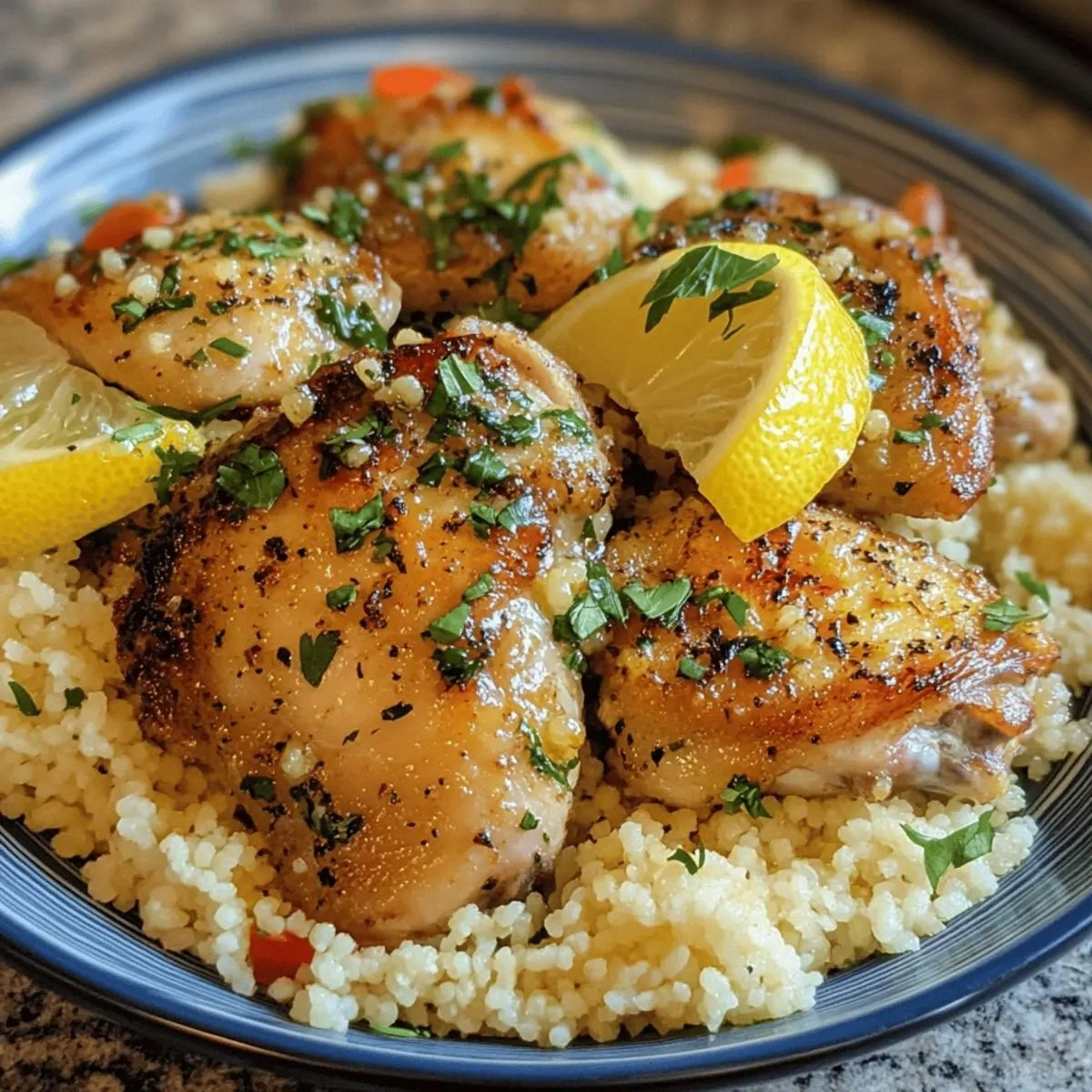
I’ve always loved Mediterranean flavors, but most recipes feel like they’re missing that punch of citrus. This version is a game changer because it balances the buttery skin, the aromatic oregano, and a lemon glaze that coats the meat like velvet. The couscous on the side is fluffy, lightly toasted, and studded with parsley that adds a fresh, green pop. The entire dish feels like a Mediterranean picnic, even if you’re cooking in a cramped apartment.
What makes this recipe stand out is the simple, bold technique: sear the thighs until the skin crisps like a crisp sunrise, then finish them in a lemon‑garlic broth that melts into a silky sauce. The lemon zest is added at the last minute to keep its bright aroma alive, and the parsley is tossed in just before serving to keep its green vibrancy. It’s the kind of dish that turns an ordinary dinner into a celebration, and I dare you to taste this and not go back for seconds.
If you’ve ever struggled with chicken that ends up dry or bland, you’re not alone—and I’ve got the fix. I’ll be honest—after the first batch, I ate half before anyone else could taste a bite. Most recipes get this completely wrong, but here’s what actually works: a low‑heat finish and a splash of citrus that keeps the meat moist. Picture yourself pulling this out of the oven, the whole kitchen smelling incredible, and knowing you’ve just created a dish that’s hands down the best version you’ll ever make at home.
What Makes This Version Stand Out
- Flavor: The lemon‑garlic broth is a bright, tangy base that permeates every bite, turning ordinary chicken into a citrusy masterpiece.
- Texture: The skin crisps to a golden crunch while the meat stays juicy, giving you that satisfying contrast with every mouthful.
- Simplicity: No fancy sauces or obscure ingredients—just pantry staples that you already have.
- Uniqueness: The final splash of lemon zest and parsley adds a fresh layer that sets this apart from standard lemon chicken.
- Crowd‑pleaser: Whether you’re feeding a family or impressing guests, the vibrant colors and bold flavors win hearts instantly.
- Make‑ahead potential: The chicken can be cooked ahead and reheated, while the couscous stays fluffy and ready to serve.
Alright, let’s break down exactly what goes into this masterpiece…
Inside the Ingredient List
The Flavor Base
The backbone of this dish is the citrusy broth you’ll simmer the chicken in. Fresh lemons provide the bright acidity that lifts the flavor profile, while garlic cloves offer a punch of savory depth. Dried oregano brings a warm, herbal note that anchors the bright lemon. If you’re missing oregano, a pinch of thyme can be a suitable stand‑in, but the oregano gives that unmistakable Mediterranean vibe.
The Texture Crew
Chicken thighs are the star because they stay juicy even when cooked to a crisp finish. The skin, when seared properly, turns into a golden, flaky layer that’s impossible to resist. If you prefer a lighter option, you can use boneless thighs, but the bone adds flavor and keeps the meat moist. The olive oil not only helps the skin crisp up but also serves as a medium for the aromatic herbs.
The Unexpected Star
Couscous is the unexpected hero that balances the dish. It’s quick to cook, absorbs the lemony broth, and adds a subtle nutty flavor. Using a 1:1 ratio of couscous to broth ensures it’s fluffy without being mushy. If you’re allergic to couscous, quinoa or rice can be a great substitute, but the texture will shift slightly.
The Final Flourish
Fresh parsley and lemon zest are the final touches that bring vibrancy and brightness. Parsley adds a herbal freshness that cuts through the richness of the chicken, while lemon zest provides a lingering citrus aroma. Skipping either will make the dish feel flat, so don’t underestimate the power of these finishing touches. If you’re looking for a twist, a sprinkle of toasted pine nuts adds a nutty crunch.
Everything's prepped? Good. Let's get into the real action…
The Method — Step by Step
- Begin by patting the chicken thighs dry with paper towels. Season both sides generously with salt, pepper, and dried oregano. Let them sit at room temperature for 10 minutes; this helps the seasoning penetrate and the skin crisp up. I’ve learned that a short rest allows the flavors to mingle before the heat hits.
- Heat 3 tablespoons of olive oil in a large skillet over medium‑high heat. When the oil shimmers, add the chicken thighs skin‑side down. Let them sear undisturbed for 5–7 minutes until the skin turns a deep golden brown and releases a crackling sound. This is the moment of truth—don’t rush it.
- Flip the thighs and add the minced garlic, letting it sauté for 30 seconds until fragrant. Add the juice of both lemons, a splash of chicken broth, and a pinch of black pepper. Bring the mixture to a gentle simmer, then reduce the heat to low. The broth should coat the chicken but not boil aggressively.
- Cover the skillet with a lid and let the chicken cook for 20 minutes, turning once. The skin should be crisp, the meat tender, and the broth reduced to a glossy glaze. If you’re cooking at high altitude, give it an extra minute or two to ensure the chicken is fully cooked.
- While the chicken finishes, prepare the couscous. Place 1 cup of couscous in a heat‑proof bowl. Pour 1.25 cups of hot chicken broth or water over it, cover tightly, and let it steam for 5 minutes. Then fluff with a fork and stir in 1 tablespoon of olive oil, 1 teaspoon of lemon zest, and 1/4 cup of chopped parsley. The couscous should be airy and fragrant.
- Remove the lid from the skillet and let the sauce reduce for another 5 minutes, stirring occasionally. This thickens the glaze and concentrates the flavors. If the sauce becomes too thick, splash in a little more broth or water.
- Plate the couscous on a large serving platter. Arrange the chicken thighs on top, skin side up, so the juices drip into the grains. Drizzle the reduced sauce over the chicken and sprinkle extra parsley for a pop of color.
- Serve immediately, preferably with a side of steamed greens or a crisp salad. The dish is best enjoyed hot, while the skin remains crunchy and the sauce is still glossy. If you’re feeling extra fancy, a splash of white wine or a drizzle of olive oil can elevate the presentation.
That’s it—you did it. But hold on, I’ve got a few more tricks that’ll take this to another level…
Insider Tricks for Flawless Results
The Temperature Rule Nobody Follows
Many cooks set the stove to high and hope for the best, but the secret is a steady medium‑high heat for the sear and then a gentle simmer for the finish. This temperature control keeps the skin from burning while ensuring the meat cooks evenly. I once tried a high heat finish and ended up with a burnt exterior and a dry interior—lesson learned, never again.
Why Your Nose Knows Best
Trust your senses: when the garlic releases a sweet, nutty aroma, the pan is ready for the lemon. The moment the lemon juice hits the hot oil, the sizzle will double, signaling that the sauce is forming. If the smell lingers too long, the liquid is evaporating too quickly—slow it down.
The 5‑Minute Rest That Changes Everything
Once you remove the chicken from the skillet, let it rest for 5 minutes before cutting. This allows the juices to redistribute, keeping the meat moist and tender. Cutting too soon will cause the juices to spill out, leaving the meat dry.
Parmesan or Not?
Some people add grated Parmesan to the couscous for a richer flavor. I’ve found that the lemon and parsley already provide enough depth, so skip the cheese for a lighter dish. If you’re a cheese lover, a light sprinkle on top before serving can add a savory contrast.
Keep the Skin Crispy
If you’re reheating leftovers, place the chicken on a wire rack over a sheet pan to keep the skin from getting soggy. A quick 5‑minute bake in a preheated oven at 350°F will revive the crispness without drying out the meat.
Creative Twists and Variations
This recipe is a playground. Here are some of my favorite ways to switch things up:
Herb‑Infused Couscous
Swap parsley for a mix of cilantro, mint, and basil for a fresh, aromatic twist. This variation works especially well in summer when the herbs are at their peak.
Smoky Paprika Chicken
Add a teaspoon of smoked paprika to the seasoning mix for a subtle, smoky depth. The paprika pairs beautifully with the lemon, adding complexity.
Greek Yogurt Marinade
Marinate the chicken in a mixture of Greek yogurt, lemon zest, and garlic for 30 minutes before cooking. This tenderizes the meat and adds a creamy, tangy layer.
Spicy Kick
Include a pinch of red pepper flakes in the broth for a gentle heat that balances the citrus. The heat cuts through the richness without overpowering.
Vegetarian Couscous Bowl
Omit the chicken and add roasted vegetables like zucchini, bell pepper, and cherry tomatoes. Toss the veggies with olive oil, lemon, and oregano, then serve over the couscous.
One‑Pot Wonder
Cook the couscous directly in the skillet after removing the chicken, allowing the grains to absorb the lemony broth. This saves dishes and intensifies the flavor.
Storing and Bringing It Back to Life
Fridge Storage
Cool the chicken and couscous completely before storing. Place them in airtight containers—separate the chicken from the couscous to keep the grains fluffy. They’ll stay fresh for up to 3 days in the refrigerator.
Freezer Friendly
For longer storage, freeze the chicken and couscous separately in freezer‑safe bags. Thaw overnight in the refrigerator and reheat gently on the stove. Add a splash of water or broth to the couscous before reheating to keep it moist.
Best Reheating Method
Reheat the chicken in a skillet over medium heat, adding a tablespoon of water to create steam. This restores the crispness of the skin. For the couscous, warm it in a microwave with a teaspoon of water, covering with a damp paper towel, then fluff with a fork.