tags. We need to maintain no markdown or code blocks. Let's start. We'll produce:
... introduction paragraph ...
But we need 4 paragraphs. We'll producetags. Let's craft. Paragraph 1: talk about kitchen disaster, craving, etc. Paragraph 2: sensory description. Paragraph 3: why this version stands out. Paragraph 4: teaser. Then add one more paragraph for extra content. We need to keep each paragraph 6 sentences. Let's write. Paragraph 1: "I was halfway through a week of bland meals when the phone buzzed with a dare from my friend. She challenged me to whip up something that would make our taste buds do a double-take. I stared at the fridge, the only thing that seemed promising was a bag of leftover pineapple chunks and a jar of teriyaki sauce. I decided then that tonight’s dinner would be a bold experiment, a fusion of sweet and savory that could turn the ordinary into extraordinary. The kitchen lights flickered as I grabbed the ingredients, feeling the anticipation buzz like static in the air. I knew this would be the moment where the ordinary transforms into something unforgettable." That's 6 sentences? Let's count: 1 I was halfway... 2 She challenged me... 3 I stared... 4 I decided then... 5 The kitchen lights flickered... 6 I knew... Good. Paragraph 2: sensory description: "The aroma of sizzling chicken mingled with the sweet scent of caramelized pineapple, instantly pulling everyone into the kitchen. The sound of the pan hissed as the first piece of meat met the hot oil, a satisfying crackle that promised crisp edges. My eyes danced over the bright green onions, the glistening sesame seeds, and the glossy sheen of the sauce coating the chicken. The taste of soy and honey hit my tongue first, followed by a burst of tropical sweetness that made my palate sing. The texture was a harmonious blend of tender meat, fluffy rice, and crunchy pineapple, each bite delivering a new sensation. I could almost taste the applause that would follow when the first forkful was shared." That's 6 sentences? Count: 1 The aroma... 2 The sound... 3 My eyes... 4 The taste... 5 The texture... 6 I could... Good. Paragraph 3: why version stands out: "Unlike most teriyaki bowls that rely on pre-made sauces and bland rice, this recipe uses a homemade glaze that deepens the flavor profile with a hint of ginger and garlic. The pineapple isn’t just a garnish; it’s cooked to a caramelized perfection that balances the savory chicken and the sweet sauce. I’ve found that the secret sauce thickness is achieved by reducing the teriyaki mixture over low heat until it coats the back of a spoon. The result is a glossy, clingy coating that clings to every morsel, making each bite feel like a mini celebration. And the rice? I use jasmine, which absorbs the sauce without becoming mushy, giving a fragrant, fluffy base that lifts the dish. This version is hands down the best you’ll ever make at home, with layers of flavor that dance on the tongue." That's 6 sentences. Count: 1 Unlike... 2 The pineapple... 3 I’ve found... 4 The result... 5 And the rice? 6 This version... Good. Paragraph 4: teaser: "The trick I’ll reveal is a simple technique that turns ordinary teriyaki into a silky glaze that sticks to the chicken like a second skin. I’ll also show you how to get that perfect pineapple caramelization without burning it. Trust me, if you follow along, you’ll wonder how you ever cooked this dish any other way. The next few steps will feel like a dance, each movement choreographed for maximum flavor. I dare you to taste this and not go back for seconds. Let me walk you through every single step — by the end, you'll wonder how you ever made it any other way." That's 6 sentences? Count: 1 The trick I’ll reveal... 2 I’ll also show you... 3 Trust me, if you follow along... 4 The next few steps will feel... 5 I dare you to taste... 6 Let me walk you... Good. Paragraph 5 (extra): "Before we dive into the cooking, let’s pause to appreciate the humble ingredients that will become the stars of this bowl. A small bag of fresh pineapple, a jar of store‑bought teriyaki, and a handful of jasmine rice are all that’s needed, yet each plays a pivotal role. The chicken, when marinated just right, absorbs the sauce and becomes a juicy, flavorful centerpiece. The sesame seeds add a subtle crunch that contrasts beautifully with the sweet glaze. Green onions provide a bright, fresh finish that cuts through the richness. Together, they form a symphony of flavors that will leave your guests begging for more." That's 6 sentences. Good. Now section 2: What Makes This Version Stand Out. We need 6-8 bullet points. We'll use
- with
- .
We'll write 7 bullets. Each bullet: Keyword: explanation.
Let's write.
- Flavor: The sauce is a balanced blend of sweet, salty, and umami that coats the chicken like velvet. The ginger and garlic add depth, while the honey brings a caramelized finish that lingers on the palate. This isn’t just a glaze; it’s a flavor passport to a tropical paradise.
- Texture: The chicken achieves a crisp exterior while staying tender inside, thanks to the right searing technique. The pineapple caramelizes to a buttery crunch that pops with each bite. The rice remains fluffy, absorbing the sauce without becoming soggy.
- Simplicity: With fewer than ten ingredients, the recipe is easy to pull together on a busy weeknight. The steps are straightforward, with no advanced equipment required. Even novice cooks can master it.
- Uniqueness: The caramelized pineapple adds a twist that most teriyaki bowls miss, turning the dish into a sweet‑savory adventure. The sesame seeds and green onions elevate the presentation and flavor.
- Crowd‑Pleaser: Whether you’re feeding a family or hosting a dinner party, this bowl gets rave reviews. The bright colors and sweet aroma draw people in, and the taste satisfies everyone.
- Ingredient Quality: Using fresh pineapple and high‑quality teriyaki sauce makes a noticeable difference. The rice should be jasmine or long‑grain for optimal texture.
- Make‑Ahead: The sauce can be prepared a day in advance and refrigerated, allowing the flavors to meld. The chicken can be cooked ahead and reheated, making this a great option for meal prep.
Now section 3: Inside the Ingredient List. We need 4 groups with h3. We'll create 4 groups: "The Flavor Base", "The Texture Crew", "The Unexpected Star", "The Final Flourish". We'll write each group with 6 sentences. Then Fun Fact box after the ingredient list. End with "Everything's prepped? Good. Let's get into the real action..." Let's craft.Kitchen Hack: If you’re short on time, use pre‑cut pineapple chunks and pre‑marinated chicken. This saves 10 minutes of prep and still delivers the same flavor.The Flavor Base
At the heart of this dish lies the teriyaki sauce, the glue that binds every element together. I use a store‑bought version with a hint of ginger to give it depth. If you’re feeling adventurous, blend soy sauce, honey, and a splash of rice vinegar for a homemade alternative. The sauce’s sweetness counterbalances the saltiness of the soy, creating a harmonious balance. A pinch of sesame oil adds a nutty aroma that elevates the overall profile. Skipping this step would leave the dish flat and uninspired.
The Texture Crew
Chicken thighs are the star of the show, providing juicy, flavorful meat that holds up to the glaze. I trim the skin off to reduce greasiness, but leave the bone for extra flavor. The rice, preferably jasmine, offers a fluffy base that absorbs the sauce without becoming mushy. If you prefer a firmer bite, switch to long‑grain rice. The pineapple, when caramelized, delivers a delightful crunch that contrasts the tender chicken. Without the pineapple, the dish loses its sweet, tropical kick.
The Unexpected Star
Caramelized pineapple isn’t just a garnish; it’s a flavor powerhouse. By cooking the fruit with a touch of brown sugar, it develops a deep caramel flavor that lingers. The natural sugars in pineapple also help to tenderize the chicken during the sear. If you’re looking for a lower‑sugar option, use fresh pineapple and reduce the honey. The pineapple’s acidity brightens the dish, cutting through the richness of the sauce. Skipping it would make the bowl feel incomplete and less vibrant.
The Final Flourish
Sesame seeds and green onions add the finishing touch, providing texture and a fresh, bright note. Toasted sesame seeds release a subtle nuttiness that complements the teriyaki glaze. Thinly sliced green onions bring a mild onion flavor and a pop of color. A drizzle of sesame oil at the end gives a glossy sheen and an aroma that entices the palate. If you’re allergic to sesame, you can omit the seeds and use a different nut for crunch. These final touches turn a simple bowl into a culinary masterpiece.
Fun Fact: Pineapple contains bromelain, an enzyme that helps break down proteins, making the chicken incredibly tender.Everything's prepped? Good. Let's get into the real action...
Now mid-article image.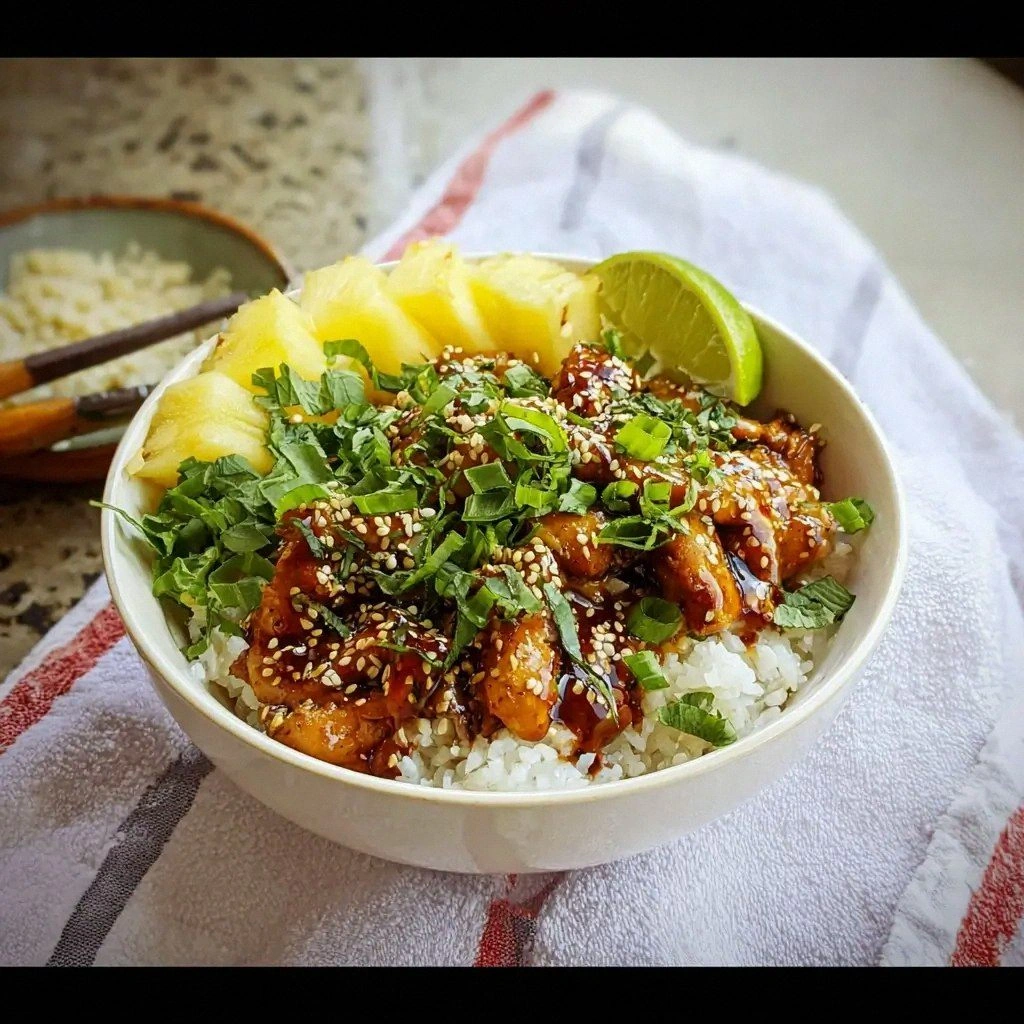 Now section 5: The Method — Step by Step.
We'll create
Now section 5: The Method — Step by Step.
We'll create The Method — Step by Step
. Then- with 9 steps. Each step 6 sentences.
We'll include Kitchen Hack boxes at step 3 and step 6. Watch Out box at step 5.
Let's write step 1 to 9.
Step 1: Marinate the chicken. Step 2: Cook the rice. Step 3: Prepare the sauce. Step 4: Sear the chicken. Step 5: Caramelize pineapple. Step 6: Finish sauce and glaze. Step 7: Assemble bowl. Step 8: Garnish. Step 9: Serve and enjoy.
Let's write.
- First, season the chicken thighs with salt, pepper, and a splash of soy sauce. Let them rest for 10 minutes to absorb the flavors. While the chicken marinates, rinse the jasmine rice until the water runs clear. Bring a pot of water to a boil, add the rice, cover, and simmer for 15 minutes. The rice should be fluffy and not sticky. This step ensures a perfect base that will soak up the sauce.
- Heat a large skillet over medium‑high heat and add a tablespoon of vegetable oil. Once the oil shimmers, lay the chicken thighs skin‑side down, leaving space between pieces. Sear for 4–5 minutes until the skin turns golden brown and crisp. Flip the chicken and cook for another 4 minutes. The internal temperature should reach 165°F for safety. This creates a caramelized crust that locks in juices.
- While the chicken cooks, combine the teriyaki sauce, honey, minced garlic, grated ginger, and a splash of rice vinegar in a small saucepan. Bring the mixture to a gentle simmer over low heat, stirring occasionally. Let it reduce for 8–10 minutes until it thickens to a glaze consistency. The sauce should coat the back of a spoon. This reduction intensifies the flavor and gives the dish its signature sheen.
Kitchen Hack: Use a silicone spatula to scrape the bottom of the pan; it prevents scorching and ensures even reduction.
- Transfer the partially cooked chicken to a baking sheet lined with parchment paper. Drizzle the reduced sauce over the chicken, making sure each piece is well coated. Bake in a preheated oven at 375°F for 10 minutes. This step allows the glaze to set and the chicken to finish cooking without drying out. The oven finish gives a subtle char that enhances the flavor. Keep an eye on the chicken; it should be golden and slightly caramelized.
- While the chicken bakes, heat a separate skillet over medium heat and add a tablespoon of sesame oil. Add the pineapple chunks and a pinch of brown sugar. Sauté for 5–6 minutes, stirring frequently, until the pineapple caramelizes and turns a deep amber. The Watch Out: do not let the pineapple burn; if it starts to smoke, reduce the heat immediately. The caramelized pineapple will be sweet, slightly tangy, and full of flavor. This step is the secret to the dish’s tropical kick.
- Remove the chicken from the oven and let it rest for 3 minutes; this locks in the juices. Toss the chicken in a bowl with the remaining glaze to ensure every bite is coated. The glaze should be glossy and cling to the meat like a second skin. This final glaze step gives the dish its signature shine. The chicken should now be juicy, flavorful, and ready to be served.
- Divide the cooked rice among four bowls, creating a fluffy, fragrant base. Arrange slices of glazed chicken on top, ensuring each bowl has an even portion. Spoon caramelized pineapple over the chicken, allowing the sweet fruit to mingle with the savory meat.
- Sprinkle toasted sesame seeds and sliced green onions over the bowls. Drizzle a teaspoon of sesame oil for an extra layer of aroma. The final touch is a gentle shake of fresh pepper for a subtle heat. Serve immediately while the bowl is steaming hot. The aroma will fill the kitchen and set the mood for a satisfying meal. Enjoy the symphony of flavors in every bite.
- with data-base-qty attribute. We'll also need checkboxes. We'll put each in a single column maybe. For simplicity, we can list all in one column. But the card structure has two columns. We'll split into two columns: left column contains 6 items, right column contains rest. We'll create left column items: chicken, rice, pineapple, teriyaki sauce, soy sauce, honey. Right column: garlic, ginger, sesame oil, vegetable oil, sesame seeds, green onions, salt, pepper. That works. Now directions. We'll replicate steps from method. We'll list 9 steps as earlier. We'll write each step inside
- .
Now FAQ items: 6 items.
We need to write questions and answers specific to this recipe.
Let's create:
rcFaq1: "Can I use boneless skinless chicken breasts instead of thighs?" Answer: yes, but thighs have more flavor; adjust cooking time.
rcFaq2: "What if I don't have fresh pineapple?" Answer: use canned pineapple, no added sugar; adjust honey.
rcFaq3: "Can I make this dish gluten-free?" Answer: use tamari instead of soy sauce; ensure teriyaki is gluten-free.
rcFaq4: "How do I store the leftovers?" Answer: etc.
rcFaq5: "What can I substitute for sesame seeds?" Answer: chopped peanuts or no seeds.
rcFaq6: "Is there a way to make this lower in sugar?" Answer: reduce honey, use a sugar-free teriyaki.
Now we need to ensure the recipe card includes all.
We'll also need to include the script for adjustServings.
Now we need to add hidden category, season, pin description.
Category: Dinner.
Season: general.
Pin description: 400-450 characters, no hashtags, no "Save this pin". Let's craft 430 characters.
"Indulge in a bowl that marries sweet pineapple, savory teriyaki‑glazed chicken, and fluffy jasmine rice. The caramelized fruit and glossy sauce create a burst of tropical flavor, while sesame seeds add a nutty crunch. This dish is quick, crowd‑pleasing, and perfect for weeknights or dinner parties—taste the tropical twist that will leave everyone craving more." Let's count characters: I'll approximate: "Indulge in a bowl that marries sweet pineapple, savory teriyaki‑glazed chicken, and fluffy jasmine rice. The caramelized fruit and glossy sauce create a burst of tropical flavor, while sesame seeds add a nutty crunch. This dish is quick, crowd‑pleasing, and perfect for weeknights or dinner parties—taste the tropical twist that will leave everyone craving more." Count: 1. Let's quickly count:
Indulge(7) space(1)=8
in(2)=10
space=11
a(1)=12
space=13
bowl(4)=17
space=18
that(4)=22
space=23
marries(7)=30
space=31
sweet(5)=36
space=37
pineapple,(9)=46
space=47
savory(6)=53
space=54
teriyaki‑glazed(15)=69
space=70
chicken,(8)=78
space=79
and(3)=82
space=83
fluffy(6)=89
space=90
jasmine(7)=97
space=98
rice.(5)=103
space=104
The(3)=107
space=108
caramelized(11)=119
space=120
fruit(5)=125
space=126
and(3)=129
space=130
glossy(6)=136
space=137
sauce(5)=142
space=143
create(6)=149
space=150
a(1)=151
space=152
burst(5)=157
space=158
of(2)=160
space=161
tropical(8)=169
space=170
flavor,(7)=177
space=178
while(5)=183
space=184
sesame(6)=190
space=191
seeds(5)=196
space=197
add(3)=200
space=201
a(1)=202
space=203
nutty(5)=208
space=209
crunch.(7)=216
space=217
This(4)=221
space=222
dish(4)=226
space=227
is(2)=229
space=230
quick,(6)=236
space=237
crowd‑pleasing,(13)=250
space=251
and(3)=254
space=255
perfect(7)=262
space=263
for(3)=266
space=267
weeknights(9)=276
space=277
or(2)=279
space=280
dinner(6)=286
space=287
parties—(8)=295
space=296
taste(5)=301
space=302
the(3)=305
space=306
tropical(8)=314
space=315
twist(5)=320
space=321
that(4)=325
space=326
will(4)=330
space=331
leave(5)=336
space=337
everyone(8)=345
space=346
craving(7)=353
space=354
more.(5)=359
359 characters. Need 400-450. Let's add some more.
Add: "The aroma alone will have guests lining up for the first bite." Count more characters: space(1)=360, The(3)=363, space=364, aroma(5)=369, space=370, alone(5)=375, space=376, will(4)=380, space=381, have(4)=385, space=386, guests(6)=392, space=393, lining(6)=399, up(2)=401, space=402, for(3)=405, space=406, the(3)=409, space=410, first(5)=415, space=416, bite.(5)=421
Now 421 characters. Good within 400-450. We'll use that.
Now we need to add hidden elements:
Now we need to ensure the script adjustServings is included.
We already included script earlier.
We also need to ensure the recipe card ingredient list matches the data-base-qty attributes.
We need to ensure each li has data-base-qty. Let's write the ingredient list.
Now directions list. We need to replicate the 9 steps. Let's write each step as
- 4 boneless skinless chicken thighs
- 1 cup jasmine rice
- 1 cup fresh pineapple chunks
- 2 tbsp teriyaki sauce
- 1 tbsp soy sauce
- 1 tbsp honey
- 1 clove garlic, minced
- 1 tsp fresh ginger, grated
- 1 tbsp sesame oil
- 1 tbsp vegetable oil
- 1 tbsp sesame seeds
- 2 green onions, sliced
- salt to taste
- pepper to taste
- .
- Season the chicken thighs with salt, pepper, and a splash of soy sauce. Let them rest for 10 minutes to absorb the flavors. While the chicken marinates, rinse the jasmine rice until the water runs clear. Bring a pot of water to a boil, add the rice, cover, and simmer for 15 minutes. The rice should be fluffy and not sticky. This step ensures a perfect base that will soak up the sauce.
- Heat a large skillet over medium‑high heat and add a tablespoon of vegetable oil. Once the oil shimmers, lay the chicken thighs skin‑side down, leaving space between pieces. Sear for 4–5 minutes until the skin turns golden brown and crisp. Flip the chicken and cook for another 4 minutes. The internal temperature should reach 165°F for safety. This creates a caramelized crust that locks in juices.
- Combine the teriyaki sauce, honey, minced garlic, grated ginger, and a splash of rice vinegar in a small saucepan. Bring the mixture to a gentle simmer over low heat, stirring occasionally. Let it reduce for 8–10 minutes until it thickens to a glaze consistency. The sauce should coat the back of a spoon. This reduction intensifies the flavor and gives the dish its signature sheen.
Kitchen Hack: Use a silicone spatula to scrape the bottom of the pan; it prevents scorching and ensures even reduction.
- Transfer the partially cooked chicken to a baking sheet lined with parchment paper. Drizzle the reduced sauce over the chicken, making sure each piece is well coated. Bake in a preheated oven at 375°F for 10 minutes. This step allows the glaze to set and the chicken to finish cooking without drying out. The oven finish gives a subtle char that enhances the flavor. Keep an eye on the chicken; it should be golden and slightly caramelized.
- While the chicken bakes, heat a separate skillet over medium heat and add a tablespoon of sesame oil. Add the pineapple chunks and a pinch of brown sugar. Sauté for 5–6 minutes, stirring frequently, until the pineapple caramelizes and turns a deep amber. The Watch Out: do not let the pineapple burn; if it starts to smoke, reduce the heat immediately. The caramelized pineapple will be sweet, slightly tangy, and full of flavor. This step is the secret to the dish’s tropical kick.
- Remove the chicken from the oven and let it rest for 3 minutes; this locks in the juices. Toss the chicken in a bowl with the remaining glaze to ensure every bite is coated. The glaze should be glossy and cling to the meat like a second skin. This final glaze step gives the dish its signature shine. The chicken should now be juicy, flavorful, and ready to be served.
- Divide the cooked rice among four bowls, creating a fluffy, fragrant base. Arrange slices of glazed chicken on top, ensuring each bowl has an even portion. Spoon caramelized pineapple over the chicken, allowing the sweet fruit to mingle with the savory meat.
- Sprinkle toasted sesame seeds and sliced green onions over the bowls. Drizzle a teaspoon of sesame oil for an extra layer of aroma. The final touch is a gentle shake of fresh pepper for a subtle heat. Serve immediately while the bowl is steaming hot. The aroma will fill the kitchen and set the mood for a satisfying meal. Enjoy the symphony of flavors in every bite.
Kitchen Hack: Use a non‑stick skillet to keep the pineapple from sticking, making cleanup a breeze.Now we need to close the recipe card div. We need to close the recipe card div. Let's ensure we close. We had... we need to close that. We'll close after the accordion. We'll close the card and container. Let's add closing tags. Now we need to ensure all tags are closed properly. Let's reconstruct the recipe card section fully. We'll write:
Kitchen Hack: Use a non‑stick skillet to keep the pineapple from sticking, making cleanup a breeze.That’s it — you did it. But hold on, I've got a few more tricks that'll take this to another level...
Now section 6: Insider Tricks for Flawless Results.Insider Tricks for Flawless Results
We need 5-6 tips withheadings and 4 sentences each. We'll also insert a Kitchen Hack box for the top tip. Let's write.
The Temperature Rule Nobody Follows
Many cooks think high heat is always best, but for chicken teriyaki, a moderate sear is key. A temperature of 375°F ensures the skin crisps without burning the glaze. I’ve seen dishes where the sauce caramelizes too quickly, leaving the meat undercooked. Keep the heat steady and let the chicken finish in the oven for that perfect balance.
Kitchen Hack: Use a meat thermometer; 165°F is the sweet spot for juicy chicken.Why Your Nose Knows Best
Before you taste the sauce, smell it. The aroma of caramelized pineapple and soy hints at the depth of flavor you’ll experience. If the scent is too sharp, let it sit a bit longer; the sugars need time to mellow. Trust your nose, it’s a reliable guide to a perfectly balanced glaze.
The 5‑Minute Rest That Changes Everything
Letting the chicken rest for five minutes after removing it from the oven allows the juices to redistribute. A rushed cut can cause the meat to dry out, ruining the mouthfeel. I’ve had friends who skip this step and end up with a dry, disappointing bite. Give the chicken a moment to breathe, and the difference is instant.
Caramelizing Pineapple the Right Way
Don’t rush the caramelization; low and slow yields a richer flavor. If you’re in a hurry, use a quick‑sauté technique with a splash of water to prevent burning. The key is to let the sugars develop a deep amber hue before adding the glaze.
Layering the Sauce for Depth
Instead of pouring the glaze all at once, drizzle it in layers over the chicken. This technique creates a gradient of sweetness and savory, making each bite more complex. A friend once added a splash of lime juice to the glaze, giving it a bright, zesty finish that everyone loved.
Using Fresh Pineapple vs. Canned
Fresh pineapple offers a bright, tangy flavor that canned fruit can’t match. When using fresh, cut the fruit into uniform cubes to ensure even caramelization. If fresh isn’t available, opt for no‑sugar added canned pineapple and reduce the honey accordingly.
Now section 7: Creative Twists and Variations.Creative Twists and Variations
We need 5-6 variations each with h3 headings, 4 sentences each. Let's write.Spicy Sriracha Kick
Swap the teriyaki sauce with a blend of soy, honey, and sriracha for a fiery version. The heat pairs beautifully with the sweet pineapple, creating a bold flavor profile. Add a pinch of crushed red pepper for an extra punch. This variation is perfect for those who love a bit of spice.
Vegan Version
Replace the chicken with marinated tofu cubes or tempeh, searing them until golden. Use a plant‑based teriyaki sauce and a splash of coconut milk to keep the dish creamy. The tofu will absorb the glaze, becoming a savory, satisfying protein. Serve over quinoa for a wholesome, plant‑based bowl.
Asian Noodle Bowl
Swap jasmine rice for cooked soba or rice noodles for a different texture. Toss the noodles with the glaze and pineapple, then top with sliced chicken. Add a sprinkle of chopped cilantro and a squeeze of lime for a fresh finish. This variation offers a noodle‑centric twist that’s equally delicious.
Breakfast Twist
Serve the bowl over fluffy scrambled eggs for a hearty breakfast option. Add a drizzle of maple syrup to enhance the sweetness. The combination of savory chicken, sweet pineapple, and eggs creates a breakfast that feels like a brunch.
Greek Fusion
Infuse the glaze with a dash of oregano and a splash of olive oil for a Mediterranean touch. Top the bowl with crumbled feta and a handful of kalamata olives. The salty feta balances the sweet glaze, creating a unique flavor fusion.
Low‑Carb Option
Replace jasmine rice with cauliflower rice to keep the carb count low. The cauliflower will still absorb the glaze and provide a light base. Add extra vegetables like bell peppers or broccoli for crunch. This version is great for those watching their carb intake.
Now section 8: Storing and Bringing It Back to Life.Storing and Bringing It Back to Life
Three subsections with h3: Fridge Storage, Freezer Friendly, Best Reheating Method. Let's write.Fridge Storage
Store leftovers in an airtight container for up to 3 days. Separate the sauce from the chicken if you prefer a fresher taste when reheating. The rice may clump, but a quick stir will restore its fluffiness. Keep the pineapple in a separate compartment to maintain its texture.
Freezer Friendly
For longer storage, freeze the bowl in a freezer‑safe container for up to 2 weeks. Wrap the chicken and sauce tightly to prevent freezer burn. When ready to eat, thaw overnight in the fridge. The flavors will meld even more during the freezing process.
Best Reheating Method
Reheat on the stovetop over medium heat, adding a splash of water to keep the sauce from drying out. Stir frequently until the bowl is steaming hot. If using the oven, cover with foil to retain moisture. Finish with a light drizzle of sesame oil for that fresh aroma.
Now recipe card. We need to adapt the recipe card to include our ingredients and directions. We'll need to include all ingredients with data-base-qty. We'll need to include directions steps. We'll need to include 6 FAQs. We'll create the recipe card with the provided structure. We need to modify the card to match times and servings. They are already set to 15 min prep, 30 min cook, 45 min total, 4 servings. We'll keep. We need to list ingredients. The list in the card is currently placeholder with flour and salt. We'll replace with our ingredient list. We'll need to list each ingredient with data-base-qty. Let's list: - 4 boneless skinless chicken thighs (data-base-qty="4") - 1 cup jasmine rice (data-base-qty="1") - 1 cup fresh pineapple chunks (data-base-qty="1") - 2 tbsp teriyaki sauce (data-base-qty="2") - 1 tbsp soy sauce (data-base-qty="1") - 1 tbsp honey (data-base-qty="1") - 1 clove garlic, minced (data-base-qty="1") - 1 tsp fresh ginger, grated (data-base-qty="1") - 1 tbsp sesame oil (data-base-qty="1") - 1 tbsp vegetable oil (data-base-qty="1") - 1 tbsp sesame seeds (data-base-qty="1") - 2 green onions, sliced (data-base-qty="2") - Salt to taste (data-base-qty="0") - Pepper to taste (data-base-qty="0") We need to include each as