I still remember the Great Cranberry Orange Muffin Rebellion of 2019. There I was, standing in my kitchen at 6:47 AM on a Tuesday, staring at a baking sheet of what looked like orange hockey pucks studded with rubbery red pebbles. The recipe I'd followed promised "bakery-style perfection," but what emerged from my oven had the texture of desert sand and tasted like someone had squeezed a bottle of cleaning solution into flour. My roommate took one bite, politely asked if this was some kind of "experimental art project," and backed out of the kitchen slowly.
But here's the thing about food obsession — it doesn't let go just because you failed spectacularly. That rubbery disaster haunted me. I became the Goldilocks of cranberry orange muffins, testing recipe after recipe, each promising the perfect balance of tart cranberries and bright citrus. Some were too sweet, masking the fruit entirely. Others were so tart they made my cheeks pucker like I'd bitten into a lemon. I tested 47 different versions over three months, and just when I was ready to admit defeat and stick to banana bread forever, the magic happened.
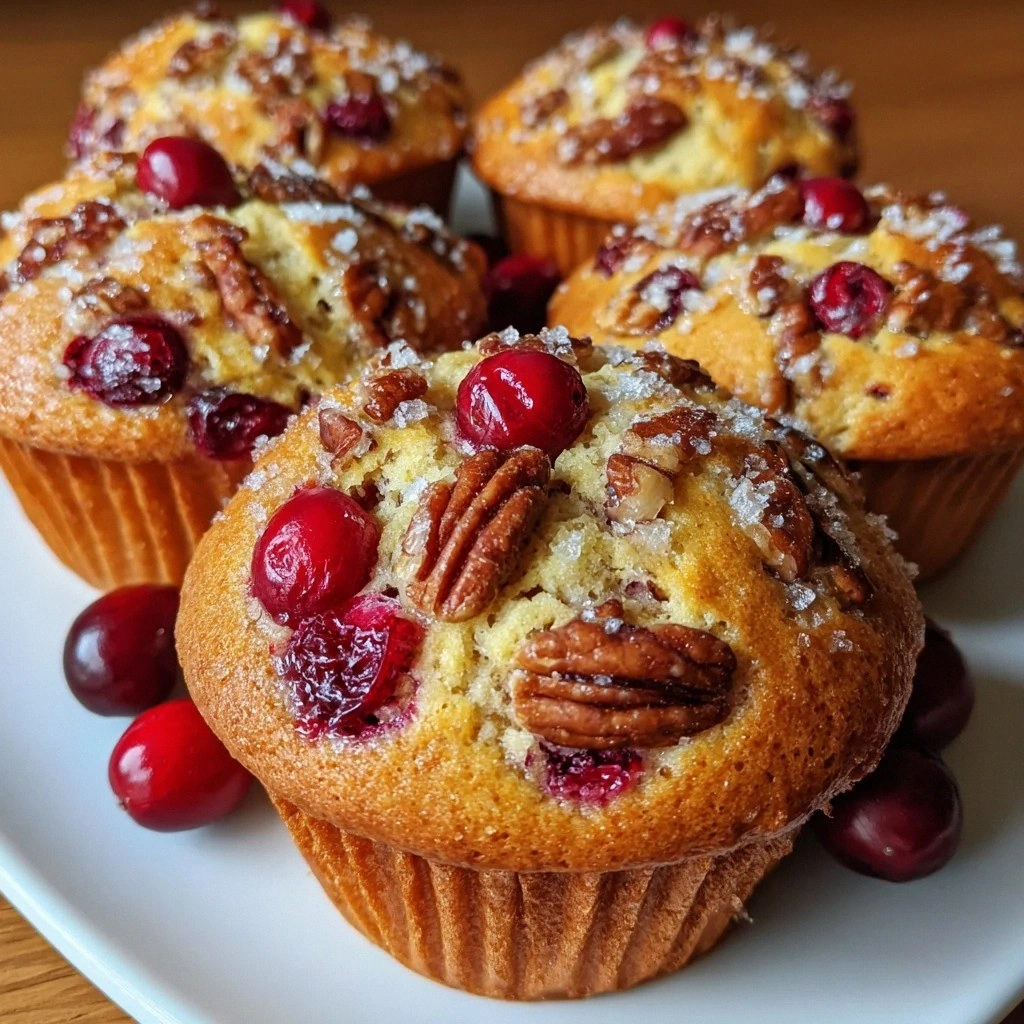
Picture this instead: You pull open your oven door to a cloud of fragrant steam that smells like Christmas morning and summer vacation had a beautiful baby. The muffins rise like proud golden domes, their tops crackling with a sweet-sugary crust that shatters under your fork like thin ice on a frozen pond. Inside, the crumb is impossibly tender and moist, studded with ruby jewels of cranberries that burst with tangy brightness, balanced perfectly by the perfume of fresh orange zest that dances through every bite. These aren't just muffins — they're edible sunshine that somehow manages to taste like both a cozy winter morning and a bright spring afternoon.
What makes this version different? I'm glad you asked. These cranberry orange muffins use a technique I discovered by accident involving whipped egg whites that creates a texture so light and airy, you'll swear they float off the plate. The secret ingredient (okay, I'll spoil it — it's a splash of orange blossom water) elevates the citrus notes to something almost ethereal. Let me walk you through every single step — by the end, you'll wonder how you ever made it any other way.
What Makes This Version Stand Out
Texture Revolution: Most muffin recipes produce dense, cake-like results that sit in your stomach like a brick. This version uses a modified chiffon technique that incorporates whipped egg whites into the batter, creating a texture so light and airy, you'll swear these muffins defy gravity. The crumb is tender yet structured, with a delicate crumb that practically melts on your tongue.
Flavor Balance: Too many recipes either bury the cranberries in mountains of sugar or leave them so tart they make your eyes water. This version strikes the perfect balance — the cranberries retain their bright tang but get tamed by a quick maceration in orange juice and just enough sugar to take the edge off. The result is a complex flavor profile that keeps you coming back bite after bite.
Triple Orange Threat: While other recipes might use just orange zest, we go full orange assault with fresh zest, juice, and a whisper of orange blossom water. This creates layers of citrus flavor that bloom on your palate like a time-release capsule of sunshine. Your taste buds will detect bright top notes, mellow middle tones, and a haunting floral finish.
Crunch Factor: The streusel topping isn't just an afterthought — it's a game-changer. We use brown sugar for deep caramel notes, a touch of salt to balance sweetness, and the secret weapon: finely chopped candied orange peel that caramelizes into little pockets of citrus candy. The contrast between soft muffin and crunchy top is pure textural poetry.
Make-Ahead Magic: These muffins actually improve overnight as the flavors meld and deepen. The batter can be prepped the night before, and the baked muffins freeze beautifully for up to three months. I always make a double batch because they disappear faster than free samples at Costco.
Fail-Proof Technique: You know those recipes where one wrong move ruins everything? This isn't one of them. The method is forgiving, with built-in checkpoints that tell you exactly when each step is done. Even if you've never baked anything more complicated than toast, you'll nail this on the first try.
Inside the Ingredient List
The Flavor Base
Fresh cranberries are the true heroes here, and frozen ones simply won't cut it. Fresh berries have a pop and brightness that frozen ones lose in translation, plus they hold their shape better during baking instead of bleeding purple streaks through your beautiful batter. When selecting cranberries, look for firm, shiny berries that bounce when you drop them (yes, bounce — nature's freshness indicator). Skip any that are soft, wrinkled, or have brown spots. The good news? Fresh cranberries freeze beautifully, so when you find them in season, stock up and freeze your own.
Orange zest might seem like a small player, but it's actually carrying most of the citrus flavor load. Those tiny flecks of orange gold contain essential oils that pack more concentrated flavor than the juice itself. Use a microplane grater and only remove the bright orange part — the white pith underneath is bitter and will ruin the party. One medium orange yields about a tablespoon of zest, but I always zest two because you can never have too much orange perfume in your life.
Orange blossom water is the secret ingredient that separates good muffins from legendary ones. This Middle Eastern staple adds a haunting floral note that makes people stop mid-bite and ask, "What is that amazing flavor?" A little goes a long way — just half a teaspoon transforms the entire experience. Find it in Middle Eastern markets or online, and once you start using it, you'll want to add it to everything from yogurt to cocktails.
The Texture Crew
Cake flour is non-negotiable for that tender, bakery-style crumb. All-purpose flour creates muffins with the texture of quick bread, while cake flour's lower protein content produces a softer, more delicate texture that practically melts on your tongue. If you absolutely must substitute, you can make your own cake flour by replacing 2 tablespoons of all-purpose flour with cornstarch for every cup, but trust me — spring for the real thing. Your taste buds will throw a party in your honor.
Sour cream isn't just here for moisture — it's the secret weapon that activates baking soda and creates a tender crumb that stays fresh for days. Full-fat is essential; low-fat versions have added stabilizers that can make your muffins gummy. If sour cream isn't your thing, you can substitute with full-fat Greek yogurt, but the flavor won't be quite as rich and tangy. Room temperature sour cream blends more smoothly, preventing those annoying little white flecks in your finished muffins.
Brown sugar does double duty, providing sweetness and that subtle caramel note that makes these muffins taste like they came from a professional bakery. Dark brown sugar has more molasses and creates a deeper flavor, but light brown works beautifully too. Make sure it's fresh — brown sugar hardens into cement when exposed to air, and no amount of microwave softening will restore it to its former glory.
The Unexpected Star
Cardamom might seem like an odd addition, but this warm spice creates a bridge between the tart cranberries and bright orange that makes both flavors sing. It's like the conductor in an orchestra — you might not notice it directly, but remove it and the whole symphony falls apart. Buy whole cardamom pods and grind them fresh for the most intense flavor. One pod yields about 1/8 teaspoon, so you'll need about half a pod for this recipe.
Vanilla extract isn't just background noise here — it rounds out the flavors and adds depth that makes people say, "I can't quite put my finger on it, but these are amazing." Use real vanilla extract, not the imitation stuff that tastes like a birthday candle melted in your batter. Madagascar vanilla pairs beautifully with orange, but Tahitian vanilla's floral notes can create an even more complex flavor profile.
The Final Flourish
Butter temperature is crucial for the streusel topping. Too cold and it won't incorporate properly, too warm and you'll have greasy paste instead of crumbly perfection. The ideal temperature is cool room temperature — soft enough to leave an imprint when pressed but still slightly firm. Cut it into small cubes and let it sit while you prep everything else. European-style butter with higher fat content creates the richest flavor, but regular butter works beautifully too.
Demerara sugar adds crunch and sparkle to the muffin tops that makes them look like they came from a fancy bakery. These large, golden crystals don't dissolve during baking, creating little pockets of caramelized crunch. If you can't find demerara, turbinado or even coarse sanding sugar works, but avoid regular granulated sugar which melts into a dull crust. The visual appeal of those glittering sugar crystals is half the reason people will think you're a baking wizard.
Everything's prepped? Good. Let's get into the real action...
The Method — Step by Step
- Start by macerating your cranberries because this step transforms them from tart little bombs into jewels of balanced flavor. Toss fresh cranberries with 2 tablespoons of sugar and 1 tablespoon of orange juice in a small bowl, stirring to coat each berry. Let them sit while you prep everything else — minimum 15 minutes, but 30 minutes is even better. You'll notice the sugar starts to dissolve and create a glossy syrup while the berries soften slightly but still maintain their shape. This step is the difference between cranberries that burst unpleasantly in your mouth and ones that provide pleasant pops of flavor.
- Now for the game-changing technique that separates these muffins from every other recipe you've tried. Separate your eggs while they're cold (it's easier), then let the whites come to room temperature. Using a stand mixer or hand beaters, whip the egg whites with a pinch of cream of tartar until they form stiff peaks that hold their shape but still look glossy. This isn't just for show — those whipped whites get folded into the batter at the end, creating a texture so light and airy, you'll swear these muffins could float away. Don't overwhip or they'll become dry and difficult to fold.
- While your egg whites are coming to room temperature, prepare your dry ingredients with the precision of a chemist. Whisk together cake flour, baking powder, baking soda, salt, and cardamom until they're so well combined that you can't see any streaks. This ensures even distribution of leavening agents so your muffins rise uniformly instead of looking like miniature mountain ranges. Sift everything together twice — yes, twice — because nobody wants to bite into a bitter pocket of baking soda.
- The wet ingredient mixing is where most recipes go wrong, so pay attention here. Cream the butter and brown sugar until the mixture looks pale and fluffy, about 3-4 minutes on medium speed. This isn't just about mixing — you're incorporating air that helps with lift. Add the egg yolks one at a time, beating well after each addition. The mixture should look like thick, glossy frosting. If it curdles, your butter was too cold — warm the bowl slightly over a pan of hot water and continue beating until smooth.
- The folding technique is where the magic happens, so channel your inner pastry chef. Add one-third of the dry ingredients to the wet mixture, folding gently with a large rubber spatula. Add half the buttermilk, fold again, then repeat with another third of flour, the remaining buttermilk, and finally the last of the flour. Stop as soon as you don't see dry streaks — overmixing develops gluten and creates tough muffins. The batter should look slightly lumpy, like cottage cheese mixed with clouds.
- Now for the delicate operation of incorporating those glorious whipped egg whites. Add one-third of the whites to the thick batter and fold vigorously to lighten the mixture. This sacrifice batch makes it easier to fold in the remaining whites without deflating them. Add the remaining whites in two additions, folding gently but confidently. Use a figure-eight motion, scooping from the bottom and lifting up. You should still see streaks of white when you stop — better to have a few flour pockets than deflated muffins.
- The final additions require a gentle touch. Drain the cranberries (save that syrup for cocktails) and toss them with a teaspoon of flour — this prevents them from all sinking to the bottom. Fold them into the batter along with the orange zest and orange blossom water. The batter should look like a Jackson Pollock painting, with streaks of white from the egg whites and ruby gems of cranberries. If you're adding nuts (and you should), fold them in now with just a few strokes.
- Portioning is an art form that affects how your muffins bake and look. Use an ice cream scoop for uniform size — this ensures even baking and professional appearance. Fill muffin cups almost to the top, about three-quarters full. This high fill creates those beautiful domed tops that make bakery muffins look so appealing. If you want smaller muffins, use a smaller scoop and reduce baking time, but trust me — you'll want the full-sized version once you taste these.
- The streusel topping comes together while your oven preheats to 400°F. Combine flour, brown sugar, cinnamon, and salt, then cut in the butter until the mixture looks like coarse crumbs. Don't overwork it or you'll have dough instead of streusel. The pieces should be pea-sized and irregular. Sprinkle generously over each muffin — yes, it seems like too much, but the topping settles into the batter as it bakes, creating pockets of caramelized crunch.
- Baking time is critical and varies depending on your oven, altitude, and the phase of the moon (kidding about the last one, but sometimes it feels that way). Bake for 18-22 minutes total, rotating the pan halfway through. They're done when the tops are golden brown, a toothpick inserted in the center comes out with just a few moist crumbs, and the edges are pulling away slightly from the pan. The smell will drive you crazy — sweet, citrusy, with caramel notes from the streusel. Resist opening the oven door too early or they'll sink faster than your hopes of winning the lottery.
- The cooling process is where patience pays off. Let them cool in the pan for 5 minutes — this allows the structure to set so they don't fall apart when you remove them. Then transfer to a wire rack to cool completely, though I dare you to wait that long. The paper liners will peel away cleanly once they're cool enough to handle. If you used a non-stick pan without liners, run a thin knife around the edges before removing. These muffins are best warm but keep beautifully for days in an airtight container.
That's it — you did it. But hold on, I've got a few more tricks that'll take this to another level...
Insider Tricks for Flawless Results
The Temperature Rule Nobody Follows
Here's the thing about baking that drives me absolutely bonkers — everyone focuses on ingredients and timing, but temperature is the silent killer of perfect muffins. Your oven temperature matters less than your ingredient temperature, and I've got the science to prove it. Cold eggs don't incorporate air properly, leading to dense muffins that could double as doorstops. Cold sour cream creates pockets that never fully blend, leaving you with white streaks and uneven texture. But here's the kicker — you want your butter for the streusel to be cold, even frozen. The contrast between cold fat and hot oven creates those beautiful, irregular crumbs that make professional streusel look so appealing. I keep butter cubes in my freezer specifically for topping emergencies.
Why Your Nose Knows Best
Forget timers — your nose is the most sophisticated baking tool you own. When these muffins are 2-3 minutes from perfection, your kitchen will fill with the most intoxicating aroma of caramelized sugar, bright citrus, and warm spices. It's like someone bottled sunshine and added a hint of vanilla. That smell is the Maillard reaction in action, creating hundreds of flavor compounds that make these muffins irresistible. If you don't smell anything by minute 15, your oven is running cold. If the smell is sharp or bitter, you've gone too far. A friend tried to multitask and burned her first batch because she ignored this crucial sensory cue. Don't be like her — trust your nose, not your phone alarm.
The 5-Minute Rest That Changes Everything
This is where impatient bakers ruin perfectly good muffins. After you fold in the egg whites, let the batter rest for exactly 5 minutes. Not 3, not 10 — 5. This brief pause allows the flour to hydrate fully and the leavening agents to start their chemical reaction. The batter will thicken slightly, making it easier to portion and ensuring your cranberries don't all sink to the bottom. During this time, the air bubbles you incorporated with the egg whites stabilize, creating a stronger structure that won't collapse in the oven. I use this time to prep my muffin tin and make the streusel topping. It's like a meditation moment, but with the promise of baked goods at the end.
The Paper Liner Secret
Those pretty paper liners aren't just for show — they're your insurance policy against stuck muffins and over-browned bottoms. But here's what most people get wrong: spray the inside of the papers with non-stick spray. Yes, even if they're "non-stick" papers. This creates a micro-layer of fat that prevents the muffins from clinging to the paper like desperate exes. The result? Muffins that release cleanly every time, leaving no precious crumbs behind. For extra insurance, use double papers — the outer one prevents over-browning while the inner one peels away cleanly. Professional bakeries do this for a reason, and now you're in on the secret.
Creative Twists and Variations
This recipe is a playground. Here are some of my favorite ways to switch things up:
White Chocolate Cranberry Orange
Fold in 3/4 cup of good quality white chocolate chips (not the cheap ones that taste like sweetened plastic) along with the cranberries. The white chocolate adds pockets of creamy sweetness that complement the tart berries and bright citrus. Use chips rather than chunks — they distribute more evenly and don't create gaping holes in your muffin structure. The chocolate will melt slightly and create little rivers of sweetness that make these taste like a sophisticated candy bar.
Maple Pecan Cranberry Orange
Replace half the brown sugar with pure maple syrup and fold in 3/4 cup of toasted pecans. The maple adds a deeper, more complex sweetness than regular sugar, while the toasted pecans provide crunch and a nutty counterpoint to the bright citrus. Toast the pecants first — raw nuts will taste bland and have a weirdly soft texture after baking. This version tastes like fall in New England, even if you're making them in July.
Tropical Cranberry Orange
Add 1/2 cup of unsweetened coconut flakes and replace the orange blossom water with coconut extract. Fold in 1/2 cup of diced dried pineapple or mango along with the cranberries. Suddenly, your winter comfort food becomes a tropical vacation in muffin form. The coconut toasts beautifully in the oven, creating golden edges that taste like paradise. Serve these warm with a pat of coconut oil instead of butter.
Spiced Cranberry Orange
Add 1 teaspoon of ground ginger, 1/2 teaspoon of nutmeg, and a pinch of white pepper to the dry ingredients. The ginger adds warmth without heat, the nutmeg provides classic holiday notes, and the white pepper gives the most subtle background warmth that makes people ask, "What is that I can't quite identify?" This version is perfect for holiday mornings and makes your house smell like you've been baking since dawn.
Dark Chocolate Chunk Cranberry Orange
Use 70% dark chocolate chunks instead of white chocolate for a more sophisticated, less sweet version. The bitterness of the dark chocolate creates a beautiful contrast with the tart cranberries and sweet orange. Add a teaspoon of espresso powder to the dry ingredients — it won't make the muffins taste like coffee, but it will intensify the chocolate flavor and add depth. This is the version you serve to dinner guests with strong coffee and pretend you went to culinary school.
Gluten-Free Cranberry Orange
Replace the cake flour with a blend of 1 cup superfine almond flour and 1 cup gluten-free all-purpose flour. Add an extra egg white for structure and increase the baking powder by 1/2 teaspoon. The almond flour adds a subtle nuttiness and extra moisture that makes these even more tender than the original. They'll be slightly denser but still incredibly delicious, and your gluten-free friends will think you're a wizard.
Storing and Bringing It Back to Life
Fridge Storage
Here's where most people go wrong — they think the fridge is their friend, but for muffins, it's more like a well-meaning relative who ruins everything. The refrigerator's cold, dry environment turns these tender beauties into hockey pucks faster than you can say "leftover muffins." Instead, store them in an airtight container at room temperature for up to 3 days. Line the container with a paper towel to absorb excess moisture, and place another paper towel on top before sealing. This prevents the streusel from getting soggy while keeping the muffins from drying out. If your kitchen is particularly humid or hot, you can refrigerate them, but bring them to room temperature before serving.
Freezer Friendly
These muffins freeze like champions — individually wrap each cooled muffin in plastic wrap, then place them in a freezer bag with the air squeezed out. They'll keep for up to 3 months, though honestly, they've never lasted more than 3 weeks in my house. The key is to freeze them as soon as they're completely cool to lock in that fresh-baked flavor. Don't forget to label the bag with the date and contents, because frozen muffin mystery bags are a tragedy waiting to happen. For best results, freeze them without the paper liners — they tend to stick when frozen.
Best Reheating Method
Forget the microwave — it turns your beautiful muffins into rubbery imposters. Instead, thaw overnight in the refrigerator (if frozen), then warm them in a 300°F oven for 8-10 minutes. For a quick fix, split them in half horizontally and toast them cut-side down in a dry skillet over medium heat until the edges are golden and crisp. The cut surface gets caramelized and slightly crunchy while the inside stays tender. Serve warm with a pat of butter that melts into all the nooks and crannies. If you're feeling fancy, brush them with a little orange juice before warming to refresh the citrus flavor.