I was in the middle of a kitchen catastrophe when the idea hit me like a bright flash of neon. I’d been trying to salvage a batch of over‑cooked sushi rice, a half‑sliced avocado that had turned a sad shade of green, and a tuna steak that was still a bit pink in the center. I tossed everything into a pan, hoping for a miracle, and the smell that erupted was a heady mix of coconut oil, rice vinegar, and something that tasted like hope. That was the moment I realized that disaster could be delicious, and that sushi and wonton could collide in a way that would make my friends gasp. I’m not just talking about a quick fix; this is a full-on culinary revelation that turns a kitchen mishap into a crowd‑pleasing showstopper.
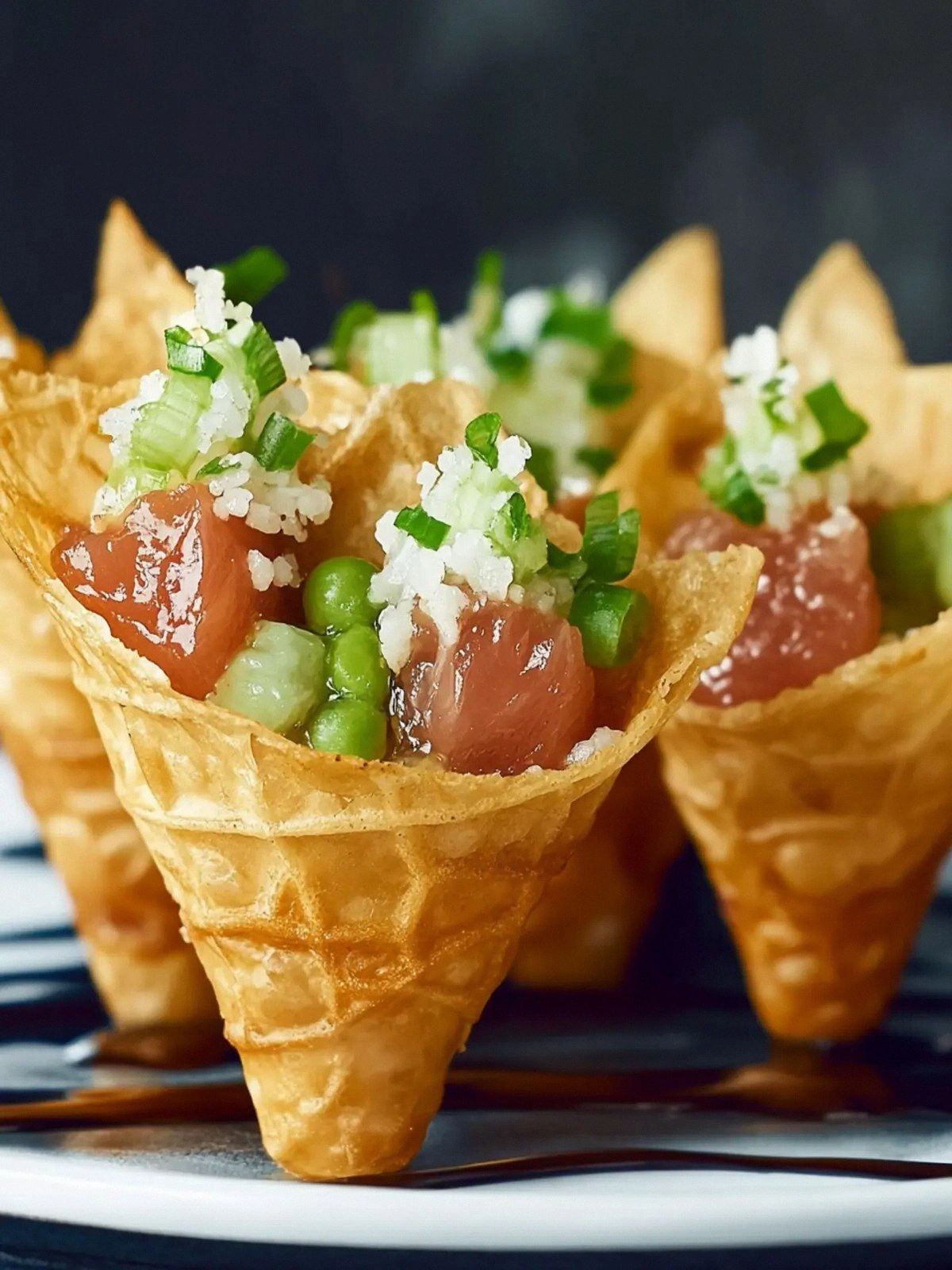
Picture this: a crisp, golden wonton shell that holds a fluffy, vinegary sushi rice base, a silky slice of avocado that melts in your mouth, and a seared tuna steak that still glistens with a pink center. Drizzled with a sauce that is a sweet‑spicy mayo‑ketchup fusion, the final product is a bite‑size masterpiece that feels like a sushi roll on a stick. The first bite is a symphony of textures—crunch, creaminess, and a subtle chew from the rice—followed by a burst of umami that lingers. I dare you to taste this and not go back for seconds; the flavor profile is so addictive that you’ll find yourself reaching for more before you even realize you’ve started again. This is hands down the best version you'll ever make at home.
What makes this dish so unforgettable is the way each element is elevated. The coconut oil gives the wonton a buttery richness that contrasts with the lightness of the rice, while the sriracha and ketchup create a sauce that coats the cone like velvet, leaving a lingering heat that’s perfectly balanced by the lime zest. The tuna is cooked just right—seared on the outside, tender inside—so it adds a savory depth that is almost theatrical. The avocado, sliced thin and placed strategically, brings a silky mouthfeel that softens the crunch. The final sprinkle of furikake adds a burst of umami and a subtle crunch that completes the sensory experience. Every bite is a journey, and I’ve spent hours fine‑tuning the proportions until it feels like a well‑orchestrated performance.
Most recipes get this completely wrong by over‑seasoning the rice, under‑cooking the tuna, or forgetting the crunch that comes from a perfectly toasted wonton. The result? A soggy, bland, and forgettable appetizer. But here, I’ve found the sweet spot where everything clicks. The rice is seasoned just enough to taste like sushi, the wonton is crisp enough to hold its shape, and the sauce is balanced so it doesn’t drown the delicate flavors. The tuna is seared to lock in juices, and the avocado is added at the right moment to keep it fresh. It’s a recipe that works on a first try, and that’s a bold claim I’m proud to make.
If you’ve ever struggled with making sushi at home, you’re not alone—and I’ve got the fix. The key is to keep the rice at a perfect texture: sticky but not mushy, seasoned with vinegar, sugar, and salt, and cooled quickly to lock in flavor. The wonton shells need to be heated just until they’re golden but not over‑baked, so they hold their shape but remain airy inside. The sauce is the game‑changer; a small amount of ketchup adds sweetness, Kewpie mayo adds creaminess, and a dash of sriracha gives a subtle kick. The final touch is a sprinkle of furikake, which adds umami and a hint of crunch. With these tweaks, you’ll be able to create a sushi wonton cone that will have your guests begging for the recipe.
Picture yourself pulling this out of the oven, the whole kitchen smelling incredible, and the table filled with colorful, bite‑size cones that look like a carnival of flavors. The anticipation is palpable; the first cone is a crunchy bite that melts into a creamy, savory center. The crowd goes wild, and I’m left standing in the middle, a grin spreading across my face as I watch them devour each cone. The moment of truth is when someone takes a bite and their eyes widen—this is the moment that makes all the prep worth it. And now, ready for the game‑changer? Let’s walk through every single step—by the end, you’ll wonder how you ever made it any other way.
What Makes This Version Stand Out
- Taste: The sauce is a harmonious blend of sweet, spicy, and tangy, creating a flavor profile that feels both familiar and entirely new. The balance of ketchup, mayo, and sriracha is carefully calibrated so that no single element overpowers the others.
- Texture: The wonton shell provides a satisfying crunch that transitions into a chewy rice center, while the avocado offers a buttery softness that melts in the mouth.
- Visual Appeal: The bright green avocado and the golden crust of the wonton create a vibrant contrast that’s almost too pretty to eat—until you do.
- Uniqueness: Combining sushi rice with wonton shells is a playful twist that turns a classic appetizer into a fun, handheld experience.
- Crowd Reaction: The bite‑size cones are perfect for parties, game nights, or a quick weekday treat; they’re easy to eat and hard to forget.
- Ingredient Quality: Using fresh tuna steak, ripe avocado, and high‑quality Kewpie mayo elevates the dish from good to unforgettable.
- Cooking Method: The technique of forming the rice into a cone before filling ensures every bite is packed with flavor and texture.
- Make‑Ahead Potential: The cones can be assembled ahead of time and kept in the fridge; a quick reheat in a skillet or oven restores the crunch.
Inside the Ingredient List
The Flavor Base
The sushi rice is the heart of this dish; it’s seasoned with rice vinegar, sugar, and a pinch of salt to create that signature tangy, slightly sweet flavor. If you skip the vinegar, the rice will taste bland and lack the bright contrast that makes the dish pop. For a twist, try adding a splash of mirin or a dash of sesame oil for a deeper umami flavor. When selecting rice, look for short‑grain varieties that hold together well and have a sticky texture—this ensures the rice stays in the cone shape without falling apart.
The Texture Crew
Wonton wrappers provide that coveted crunch; they’re thin, buttery, and crisp when toasted just right. If you use a thicker wrapper, the cone will be heavier and less airy. To keep the wrappers from drying out, keep them in an airtight container until you’re ready to use them. The avocado adds a silky, buttery softness that balances the crunch; slicing it thinly allows it to melt into the rice without overpowering the other flavors.
The Unexpected Star
The tuna steak is the star of the show; it’s seared to lock in juices while still maintaining a pink, buttery center. If you cook it too long, it becomes dry and loses that tender texture. For a smoky twist, add a pinch of smoked paprika to the sear. The Kewpie mayonnaise adds a creamy richness that’s more flavorful than regular mayo; it’s a key component that ties the sauce together.
The Final Flourish
The sauce, a blend of ketchup, Kewpie mayo, and sriracha, brings the dish together with a sweet, spicy, and tangy kick. The lime zest adds a bright citrus note that lifts the overall flavor profile. The furikake, a Japanese seasoning blend, adds a subtle umami burst and a satisfying crunch that complements the soft interior. If you’re looking for a dairy‑free version, you can swap Kewpie mayo with a vegan mayo that has a similar flavor profile.
Everything’s prepped? Good. Let’s get into the real action...
The Method — Step by Step
- Start by cooking the sushi rice according to package instructions, then season it with rice vinegar, sugar, and salt while it’s still hot. Let the rice cool to room temperature; this helps it hold its shape when formed into a cone. While the rice cools, preheat a non‑stick skillet over medium heat and add one tablespoon of coconut oil. The oil will give the wonton wrappers a buttery flavor when toasted.
- Take a wonton wrapper and place a spoonful of rice in the center. Fold the wrapper into a triangle, sealing the edges with a bit of water to create a small pocket. Gently press the rice into the pocket until it’s compact but not packed too tight. Repeat until all rice is used, setting the formed cones aside on a plate.
- Heat the skillet again and add the remaining tablespoon of coconut oil. Place the rice‑filled wonton cones in the skillet and cook for 2–3 minutes on each side until they’re golden brown and slightly crispy. The aroma of toasted rice and coconut oil is absolutely intoxicating—watch this part closely; the edges will start pulling away, indicating they’re ready.
- While the cones are cooking, prepare the tuna. Season the tuna steak with salt and pepper, then sear it in a hot pan with a splash of oil for 1–2 minutes on each side, depending on thickness. The goal is a caramelized crust with a juicy pink center. Let the tuna rest for a minute before slicing into thin, bite‑sized strips.
- In a small bowl, whisk together Kewpie mayonnaise, ketchup, sriracha, and lime zest until smooth. Taste the sauce; if it’s too thick, add a splash of water or a drizzle of soy sauce to thin it out. This sauce will coat the cone like velvet, leaving a lingering heat that’s perfectly balanced by the lime zest.
- Place a slice of avocado on top of each toasted wonton cone. The avocado adds a creamy, buttery layer that melts into the rice. Carefully arrange the sliced tuna over the avocado, allowing the juices to mingle with the sauce.
- Drizzle the sauce over the tuna and avocado, then sprinkle a pinch of furikake on top for an umami boost and a subtle crunch. Arrange the cones on a serving platter and serve immediately. The combination of textures and flavors will have your guests reaching for more.
- That’s it — you did it. But hold on, I've got a few more tricks that'll take this to another level. The next section will give you insider tips that ensure your cones are always perfect, no matter the occasion.
Insider Tricks for Flawless Results
The Temperature Rule Nobody Follows
Cooking the wonton at the right temperature is crucial. Too low, and the wrapper will be soggy; too high, and it’ll burn. Aim for a medium‑high heat that gives you a golden brown in 2–3 minutes. I’ve found that preheating the skillet for a minute before adding oil gives a consistent crisp. This trick is often overlooked, but it makes the difference between a crunchy and a limp cone.
Why Your Nose Knows Best
The aroma of toasted rice and coconut oil is a sign that the wonton is perfectly crisp. When the smell hits, it means the oils have caramelized and the rice is firm. If the smell is weak, let the pan heat a bit longer. Your nose is a reliable guide—trust it to tell you when the texture is just right.
The 5-Minute Rest That Changes Everything
After searing the tuna, let it rest for at least five minutes. This allows the juices to redistribute, ensuring each bite stays moist and flavorful. Cutting the tuna immediately after searing will release juices and make the slices watery. Resting is a simple step that dramatically improves the final product.
Balance the Sweetness
The sauce’s sweetness comes from both ketchup and sugar in the rice seasoning. If you prefer a less sweet version, reduce the ketchup by a tablespoon and add a splash of rice vinegar to the sauce. This adjustment keeps the sauce balanced without compromising the overall flavor. Experimenting with the ratios can lead to a personalized version that suits your taste.
Keep the Avocado Fresh
Avocado can brown quickly once sliced. To keep it bright, sprinkle a little lime juice on top before placing it on the cone. The acidity slows down oxidation, keeping the avocado fresh and green. This simple step ensures the visual appeal of the dish remains intact.
Serve Immediately
The cones are best served fresh, while the wonton is still crisp and the avocado is creamy. If you need to keep them for a short while, place the cones on a paper towel to absorb excess moisture and keep them from becoming soggy. The longer you wait, the more the texture will degrade.
Creative Twists and Variations
This recipe is a playground. Here are some of my favorite ways to switch things up:
Spicy Crab Cones
Replace the tuna with fresh crab meat and add a dash of wasabi paste to the sauce. The sweet, delicate crab pairs wonderfully with the spicy kick, creating a new flavor profile that’s still anchored by the rice.
Miso‑Glazed Salmon
Swap the tuna for salmon and brush it with a miso glaze before searing. The umami depth from the miso enhances the rice, while the salmon’s rich texture offers a different mouthfeel.
Vegetarian Delight
Omit the fish entirely and fill the cones with grilled shrimp or marinated tofu. Add a sprinkle of chopped scallions for extra crunch. This version is still protein‑rich and flavorful.
Mediterranean Fusion
Use a feta cheese crumble and a drizzle of tzatziki instead of the mayo‑ketchup sauce. The briny feta and cool yogurt create a Mediterranean twist that’s both refreshing and satisfying.
Sweet Chili Tofu
Marinate tofu cubes in sweet chili sauce and pan‑fry them until crisp. The sweet heat pairs well with the creamy avocado and crunchy wonton, offering a vegetarian option with a kick.
Pesto Power
Replace the sauce with a basil pesto for a herby, nutty flavor. The pesto’s richness complements the rice, while the fresh basil adds a bright aroma.
Storing and Bringing It Back to Life
Fridge Storage
Store the assembled cones in an airtight container for up to 24 hours. Keep them on a paper towel to absorb excess moisture and maintain crispness. When ready to serve, let them sit at room temperature for 5 minutes before eating.
Freezer Friendly
To freeze, wrap each cone individually in plastic wrap and place them in a freezer bag. They’ll keep well for up to 2 weeks. Thaw in the fridge overnight and reheat in a skillet for 2 minutes on each side to restore crunch.
Best Reheating Method
Reheat the cones in a hot skillet with a splash of coconut oil; this restores the crispy texture and warms the filling evenly. Add a tiny splash of water before reheating to create steam that keeps the rice moist. Reheat for 1–2 minutes on each side until the cone is golden and the sauce is warm.