Love this? Pin it for later! 📌
Why This Recipe Works
- One Pot Wonder: Everything cooks in a single Dutch oven, developing layers of flavor while keeping cleanup minimal
- Low and Slow Magic: Patient simmering transforms tough beef into fork-tender morsels while creating an incredibly rich, complex broth
- Winter Vegetable Medley: A carefully balanced mix of root vegetables adds natural sweetness and varied textures to every bite
- Make-Ahead Friendly: This stew actually improves overnight, making it perfect for entertaining or meal prep
- Freezer Hero: Double the batch and freeze half for those nights when you need comfort food with zero effort
- Customizable Comfort: Easily adapt the vegetables and seasonings based on what you have on hand or dietary preferences
- Nutrient Dense: Packed with protein, fiber, and vitamins—this is comfort food that actually nourishes your body
Ingredients You'll Need
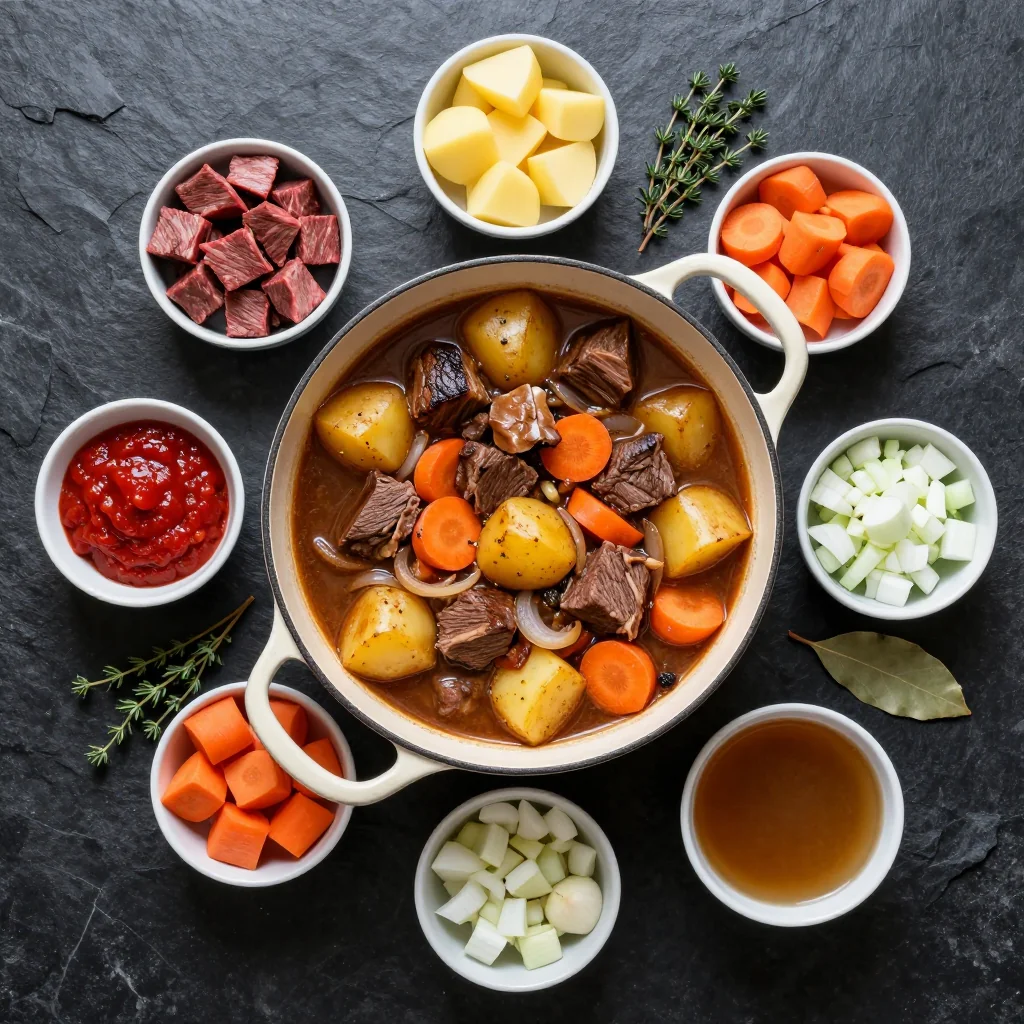
The beauty of this stew lies in its humble ingredients, each playing a crucial role in creating the final symphony of flavors. Let's break down what you'll need and why each component matters:
The Beef
For the most tender, flavorful results, choose chuck roast that weighs about 3 pounds. This well-marbled cut comes from the shoulder area and contains enough connective tissue to break down during long, slow cooking, creating that luxurious mouthfeel we all crave in a good stew. Look for pieces with bright, cherry-red color and white flecks of fat throughout—avoid anything that looks grey or has large, tough pieces of gristle. If you can't find chuck, bottom round or brisket work well too, though they may need an extra 30 minutes of cooking time.
The Root Vegetable Medley
This is where winter's bounty truly shines. I use a combination of Yukon Gold potatoes (their waxy texture holds up beautifully during long cooking), parsnips (which add honeyed sweetness), carrots for color and classic flavor, turnips for a pleasant peppery bite, and celery root for its subtle celery flavor and creamy texture when cooked. If you can't find celery root, substitute with regular celery stalks, but add them only during the last hour of cooking to prevent them from becoming mushy.
The Aromatics
A large yellow onion provides the aromatic base, while four cloves of garlic add depth. The tomato paste is crucial—it adds umami richness and helps thicken the broth slightly. Fresh thyme and bay leaves infuse the stew with herbal notes, while a touch of Worcestershire sauce adds that indefinable savory quality that makes people ask, "What's in this that makes it taste so good?"
The Liquid Gold
Use good quality beef stock—preferably low-sodium so you can control the salt level. Homemade is ideal, but a quality store-bought version works well. The addition of dry red wine (use something you'd actually drink, not cooking wine) adds acidity to balance the richness and helps tenderize the meat. If you prefer not to use wine, substitute with an equal amount of stock plus 2 tablespoons of balsamic vinegar for the acid.
How to Make Cozy One Pot Beef Stew with Potatoes and Winter Root Vegetables
Prepare and Season the Beef
Pat your 3-pound chuck roast dry with paper towels—this is crucial for proper browning. Moisture is the enemy of a good sear. Cut the roast into 1½-inch cubes, keeping them as uniform as possible so they cook evenly. Season generously with 2 teaspoons kosher salt and 1 teaspoon freshly ground black pepper. Toss to coat evenly. Let the beef sit at room temperature while you prep your vegetables; this takes the chill off and promotes better browning.
Build the Foundation with Proper Browning
Heat 2 tablespoons of vegetable oil in a large Dutch oven over medium-high heat until shimmering. Working in batches (don't crowd the pot!), sear the beef on all sides until deeply caramelized, about 3-4 minutes per side. Transfer to a plate. This step builds the foundation of flavor—those brown bits (fond) on the bottom of the pot are liquid gold. Don't rush this process; proper browning develops hundreds of flavor compounds through the Maillard reaction.
Create the Aromatic Base
Reduce heat to medium and add the chopped onion to the pot. Scrape the bottom with a wooden spoon to loosen all those flavorful browned bits. Cook until the onion is softened and translucent, about 5 minutes. Add the minced garlic and cook for another minute until fragrant. Stir in 2 tablespoons of tomato paste and cook for 2-3 minutes, stirring constantly. The tomato paste should darken from bright red to a brick red color—this caramelization removes any raw tomato taste and adds depth.
Deglaze and Build the Broth
Pour in 1 cup of dry red wine, scraping the bottom of the pot to release every last bit of flavor. Let the wine simmer and reduce by half, about 5 minutes. This concentrates the flavors and cooks off the harsh alcohol taste. Return the seared beef (and any accumulated juices) to the pot. Add 4 cups beef stock, 2 bay leaves, 3 sprigs of fresh thyme, 1 tablespoon Worcestershire sauce, and 1 teaspoon salt. The liquid should just cover the meat—add more stock if needed.
The Long, Slow Simmer
Bring the stew to a gentle simmer, then reduce heat to low. Cover with the lid slightly ajar and let it bubble away for 1½ hours. This slow cooking allows the tough connective tissue in the chuck roast to break down into gelatin, creating that silky, spoon-coating texture. Resist the urge to rush this with higher heat—it needs time to work its magic. Stir occasionally and add more stock if the liquid level drops too much.
Add the Root Vegetables
After 1½ hours, when the beef is beginning to feel tender, it's time to add the vegetables. Add the potatoes, parsnips, carrots, turnips, and celery root to the pot. The vegetables need about 45-60 minutes to become tender but not mushy. Push them down into the liquid so they're mostly submerged. Increase the heat slightly to return to a gentle simmer, then cover and continue cooking.
The Final Simmer and Seasoning
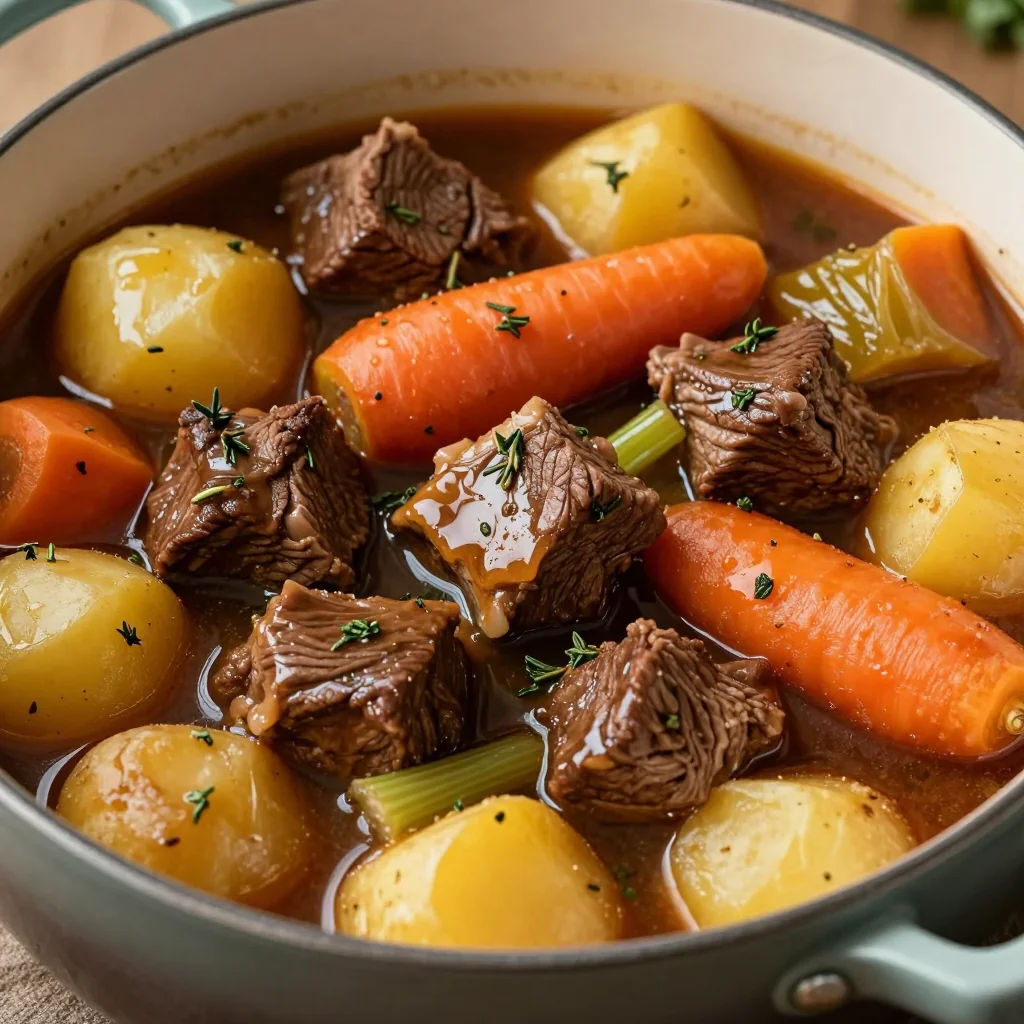
Continue simmering for another 45-60 minutes, until the vegetables are tender and the beef is fork-tender. The stew is done when you can easily pierce a piece of beef with a fork and it gives way with minimal resistance. Remove the bay leaves and thyme stems. Taste and adjust seasoning with salt and freshly ground black pepper. The broth should have thickened slightly and taken on a rich, mahogany color. If it's too thin, simmer uncovered for 10-15 minutes to reduce. If too thick, add a splash of stock.
Rest and Serve
Turn off the heat and let the stew rest for 10-15 minutes. This allows the flavors to meld and the temperature to drop slightly to a comfortable eating level. Ladle into warm bowls and garnish with fresh chopped parsley for a pop of color and freshness. The stew is heavenly on its own, but crusty bread for sopping up every last drop of the glorious broth is highly recommended.
Expert Tips
The Low and Slow Rule
Never let your stew boil vigorously. A gentle, barely-there simmer (you should see just a few bubbles breaking the surface) is key to tender meat and preventing the vegetables from turning to mush. If it's bubbling too enthusiastically, reduce the heat or place a heat diffuser under your pot.
The Fat Factor
If your stew ends up with a layer of fat on top, don't panic! This is flavor. However, if it's excessive, refrigerate the stew overnight. The fat will solidify on top and can be easily removed with a spoon. Let the stew come to room temperature before reheating.
Make-Ahead Magic
This stew tastes even better the next day! Make it entirely, let it cool, then refrigerate. When reheating, add a splash of stock or water as the liquid will have thickened. The flavors meld and deepen overnight, making leftovers something to celebrate rather than settle for.
Freezer Success
This stew freezes beautifully for up to 3 months. Portion into freezer-safe containers, leaving 1 inch of space for expansion. Thaw overnight in the refrigerator, then reheat gently on the stovetop. The potatoes may be slightly softer after freezing, but the flavor remains outstanding.
Uniform Cutting
Cut your vegetables into roughly the same size pieces so they cook evenly. About 1-inch chunks work perfectly—they hold their shape but cook through in the allotted time. If you prefer your vegetables more distinct, add them during the last 45 minutes instead of the full hour.
Thickening Tricks
For a thicker stew, mash a few potato pieces against the side of the pot and stir them in. Or remove 1 cup of vegetables and broth, blend until smooth, then return to the pot. For a quick fix, mix 2 tablespoons flour with 2 tablespoons butter, then whisk into the simmering stew.
Variations to Try
Herb Garden Version
Replace the dried thyme with fresh rosemary and sage for a more rustic, woodsy flavor. Add a Parmesan rind during simmering for extra umami depth. Finish with fresh parsley and a drizzle of good olive oil for brightness.
Smoky and Spicy
Add 2 teaspoons smoked paprika and 1/2 teaspoon chipotle powder for a subtle smokiness. Include a diced poblano pepper with the onions. This variation adds depth without overwhelming heat, perfect for those who like complexity without burn.
Beer Braised
Replace the red wine with a dark beer like Guinness for a deeper, more malty flavor. The beer's natural sugars caramelize beautifully, creating a rich, complex broth with hints of coffee and chocolate notes that complement the beef wonderfully.
International Twists
For an Irish version, add a cup of stout and serve with soda bread. For French-inspired, include pearl onions and mushrooms, finishing with a knob of butter for richness. For Italian-style, add a can of diced tomatoes and serve over creamy polenta.
Storage Tips
Refrigeration Guidelines
Store cooled stew in an airtight container in the refrigerator for up to 4 days. The flavors will continue to develop, making leftovers even more delicious. Always reheat only the portion you plan to serve rather than repeatedly warming the entire batch.
Freezing Instructions
This stew freezes exceptionally well for up to 3 months. Cool completely, then portion into freezer-safe containers or heavy-duty freezer bags. Remove as much air as possible to prevent freezer burn. Label with the date and contents. Thaw overnight in the refrigerator before reheating.
Reheating Methods
Reheat gently on the stovetop over medium-low heat, stirring occasionally and adding stock or water as needed to achieve desired consistency. Microwave reheating works for individual portions—use 50% power and stir every minute. Never reheat more than once.
Frequently Asked Questions
Absolutely! After searing the beef and sautéing the aromatics on the stovetop (steps 1-4), transfer everything to your slow cooker. Add the remaining ingredients except the root vegetables. Cook on LOW for 6-7 hours or HIGH for 3-4 hours, then add the vegetables and continue cooking until tender—about 2 more hours on LOW or 1 hour on HIGH. The result won't be quite as deeply flavored as the stovetop version, but it's still delicious and convenient for busy days.
Celery root (celeriac) adds a subtle celery flavor and creamy texture, but it's not essential. You can substitute with 3-4 celery stalks, chopped, but add them only during the last 45 minutes of cooking to prevent them from becoming stringy and overcooked. Another option is to add 1 teaspoon celery seed with the other seasonings for similar flavor without the texture concerns.
Tough beef usually means it hasn't cooked long enough. Chuck roast needs time for the connective tissue to break down into gelatin—that's what creates the tender, fall-apart texture. If your beef is still tough after the recommended cooking time, simply continue simmering. Check every 30 minutes. The stew is ready when you can easily insert a fork into a piece of beef with minimal resistance. Every piece of meat is different, and sometimes they just need more time.
While this recipe is specifically designed for beef's long cooking time, you can adapt it for chicken. Use bone-in chicken thighs (they stay moist during longer cooking) and reduce the simmering time to 45-60 minutes total. Use chicken stock instead of beef stock, and add the vegetables after the first 30 minutes. The flavor profile will be lighter but still satisfying. White wine works better than red wine with chicken.
The key is timing—add the vegetables during the last 45-60 minutes of cooking. If you're using particularly delicate vegetables or prefer them firmer, add them during the last 30 minutes instead. Cut them into larger pieces (1½ inches) to help them maintain their structure. Waxy potatoes like Yukon Gold hold up better than russets, which tend to fall apart.
Use a dry red wine that you'd actually enjoy drinking—never cooking wine from the grocery store. Cabernet Sauvignon, Merlot, or Pinot Noir all work well. Avoid sweet wines like Port or very expensive bottles (the heat will cook off the nuances). If you don't drink alcohol, substitute with an equal amount of beef stock plus 2 tablespoons of balsamic vinegar for the acidity that wine would provide.
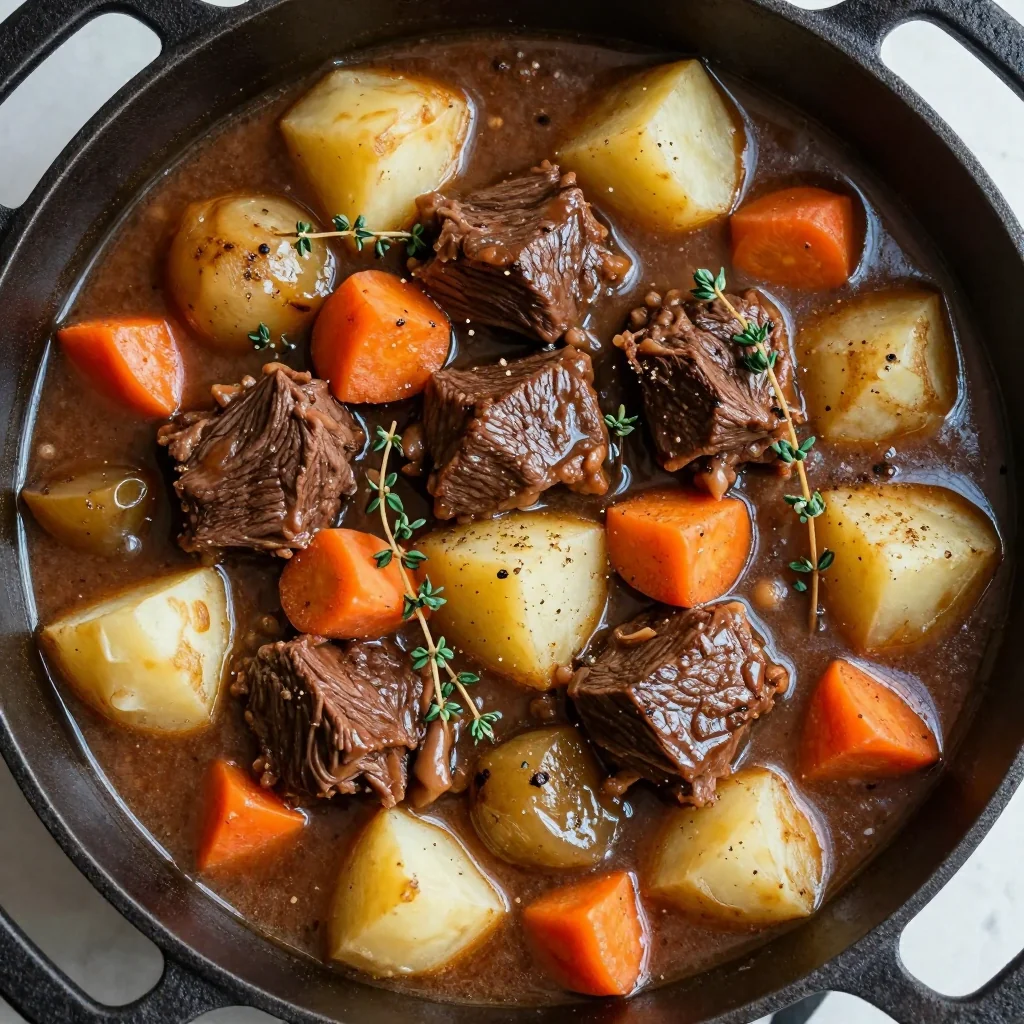
Cozy One Pot Beef Stew with Potatoes and Winter Root Vegetables
Ingredients
Instructions
- Prep: Pat beef dry and season with salt and pepper. Cut into 1½-inch cubes if not pre-cut.
- Brown: Heat oil in Dutch oven over medium-high heat. Sear beef in batches until deeply browned on all sides, 3-4 minutes per side. Transfer to plate.
- Sauté: Reduce heat to medium. Cook onion until softened, scraping up browned bits, about 5 minutes. Add garlic and cook 1 minute. Stir in tomato paste and cook 2-3 minutes.
- Deglaze: Add wine and simmer until reduced by half, about 5 minutes. Return beef and juices to pot.
- Simmer: Add stock, bay leaves, thyme, Worcestershire sauce, and 1 teaspoon salt. Bring to gentle simmer, cover partially, and cook 1½ hours.
- Add vegetables: Stir in potatoes, parsnips, carrots, turnips, and celery root. Simmer until vegetables are tender, 45-60 minutes more.
- Finish: Remove bay leaves and thyme stems. Season with salt and pepper. Let rest 10 minutes before serving. Garnish with parsley.
Recipe Notes
This stew tastes even better the next day! Store leftovers in the refrigerator for up to 4 days or freeze for up to 3 months. Reheat gently on the stovetop, adding stock or water as needed to achieve desired consistency.