Love this? Pin it for later! 📌
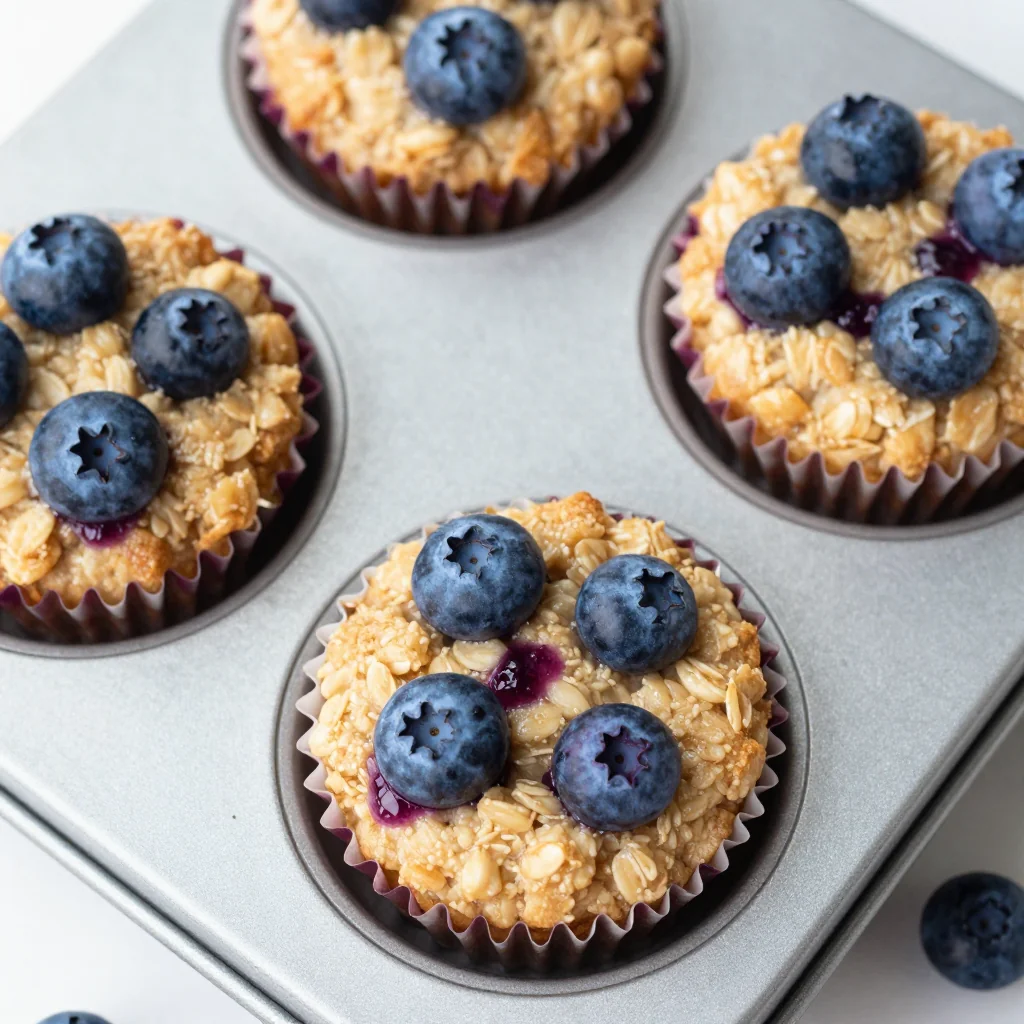
Mornings in our house used to feel like a relay race minus the baton—kids hunting for backpacks, my husband reheating yesterday’s coffee, and me trying to remember if I’d already added sugar to my own cup. Enter these emerald-accented, freezer-friendly oatmeal cups: twelve little muffin-tin miracles that have single-handedly restored peace to our pre-8 a.m. chaos. I started developing the recipe last winter after yet another snow-day breakfast meltdown (literal and emotional). I wanted something that checked every box—whole-grain, naturally sweetened, berry-bursting, toddler-approved, and sturdy enough to survive a deep-freeze. After nine test batches, countless blueberry-stained silicone liners, and one very enthusiastic neighborhood taste-test brunch, the final version was born. Now I triple the recipe on quiet Sunday afternoons, stow the cups in labeled zip-top bags, and smugly press “start” on the microwave while everyone else is still rubbing sleep from their eyes. Whether you’re feeding growing teenagers, meal-prepping for a busy workweek, or simply trying to resist the siren call of the drive-thru, these tender, cinnamon-kissed cups are about to become your breakfast hero.
Why This Recipe Works
- No-fuss freezer storage: Individually wrapped cups reheat like fresh from the oven in 60 seconds flat.
- Whole-food sweetness: Mashed banana and a touch of maple keep added sugar under 5 g per serving.
- Customizable texture: Use quick oats for cake-soft bites or old-fashioned for hearty chew.
- Protein boost: Greek yogurt and eggs deliver 7 g protein per cup—no mid-morning crash.
- Kid-approved flavor: Blueberries burst into jammy pockets that make fruit skeptics convert.
- One-bowl wonder: Less dishes, more sanity—everything stirs together in the same mixing bowl.
Ingredients You'll Need
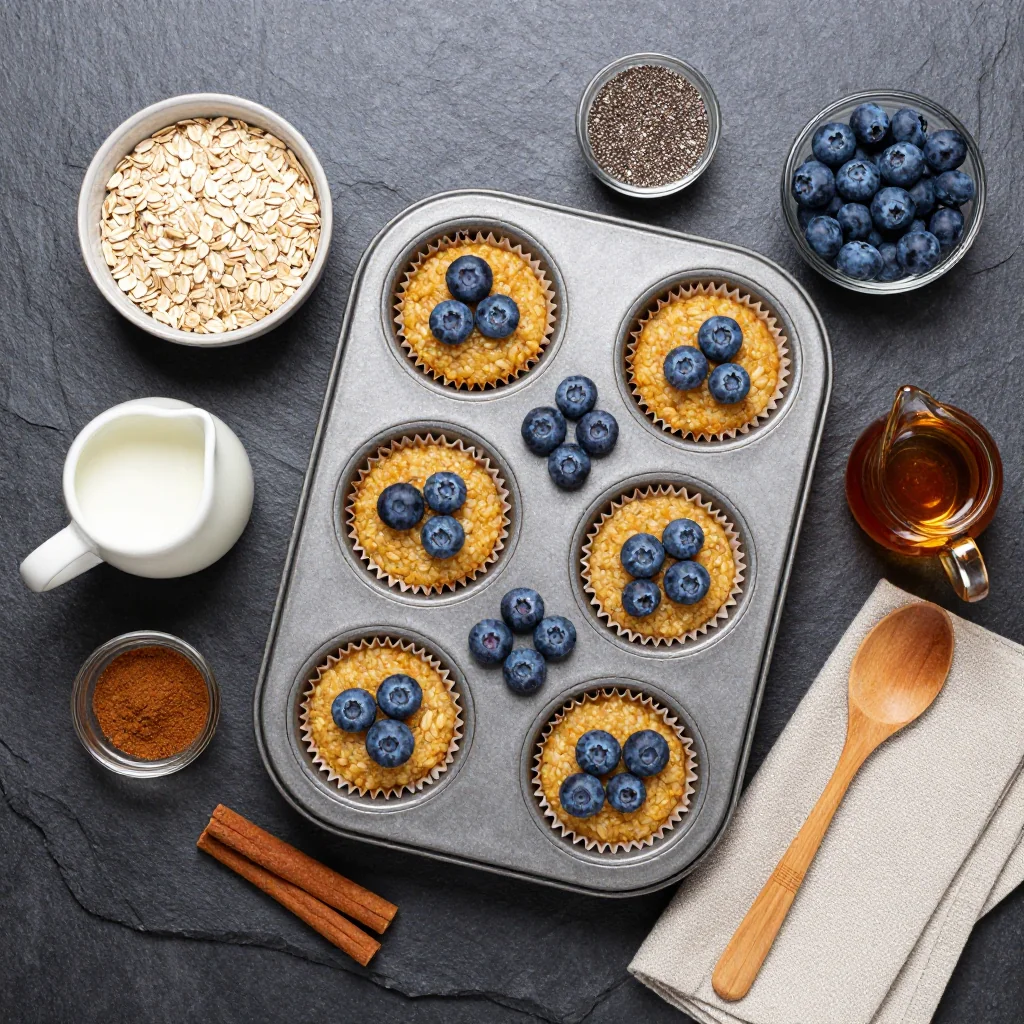
Great oatmeal cups start with great oats. Look for old-fashioned rolled oats labeled “gluten-free” if cross-contamination is a concern; their larger surface area absorbs the wet ingredients without turning gummy. Quick oats work in a pinch but yield a softer, more muffin-like crumb. Either way, buy from a store with high turnover—oats can go rancid quickly in warm bulk bins.
Blueberries are the star, so splurge on plump, indigo jewels whether fresh or frozen. If you’re using frozen berries (my winter go-to), keep them frozen until the moment you fold them in; this prevents the juice from streaking the batter a murky purple. For an antioxidant boost, wild blueberries are smaller and pack twice the phytonutrients of cultivated ones.
Banana does double duty as natural sweetener and binder. The spottier, the better—overripe bananas contain more soluble fiber that mimics the stickiness of extra oil or butter. If your bananas are still yellow, pop them on a foil-lined sheet pan at 300 °F for 15 minutes to accelerate the sugar conversion.
Greek yogurt lends tang and protein. I reach for 2 % because it keeps the cups moist without a fatty mouthfeel. Dairy-free? Swap in an unsweetened coconut or almond yogurt with at least 6 g protein per serving to maintain structure.
Maple syrup rounds out the sweetness with caramel depth. Grade A amber is perfect for baking; avoid pancake syrup imposters made with corn syrup. If you’re watching sugar, replace up to half the syrup with an equal volume of cooled chai tea—it adds spice complexity while shaving off 4 g sugar per batch.
Eggs set the custardy centers. For an egg-free version, whisk 2 Tbsp ground flaxseed with 6 Tbsp water and let stand 5 minutes; the resulting gel binds just as well and adds omega-3s.
How to Make Freezer-Friendly Breakfast Oatmeal Cups with Blueberries
Prep your pan and oven
Preheat oven to 350 °F (177 °C). Generously coat a 12-cup non-stick muffin tin with baking spray or line with silicone liners. Silicone is worth the small investment—frozen oatmeal cups pop out like ice cubes, whereas paper tends to peel off in flecks after thawing. If you only have paper, give each liner a quick mist of spray for insurance.
Combine dry ingredients
In a large bowl, whisk 2 cups old-fashioned oats, 1 tsp baking powder, 1 tsp ground cinnamon, ¼ tsp nutmeg, and ½ tsp salt until evenly dispersed. The baking powder lifts the cups so they don’t resemble hockey pucks; spices bloom in the oven for bakery-level aroma.
Mash the banana
On a plate, thoroughly mash 1 medium banana until smooth—lumps create uneven pockets of moisture. Slide the puree into the bowl with the dry mix but don’t stir yet; coating the banana in dry ingredients prevents it from sinking to the bottom later.
Whisk wet ingredients
In a 2-cup glass measure, combine 2 large eggs, ½ cup 2 % Greek yogurt, ⅓ cup maple syrup, 2 tsp vanilla extract, and 2 Tbsp melted coconut oil. Using the same fork, beat until homogenous. The yogurt’s acidity reacts with baking powder for extra lift, while oil keeps the crumb tender after freezing.
Fold everything together
Pour wet mixture into dry and fold with a silicone spatula just until no dry streaks remain. Over-mixing activates gluten and yields dense, rubbery cups. The batter will be thick—spoonable, not pourable.
Add blueberries last
Gently fold in 1 cup blueberries. If any berries are larger than a dime, halve them so heavy fruit doesn’t sink. Dusting the berries in 1 tsp oat flour (or some of the dry mix) further suspends them throughout the batter.
Portion and top
Divide batter evenly among muffin cups, mounding each nearly full. The absence of gluten means minimal rise, so you can fill higher than typical muffins. Press 2–3 reserved blueberries onto each dome for bakery visual appeal, then sprinkle with a scant ¼ tsp raw sugar per cup for a crackly crust.
Bake to perfection
Bake 22–25 minutes, rotating pan halfway, until edges pull slightly from sides and centers spring back when gently pressed. An inserted toothpick should come out with a few moist crumbs, not wet batter. Cool in pan 5 minutes; residual heat finishes baking without drying edges.
Cool completely before freezing
Transfer cups to a wire rack and cool fully—steam trapped inside packaging creates icy crystals that lead to soggy reheats. Once cool, arrange cups in a single layer on a parchment-lined sheet pan and freeze 2 hours or until rock-solid. This flash-freeze prevents clumping in storage bags.
Package for long-term storage
Transfer frozen cups to labeled gallon zip-top bags, pressing out excess air. Insert a small square of parchment between layers so cups don’t freeze into a solid brick. Store up to 3 months for best flavor, though they remain safe indefinitely at 0 °F.
Expert Tips
Reheat low and slow
Microwave on 60 % power for 45–60 seconds, then let stand 30 seconds. High heat ruptures berry skins, creating messy juice geysers.
Silicone > paper
Silicone liners flex, allowing frozen cups to release instantly. Paper liners cling and tear when thawed quickly.
Bloom your spices
Toast cinnamon and nutmeg in the dry skillet 30 seconds before adding to oats; heat releases aromatic oils for deeper flavor.
Make mini loaves
Divide batter among four 3 × 5-inch mini loaf pans; bake 28 minutes. Slice and freeze for a portable breakfast toast.
Overnight soak option
For steel-cut texture, combine oats with wet ingredients and refrigerate 8 hours. Stir in baking powder just before baking.
Scale by weight
Use a kitchen scale: 160 g oats, 150 g yogurt, 100 g blueberries. Weight eliminates cup-measure variance for consistent batches.
Variations to Try
- Apple-Cinnamon: Swap blueberries for ¾ cup diced Granny Smith and add ½ tsp apple pie spice.
- Tropical Mango-Coconut: Replace banana with equal parts mango puree; fold in ¼ cup unsweetened coconut flakes.
- Peanut Butter-Chocolate Chip: Substitute 3 Tbsp maple syrup with creamy peanut butter; use mini chocolate chips in place of berries.
- Savory Spinach-Feta: Omit maple, add ¼ cup crumbled feta, ½ cup chopped spinach, and pinch of black pepper—perfect for brunch platters.
- Carrot-Cake: Fold in ½ cup finely grated carrot, 2 Tbsp raisins, and ¼ tsp ginger; top with a dollop of cream cheese before serving.
Storage Tips
Once flash-frozen, transfer cups to an airtight container or vacuum-sealed bag. Label with recipe name and date; frozen oatmeal cups taste freshest within 3 months but remain safe well beyond. To reheat from frozen, unwrap and place on a microwave-safe plate. Cover loosely with a damp paper towel to create steam; this keeps edges from turning rubbery. Microwave on 60 % power 60–90 seconds depending on wattage. If you prefer a crisp top, reheat in an air-fryer at 325 °F for 5 minutes. Thawed cups (overnight in fridge) need only 30 seconds on high. For lunchboxes, pack frozen; they’ll thaw by late morning and keep the rest of the meal chilled.
Frequently Asked Questions
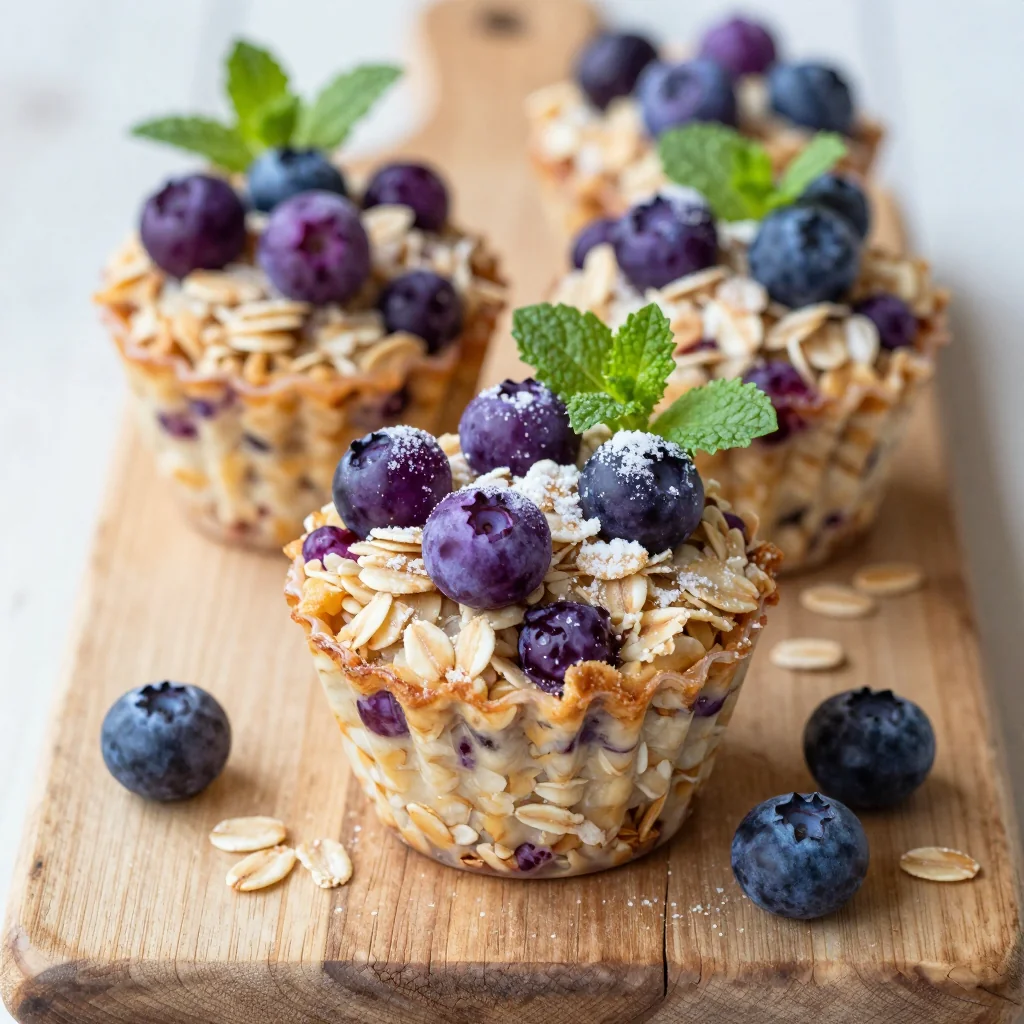
Freezer-Friendly Breakfast Oatmeal Cups with Blueberries
Ingredients
Instructions
- Preheat & prep: Heat oven to 350 °F. Coat 12 muffin cups with baking spray or silicone liners.
- Mix dry: Whisk oats, baking powder, cinnamon, nutmeg, and salt in a large bowl.
- Mash banana: On a plate, mash banana until smooth; add to dry mix.
- Whisk wet: Beat eggs, yogurt, maple, vanilla, and oil until smooth.
- Combine: Fold wet into dry just until moistened.
- Add berries: Gently fold in blueberries.
- Fill & top: Divide batter among cups; press reserved berries on top and sprinkle with sugar.
- Bake: 22–25 min until centers spring back. Cool 5 min, then remove to rack.
- Freeze: Flash-freeze cooled cups 2 hr, then store in airtight bags up to 3 months.
- Reheat: Microwave frozen cup on 60 % power 60 sec or air-fry 325 °F 5 min.
Recipe Notes
For added crunch, stir ¼ cup chopped pecans into batter. To make dairy-free, use coconut yogurt and oil; for egg-free, sub 2 Tbsp flaxseed + 6 Tbsp water.