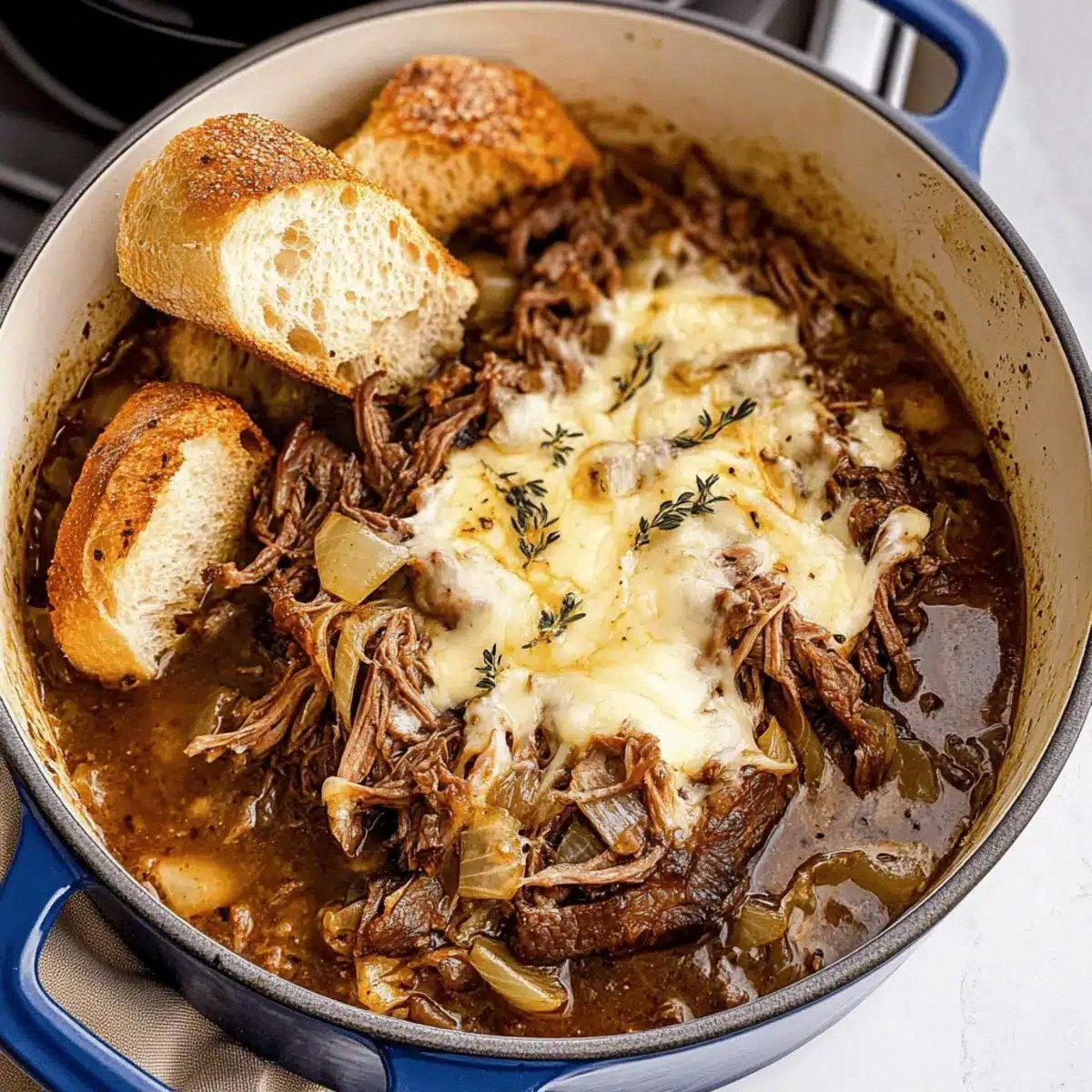
Picture this: it’s a rainy Tuesday night, the kind where the sky looks like someone spilled a bucket of charcoal over the horizon, and you’re stuck in the kitchen wondering why the universe decided to make you hungry. I was in that exact moment, clutching a half‑finished pot roast that tasted like it had been rescued from a culinary graveyard. I’d over‑salted, under‑seared, and the onions were still crying in their own juices like a bad soap opera. I dared a friend to taste it, and he gagged so hard he swore off meat for a week. That disaster sparked a fire under me, and I vowed to reinvent the classic French onion pot roast until it sang like a choir of angels on a Sunday morning.
The kitchen soon smelled like a French bistro after a midnight delivery—sweet caramelized onions mingling with the earthy perfume of beef, a whisper of rosemary, and the subtle bite of dry white wine that made my nostrils dance. I could hear the sizzle of butter and oil flirting in the pan, feel the heat radiating from the stove like a warm hug, and taste the anticipation building with every stir. The moment the broth hit the browned roast, it was like watching a slow‑motion fireworks show: bubbles rising, flavors marrying, and the whole pot turning a deep, inviting amber.
What makes this version stand out? Most recipes either skimp on the onions, leaving you with a watery broth, or drown the meat in sauce that never thickens. I’ve cracked the code by caramelizing the onions for a full 45 minutes, deglazing with a splash of wine that adds depth, and finishing with a crown of toasted baguette and Gruyère that melts into a glossy, cheesy blanket. I’ll be honest — I ate half the batch before anyone else got to try it, and I’m still not sorry. This is hands down the best version you’ll ever make at home, and I dare you to taste it and not go back for seconds.
Now, let’s talk about the secret weapon that most home cooks overlook: a splash of Worcestershire sauce that adds umami richness without overpowering the delicate onion sweetness. It’s a tiny detail that makes the whole dish sing, and you’ll wonder why you ever trusted a recipe that omitted it. Okay, ready for the game‑changer? Let me walk you through every single step — by the end, you’ll wonder how you ever made it any other way.
What Makes This Version Stand Out
- Depth of Flavor: The 45‑minute caramelization of onions creates a natural sweetness that balances the savory beef, while the wine and Worcestershire add layers of complexity.
- Texture Contrast: Tender, melt‑in‑your‑mouth beef meets crunchy, cheese‑laden baguette croutons that stay crisp even after a long simmer.
- Simplicity Meets Sophistication: Only a handful of pantry staples are needed, yet the final result feels like a dish from a Michelin‑starred kitchen.
- Ingredient Quality: Using a well‑marbled chuck roast and fresh herbs ensures every bite is juicy and aromatic.
- Crowd Reaction: Guests often claim it’s “comfort food on steroids,” and the dish disappears faster than you can say “bon appétit.”
- Make‑Ahead Potential: The roast actually improves after a night in the fridge, making it perfect for busy weeknights.
- Cooking Method Mastery: Browning, deglazing, and slow simmering are orchestrated to build flavor without any fancy equipment.
- Versatility: Swap the beef for pork or even a plant‑based alternative and you still get that signature French onion hug.
Inside the Ingredient List
The Flavor Base
Boneless chuck roast (3 pounds): This cut is the hero of our story—its marbling melts into the broth, creating a silken richness. If you skip it for a leaner cut, expect a dryer texture and less flavor depth. Look for a roast with a nice pink streak of fat; that’s the sign of quality. Swap: You can use short ribs for an even richer result, but the cooking time will increase.
Yellow onions (4 medium): Onions are the soul of French onion dishes. Their natural sugars caramelize into a sweet, nutty jam that forms the backbone of the sauce. Cutting them too fine can cause them to burn; keep them in thick slices for even caramelization. Swap: Sweet Vidalia onions give a milder flavor, while red onions add a subtle sharpness.
Fresh garlic (4 cloves): Garlic adds a punchy aromatic note that balances the sweetness of the onions. Smash them before mincing to release more allicin, which deepens the flavor. If you forget, a pinch of garlic powder works in a pinch, but the fresh bite will be missed.
The Texture Crew
Olive oil (2 tablespoons) & Unsalted butter (2 tablespoons): The duo creates a perfect sear on the roast and a glossy base for the onions. Butter adds a nutty richness, while oil raises the smoke point, preventing burning. If you’re dairy‑free, replace butter with a plant‑based margarine, but you’ll lose some of that buttery depth.
All‑purpose flour (2 tablespoons): Flour is the secret thickener that transforms the broth into a velvety sauce. Sprinkle it over the browned meat and onions, then stir to form a roux; this prevents a watery final product. For gluten‑free, use cornstarch mixed with a little cold water, but add it later to avoid lumps.
Dry white wine (1 cup): The wine deglazes the pan, lifting caramelized bits (fond) that are pure flavor gold. Choose a dry, crisp wine like Sauvignon Blanc; avoid sweet varieties that could make the sauce cloying. If you don’t drink alcohol, substitute with chicken broth plus a splash of white wine vinegar.
The Unexpected Star
Worcestershire sauce (2 tablespoons): This adds umami depth and a subtle tang that makes the broth sing. It’s the silent hero that many recipes skip, leading to a flat taste. A splash of soy sauce can mimic its effect, but you’ll lose the nuanced spice profile.
Bay leaves (2 leaves), Fresh rosemary (1 tablespoon), Fresh thyme (1 tablespoon): These herbs infuse the broth with aromatic layers that echo a French countryside garden. Crush the leaves before adding to release their oils. If you’re out of fresh herbs, dried versions work—use half the amount.
The Final Flourish
Gruyère cheese (1 cup): Gruyère melts into a silky, slightly nutty blanket that crowns the dish. Its low moisture content prevents soggy croutons. If unavailable, Swiss cheese or Emmental are solid alternatives.
Sliced baguette (1 loaf): The baguette slices become the crunchy, cheesy croutons that soak up the sauce without disintegrating. Toast them under a broiler until golden, then pile on the cheese. For gluten‑free, use sturdy gluten‑free bread, but toast longer to achieve that crisp texture.
Everything's prepped? Good. Let’s get into the real action...
The Method — Step by Step
Pat the chuck roast dry with paper towels, then season both sides generously with kosher salt and black pepper. The salt draws out moisture, creating a crust that locks in juices. Heat a heavy Dutch oven over medium‑high heat, add olive oil and butter, and wait for the butter to foam. When the butter sizzles, place the roast in the pot and sear for 4‑5 minutes per side until a deep brown crust forms—that sizzle when it hits the pan? Absolute perfection. Transfer the roast to a plate and set aside.
In the same pot, add the sliced onions (no need to rinse them). Reduce heat to medium and let them sweat, stirring occasionally. After 10 minutes, sprinkle a pinch of salt and a dash of baking soda (see Kitchen Hack above) to accelerate caramelization. Keep cooking, stirring every few minutes, until the onions turn a deep, glossy amber—about 45 minutes total. This slow process is the heart of the dish; if the onions burn, the flavor turns bitter, so stay vigilant.
Kitchen Hack: If your onions start to stick, deglaze with a splash of water before they burn—this keeps the caramelization even.Add the minced garlic to the caramelized onions and sauté for 1 minute until fragrant—watch out for any signs of burning, as garlic can turn bitter quickly. Sprinkle the flour over the mixture and stir constantly for 2 minutes to form a roux; this will thicken the broth later. If you see lumps, keep stirring; the goal is a smooth, golden paste.
Deglaze the pot with the cup of dry white wine, scraping the browned bits from the bottom with a wooden spoon. The wine will sizzle and reduce slightly, concentrating its flavor. Let it simmer for 3‑4 minutes until the liquid has reduced by half, creating a glossy base that smells like a vineyard after a rainstorm.
Return the seared roast to the pot, nestling it among the onion‑wine mixture. Pour in the beef broth, then add Worcestershire sauce, bay leaves, rosemary, and thyme. The liquid should come about an inch above the meat; if not, add a splash more broth. Bring everything to a gentle boil, then reduce the heat to low, cover, and let it simmer for 2½‑3 hours. The meat will become so tender that a fork slides in like a knife through butter.
Watch Out: If the broth evaporates too quickly, the roast can dry out. Keep an eye on the liquid level and add a splash of water or broth if it drops too low.Once the roast is fork‑tender, remove it from the pot and set it on a cutting board. Let it rest for 10 minutes before slicing—this redistributes the juices and prevents a dry slice. Meanwhile, skim any excess fat from the surface of the broth with a spoon; a thin layer of fat adds richness, but too much makes the sauce greasy.
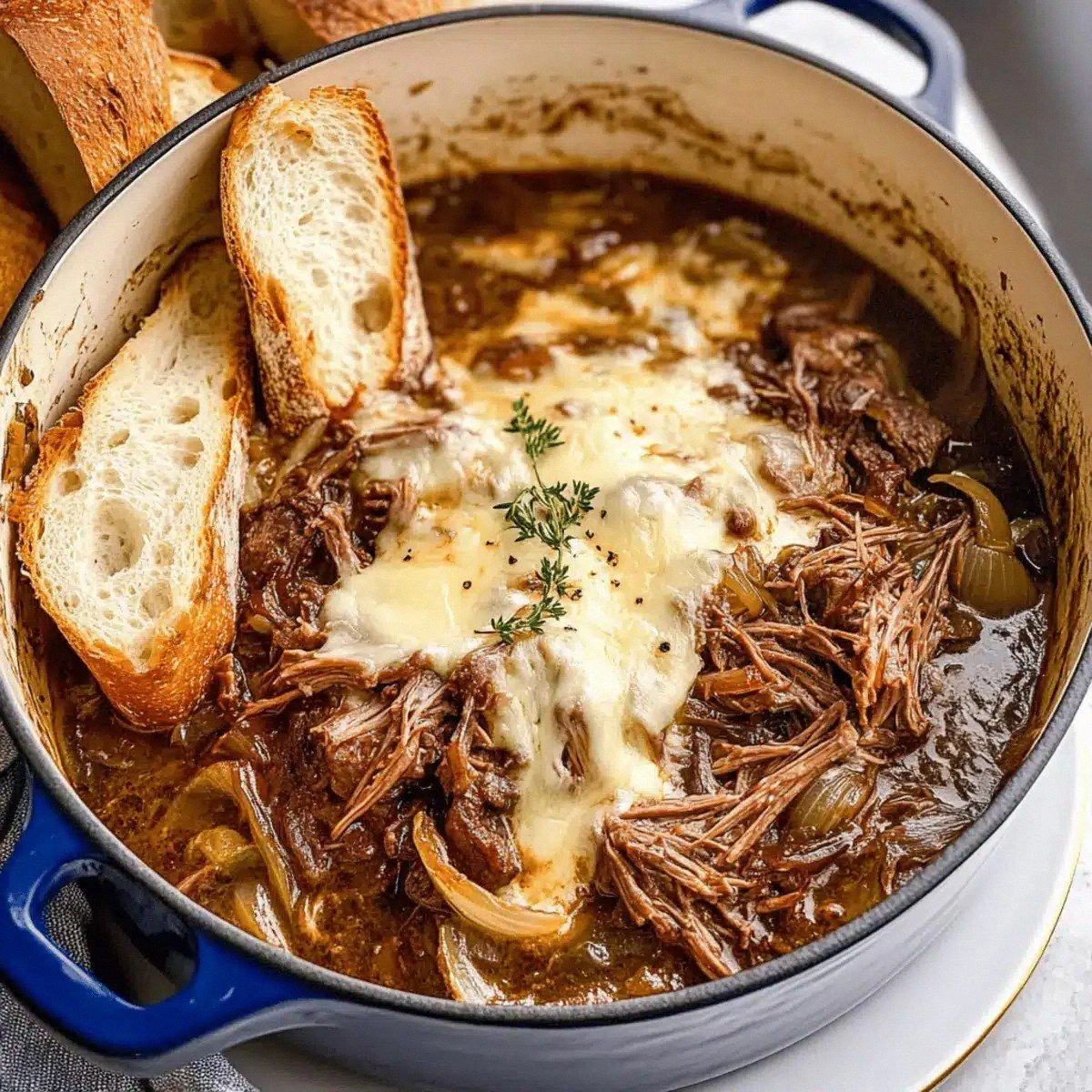
Preheat your oven’s broiler to high. Slice the baguette into 1‑inch thick pieces, arrange them on a baking sheet, and toast under the broiler for 2‑3 minutes per side until golden. Remove the toast, sprinkle each slice generously with shredded Gruyère, and return to the broiler until the cheese bubbles and turns a beautiful caramel color. This step is pure magic—the cheese melts into a glossy, slightly crispy crown that will sit atop the roast.
Kitchen Hack: For an even melt, cover the cheese‑topped baguette with foil for the first minute, then uncover to brown.Slice the rested roast against the grain into ½‑inch thick pieces and arrange them on a large serving platter. Ladle the rich onion‑broth over the meat, letting it soak into every crevice. Crown the roast with the cheese‑laden baguette slices, arranging them like a regal crown. Let the platter sit for a few minutes so the cheese melds with the broth—this is the moment of truth.
Serve immediately, encouraging guests to dig in with a hearty spoon. Pair with a crisp green salad and a glass of the same white wine you used in the pot for a harmonious dining experience. Picture yourself pulling this out of the oven, the whole kitchen smelling incredible, and everyone’s eyes widening in anticipation—that’s the payoff.
That's it — you did it. But hold on, I've got a few more tricks that'll take this to another level...
Insider Tricks for Flawless Results
The Temperature Rule Nobody Follows
Never rush the searing step. A properly hot pan (around 400°F) creates a crust that locks in moisture. If the pan isn’t hot enough, the roast will steam rather than sear, resulting in a pale, flavor‑less exterior. I once tried searing on medium heat and ended up with a soggy roast that tasted like boiled beef. Trust the heat, and you’ll get that caramelized crust that makes the dish unforgettable.
Why Your Nose Knows Best
Smell is your secret gauge. When the onions start to caramelize, they’ll emit a sweet, nutty aroma that signals they’re nearing perfection. If you notice a sharp, burnt scent, lower the heat immediately. Your nose can detect subtle changes long before your eyes can, so keep it close and let it guide you.
The 5‑Minute Rest That Changes Everything
After simmering, let the roast rest uncovered for at least five minutes. This short pause lets the fibers re‑absorb the juices, preventing a dry slice. Skipping this rest is the most common mistake I see—people cut straight into the meat and end up with a dry, disappointing bite. Trust me, those five minutes are worth the wait.
Layered Flavor Boost
For an extra depth, stir in a tablespoon of Dijon mustard right before serving. The mustard adds a subtle tang that brightens the rich broth without overwhelming the onion sweetness. I tried this once for a dinner party, and the guests claimed it was the “secret ingredient” they couldn’t identify.
Freezing Without Losing Texture
If you plan to freeze leftovers, separate the broth from the croutons. Freeze the broth in airtight containers, and keep the baguette slices in a zip‑top bag. When reheating, re‑heat the broth gently on the stove, then toast fresh baguette slices and melt cheese anew. This preserves the crispness of the croutons, which would otherwise become soggy.
Creative Twists and Variations
This recipe is a playground. Here are some of my favorite ways to switch things up:
Beer‑Infused Roast
Replace the white wine with a robust amber ale. The maltiness adds a caramel undertone that complements the onions beautifully. This version pairs well with sharp cheddar instead of Gruyère for a bold flavor punch.
Spicy Kick
Add a teaspoon of smoked paprika and a pinch of cayenne when you sprinkle the flour. The heat melds with the sweet onions, creating a subtle warmth that’s perfect for cold evenings. Serve with a dollop of sour cream to balance the spice.
Herb‑Heavy Variation
Swap rosemary and thyme for fresh sage and tarragon. Sage brings an earthy, almost piney note, while tarragon adds a hint of anise. This herb combo works especially well if you’re serving the roast with roasted root vegetables.
Vegetarian “Pot Roast”
Use a large cauliflower head or a firm plant‑based meat substitute in place of the chuck roast. Follow the same searing and simmering steps; the cauliflower absorbs the broth like a sponge, delivering a satisfying bite. Top with the same Gruyère‑laden baguette for that cheesy finish.
Cheese Swap
Try a blend of Gruyère and aged Comté for a nuttier, more complex melt. The combination creates a deeper, caramelized cheese crust that’s even more addictive. If you love blue cheese, crumble a small amount over the top just before serving for a tangy contrast.
Storing and Bringing It Back to Life
Fridge Storage
Allow the roast to cool to room temperature (no more than two hours), then transfer it to an airtight container with the broth. It will keep for up to four days. When reheating, add a splash of water or broth to the pot to restore moisture, and gently simmer until heated through.
Freezer Friendly
Separate the broth from the croutons before freezing. Portion the broth into freezer‑safe bags or containers, leaving a little headspace for expansion. The roast itself can be frozen in the same container. It will retain optimal flavor for up to three months. Thaw overnight in the refrigerator, then reheat as described above.
Best Reheating Method
Reheat the broth on the stovetop over low heat, stirring occasionally. Add a tiny splash of water (about a tablespoon per cup of broth) to steam the meat back to tenderness. Meanwhile, toast fresh baguette slices and melt cheese under the broiler just before serving. This method preserves the texture of both the meat and the croutons.