You think you’ve seen every shrimp dish that can make your taste buds dance, but I’m about to flip the script. Picture this: a sizzling pan, the aroma of garlic and butter, and the unmistakable pop of shrimp as it meets the heat. That pop is the first cue that the rest of the dish is about to hit the high notes—luscious lemon, creamy Arborio, and that bright, green pop of fresh asparagus. If you’re still holding that “shrimp is just shrimp” mindset, let’s rewrite that narrative together.
I was in the middle of a dinner party, the kitchen a flurry of pans and a frantic timer, when I realized the shrimp had turned from pink to a sad, overcooked gray. I laughed, grabbed a lemon, and decided to turn that disaster into a triumph. The result? A dish that sings with citrus brightness, buttery richness, and a risotto texture that feels like velvet against the tongue. That moment when the lemon zest hits the pan and the kitchen fills with a citrus perfume was a revelation—proof that the right technique can rescue even the most stubborn shrimp.
Why does this version feel like the “best of the best” compared to every other shrimp risotto you’ve tried? First, the sauce is a silky, buttery embrace that coats each grain of rice and every shrimp. Second, the lemon isn’t just a garnish; it’s the backbone of the flavor profile, providing a bright, clean finish that cuts through the richness. Third, the asparagus adds a fresh, slightly crunchy contrast that keeps the dish from feeling heavy. And finally, the single‑pan approach keeps cleanup to a minimum while letting flavors develop in harmony—no need for extra pots or pans. This is hands down the best version you’ll ever make at home.
Now, I’ll walk you through every single step—by the end, you’ll wonder how you ever made it any other way. I dare you to taste this and not go back for seconds. The secret? A splash of dry white wine that brings a subtle acidity, and a final flourish of Parmesan that gives the dish that glossy, decadent finish. Ready to see how it all comes together? Let’s dive in.
What Makes This Version Stand Out
- Taste: The lemon’s brightness cuts through the buttery richness, creating a balanced flavor that feels both indulgent and refreshing. The final Parmesan swirl adds a salty, nutty finish that lingers on the palate.
- Texture: Arborio rice delivers that coveted creamy consistency without being mushy, while the shrimp remains tender and the asparagus retains a slight snap.
- Simplicity: A single‑pan method means fewer dishes to wash and a streamlined cooking process that even novice cooks can master.
- Uniqueness: The use of dry white wine as a cooking liquid adds depth, and the final lemon zest garnish gives the dish a fresh, almost citrusy perfume.
- Crowd Reaction: Guests often comment on how restaurant‑quality the dish feels, and they ask for the recipe after every meal.
- Ingredient Quality: Fresh, high‑quality shrimp and asparagus are essential; the better the produce, the more vibrant the final dish.
- Cooking Method: The stepwise addition of liquid to the rice, combined with the sautéing of shrimp, ensures even cooking and optimal flavor extraction.
- Make‑ahead Potential: The risotto can be prepared ahead and reheated with a splash of water, preserving its creamy texture.
Alright, let's break down exactly what goes into this masterpiece…
Inside the Ingredient List
The Flavor Base
The foundation of any risotto is its aromatics. A medium onion finely diced and three cloves of minced garlic sautéed in olive oil and butter release a sweet, savory undertone that grounds the dish. The onion’s natural sugars caramelize just enough to add depth, while the garlic provides a pungent punch. If you skip the onion, the dish will feel flat and lack the subtle sweetness that balances the lemony brightness.
The Texture Crew
Arborio rice is the star of the show. Its high starch content creates a creamy sauce as the rice cooks, yet the grains remain distinct, giving the dish a luxurious mouthfeel. The 6 cups of chicken stock, combined with 0.5 cups of dry white cooking liquid, provide the liquid base that the rice absorbs. A splash of wine adds acidity and complexity. If you use low‑fat stock, the risotto will be less rich; stick with a full‑fat version for the best texture.
The Unexpected Star
Fresh asparagus isn’t just a garnish; it adds a bright, slightly bitter note that contrasts the buttery sauce. The asparagus should be trimmed and cut into 1‑inch pieces to ensure even cooking. If you prefer a different vegetable, try zucchini or bell peppers, but remember they will change the flavor profile.
The Final Flourish
Four tablespoons of butter, two tablespoons of olive oil, and 0.75 cups of freshly grated Parmesan cheese create a silky, decadent sauce that coats the rice and shrimp. The 2 lemons—juiced and zested—provide the dish’s signature citrus lift. Fresh parsley adds a green pop of color and a subtle herbal note. Salt and black pepper are essential for seasoning, but use them sparingly to let the flavors shine.
Everything’s prepped? Good. Let’s get into the real action…
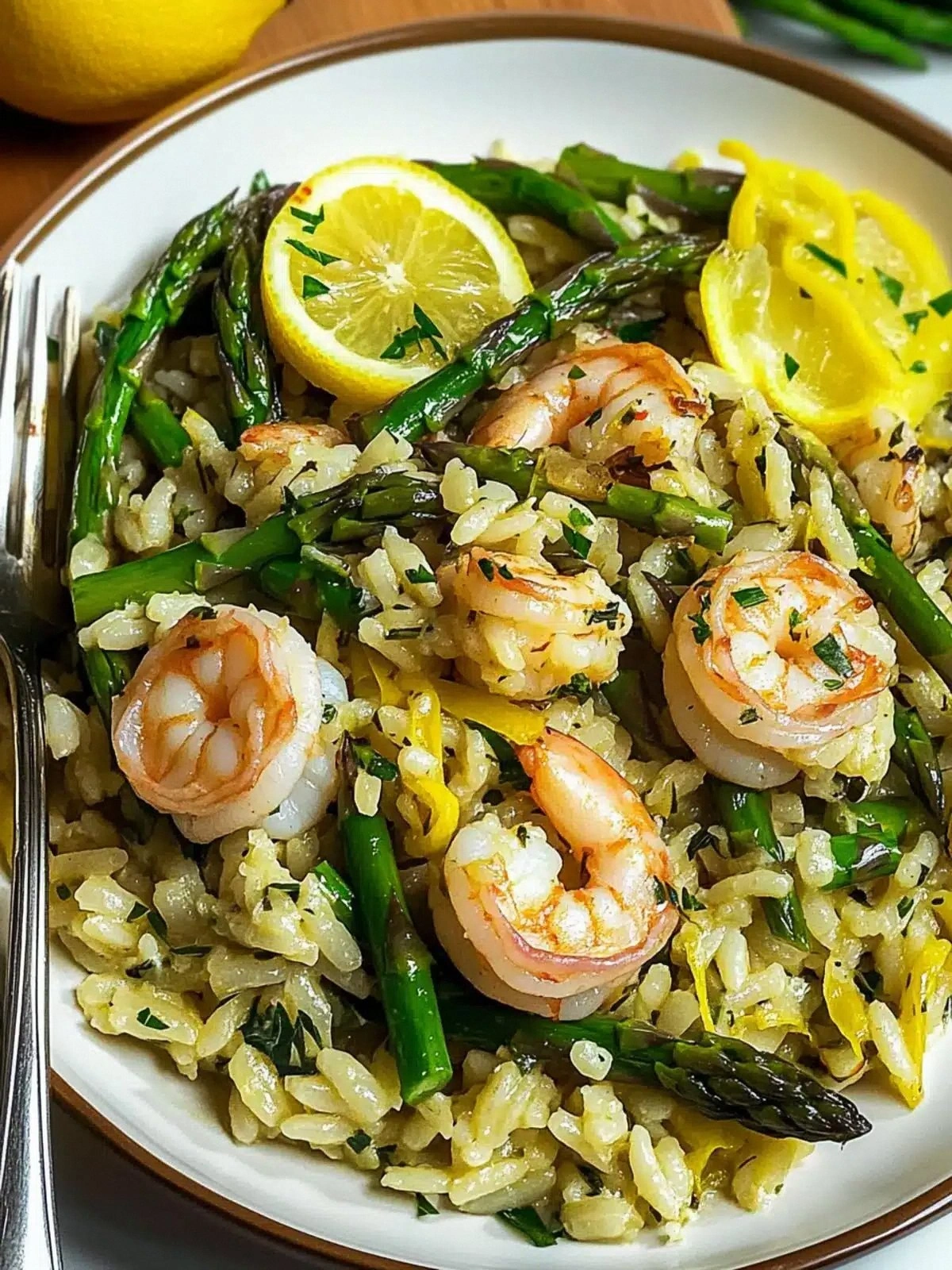
The Method — Step by Step
- Heat the olive oil and two tablespoons of butter in a large, heavy‑bottomed skillet over medium heat. Add the diced onion and cook until translucent, about 5 minutes, stirring frequently to avoid burning. The onions should be soft and slightly golden, not browned.
- Stir in the minced garlic and cook for 30 seconds until fragrant. The garlic should release a sweet, aromatic scent without turning dark. This is the moment of truth—if the garlic burns, the entire dish will be ruined.
- Add the Arborio rice, tossing to coat each grain in the butter and oil mixture. The rice should toast slightly, developing a nutty aroma. This step builds the foundation for the creamy sauce.
- Pour in the dry white cooking liquid and let it simmer until the liquid is mostly absorbed, stirring constantly. The liquid should reduce to a small pool, allowing the rice to start softening.
- Begin adding the chicken stock one ladle at a time, waiting until each addition is mostly absorbed before adding the next. This gradual process ensures the rice cooks evenly and releases its starches.
- While the rice is cooking, heat a separate skillet over medium‑high heat and add the remaining tablespoon of butter. Add the shrimp, seasoned with salt and pepper, and cook for 2 minutes per side until pink and opaque. The shrimp should be juicy, not rubbery.
- When the rice reaches al dente consistency, fold in the sautéed shrimp, asparagus, lemon zest, lemon juice, and Parmesan cheese. Stir until the cheese melts and the mixture is silky.
- Finish the dish with a drizzle of olive oil, a sprinkle of fresh parsley, and an extra pinch of salt if needed. Taste and adjust seasoning. Serve immediately, letting the steam carry the aroma to your guests.
That’s it— you did it. But hold on, I’ve got a few more tricks that will take this to another level…
Insider Tricks for Flawless Results
The Temperature Rule Nobody Follows
Keep the heat at medium throughout the risotto process. High heat can cause the liquid to evaporate too quickly, leading to uneven cooking. If the pan gets too hot, the rice will scorch, ruining the silky texture.
Why Your Nose Knows Best
Smell the risotto as it cooks; it should emit a warm, buttery aroma with a hint of citrus. If the aroma feels flat, add a splash more lemon juice or a pinch of salt to lift the flavors.
The 5‑Minute Rest That Changes Everything
After cooking, let the risotto rest off‑heat for 5 minutes before serving. This allows the rice to finish absorbing moisture and the flavors to meld. It also prevents the dish from becoming too thick.
Use Fresh Shrimp, Not Frozen
Fresh shrimp retains its natural juices and texture better than frozen ones. If you must use frozen, thaw them fully and pat dry to avoid excess water that can dilute the sauce.
Parmesan Matters
Choose a high‑quality, freshly grated Parmesan. Pre‑grated cheese often contains additives that hinder melting. Grating your own ensures a smooth, flavorful sauce.
Creative Twists and Variations
This recipe is a playground. Here are some of my favorite ways to switch things up:
Seafood Medley
Swap half the shrimp for scallops or mussels. The sweet, briny flavor of mussels complements the lemony risotto, while scallops add a buttery texture. This version is perfect for a fancy dinner.
Vegan Version
Omit the shrimp and use a plant‑based protein like marinated tofu. Replace the butter with coconut oil and use vegetable stock. The lemon and Parmesan can be substituted with nutritional yeast for a cheesy flavor.
Herb‑Infused Risotto
Add a handful of fresh basil or mint during the final stir. The herbs bring a bright, aromatic layer that pairs wonderfully with the citrus.
Spicy Kick
Incorporate a pinch of red pepper flakes or a dash of hot sauce when sautéing the onions. The heat will contrast the lemon’s brightness and add a satisfying bite.
Smoky Flavor
Use smoked paprika in the onion stage. The smoky undertone will deepen the dish’s complexity, making it feel like a night‑time feast.
Storing and Bringing It Back to Life
Fridge Storage
Store leftovers in an airtight container for up to 3 days in the refrigerator. Reheat gently over low heat, stirring frequently, and add a splash of water or stock to restore creaminess.
Freezer Friendly
Freeze portions in freezer‑safe containers for up to 2 months. Thaw overnight in the refrigerator before reheating. Add a little extra liquid to compensate for moisture loss.
Best Reheating Method
Reheat on the stovetop over low heat, adding a tablespoon of water or stock per cup of risotto. Stir until the mixture is hot and silky again. A quick microwave reheat works if you’re in a hurry, but the stovetop preserves texture best.
Final Thoughts: After you’ve mastered this risotto, you’ll find yourself reaching for the pan whenever you’re craving something comforting yet sophisticated. The combination of buttery shrimp, bright lemon, and silky rice creates a dish that feels both indulgent and wholesome. I’ve had guests come back asking for the recipe multiple times, and I can’t help but grin when I see the satisfied smiles. So go ahead—treat yourself and your loved ones to this culinary masterpiece. The kitchen will thank you, and the conversation will flow as smoothly as the sauce.