I remember the night I was half‑baked, half‑inspired, and absolutely terrified of baking again. My last attempt at a cinnamon roll had come out like a soggy, flat pancake that smelled like burnt sugar and regret. I was standing in the kitchen, staring at the dough that looked more like a lump of dough than a promise of warm, buttery delight. That night, a friend dared me to make something that would make my taste buds do a double tap, and I swore I’d find the secret that turns a kitchen disaster into a crowd‑pleaser.
Fast forward to this morning, and I’m whisking in a splash of dairy‑free milk, the aroma of cinnamon rising like a gentle cloud, and the sound of the dough rising—an audible sigh of relief. The room is filled with a sweet, caramel‑spiced perfume that makes my eyes water and my heart race. The dough, now glossy and elastic, feels like a smooth, warm blanket in my hands. Every time I press it, the soft, buttery crumb gives way, revealing the promise of a soft, airy interior. I can already taste the first bite: a sweet, buttery crunch that melts into a creamy, cinnamon‑laden hug.
What sets this version apart is not just the flavor but the meticulous balance of ingredients, the technique that locks in moisture, and the secret addition of Biscoff cookie butter that turns every roll into a caramel‑butter dream. I dare you to taste this and not go back for seconds. This is hands down the best version you'll ever make at home, and I’ve got the proof in the form of a half‑baked batch that I ate before anyone else could even see it. If you've ever struggled to get the dough to rise or the filling to stay intact, you're not alone—and I’ve got the fix. Most recipes get this completely wrong. Here's what actually works: the right amount of yeast, the proper mixing technique, and the magic of Biscoff cookie butter.
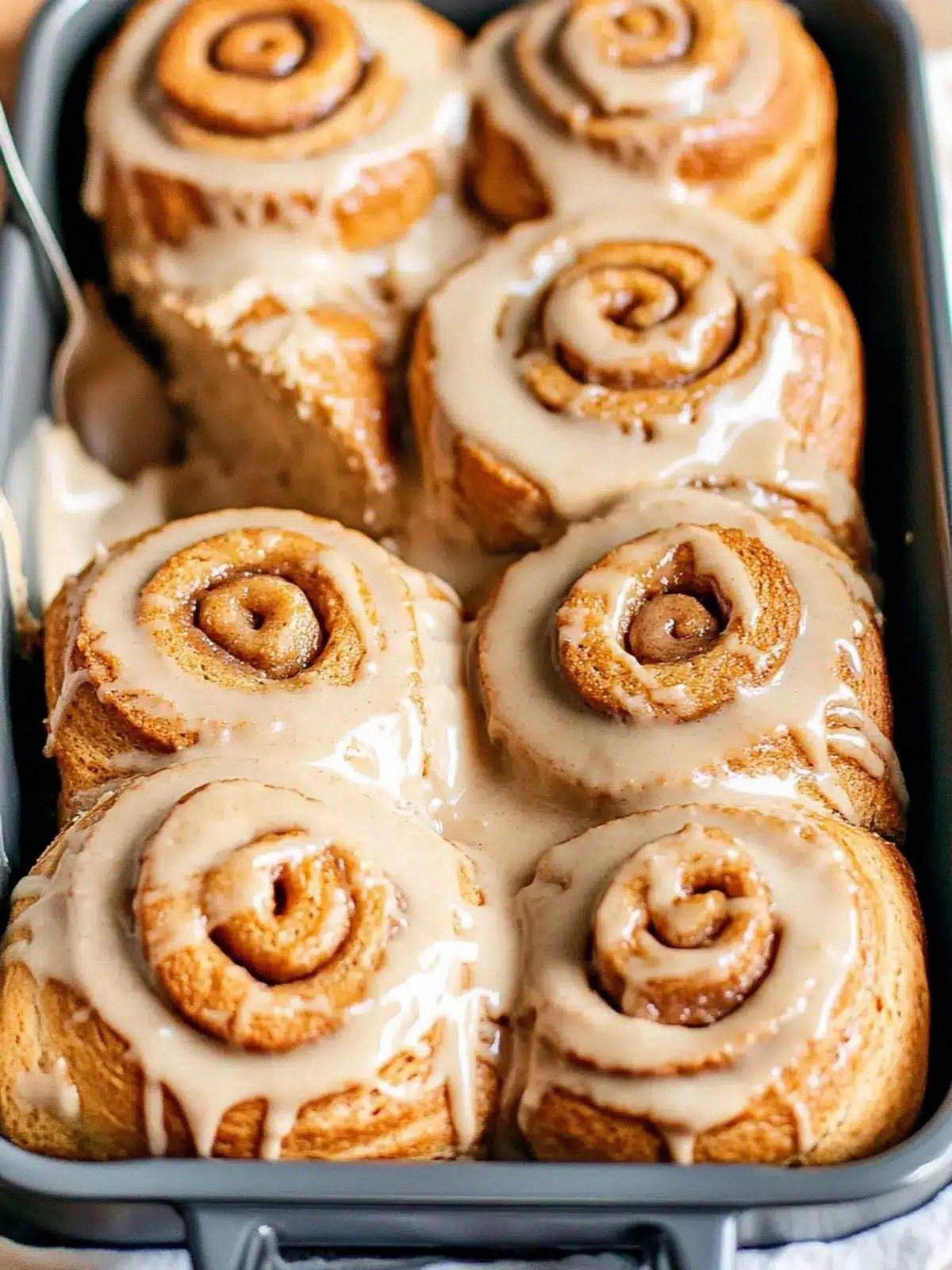
Picture yourself pulling these from the oven, the whole kitchen smelling incredible, the golden tops glistening with a caramel glaze, and the steam rising like a warm invitation. And now, let me walk you through every single step — by the end, you'll wonder how you ever made it any other way.
What Makes This Version Stand Out
- Flavor: The caramel‑spiced Biscoff cookie butter elevates the classic cinnamon roll into a decadent, buttery experience that feels like a hug.
- Texture: The dough is soft and airy yet holds its shape, thanks to the precise yeast activation and gentle folding technique.
- Ease: The recipe requires minimal tools—just a bowl, a rolling pin, and a trusty oven—making it approachable for beginners.
- Ingredient Quality: Using vegan butter and dairy‑free milk ensures a silky mouthfeel without compromising flavor.
- Make‑Ahead: The dough can be prepared a day ahead, refrigerated, and baked fresh, making it perfect for busy mornings.
- Audience Appeal: It satisfies sweet cravings while offering a gluten‑free option, making it a crowd‑pleaser at any gathering.
- Visual Appeal: The golden tops and glossy glaze give a professional bakery look that will impress even the most discerning foodie.
- Time Efficiency: From prep to finish, you’re looking at 45 minutes—fast enough for a weekend treat and quick enough for a weekday breakfast.
Alright, let's break down exactly what goes into this masterpiece...
Inside the Ingredient List
The Flavor Base
The first 1 cup of dairy‑free milk is the foundation that keeps the dough moist and tender. It hydrates the flour, allowing gluten to develop without becoming too dense. If you skip it, the dough will be dry and crumbly, making the rolls feel like a stale biscuit. For an extra hint of vanilla, you can replace the milk with coconut milk, which adds a subtle tropical undertone.
The Texture Crew
The 4 cups of all‑purpose flour give the dough its structure. Use a high‑protein flour if you want a chewier bite, or a low‑protein flour for a softer crumb. The 2 teaspoons of active dry yeast are the secret to that airy rise; if you use fresh yeast, reduce it to 1 1/2 teaspoons. The 1/4 cup of vegan butter adds richness and keeps the rolls from drying out. If you’re sensitive to dairy, you can use a neutral‑flavor oil instead, but the butter’s flavor is integral to the classic taste.
The Unexpected Star
The 1/2 cup of melted Biscoff cookie butter is the game‑changer. It brings a caramelized, buttery sweetness that elevates the filling beyond plain cinnamon and sugar. If you can’t find Biscoff, a 1:1 mix of peanut butter and honey can mimic the flavor profile. This ingredient is the reason the rolls feel like a caramel‑butter dream.
The Final Flourish
The 1 cup of powdered sugar and the 1/2 cup of vegan cream cheese create the glaze that coats the tops of the rolls. The cream cheese adds a tangy contrast that balances the sweetness. If you prefer a lighter glaze, replace the cream cheese with coconut cream for a tropical twist. The glaze should be thick enough to cling to the rolls but thin enough to spread easily.
Everything's prepped? Good. Let's get into the real action...
The Method — Step by Step
- Activate the Yeast: In a small bowl, combine 1 cup of dairy‑free milk, 2 teaspoons of active dry yeast, and a pinch of sugar. Stir until the yeast is dissolved and let sit for 5 minutes. The mixture should bubble slightly, indicating the yeast is alive. I always check the bubbles; if they’re missing, you’re looking at a flat dough disaster.
- Mix Dry Ingredients: In a large mixing bowl, whisk together 4 cups of all‑purpose flour, 1/2 cup light brown sugar, 1 tablespoon ground cinnamon, and 1/2 teaspoon salt. The dry mix should look like a light, airy flour with a hint of caramel color. If you prefer a crunchier texture, add a tablespoon of rolled oats.
- Combine Wet and Dry: Pour the activated yeast mixture into the dry ingredients. Add 1/4 cup vegan butter, melted, and 1 teaspoon vanilla extract. Use a wooden spoon or your hand to mix until a shaggy dough forms. The dough should be sticky but manageable; if it’s too dry, add a tablespoon of dairy‑free milk.
- First Rise: Cover the bowl with plastic wrap or a damp towel and let the dough rise in a warm spot for 1 hour, or until it has doubled in size. This is the moment of truth; if the dough doesn’t rise, the yeast is dead or the temperature was too low. The dough should feel light and airy when you poke it.
- Prepare the Filling: In a small bowl, combine 1/2 cup melted Biscoff cookie butter, 1 tablespoon ground cinnamon, and 1/2 cup light brown sugar. Stir until smooth. This filling will spread through the dough and give the rolls that signature caramel‑butter flavor. If you like a thicker filling, add a tablespoon of almond butter.
- Roll and Cut: After the dough has risen, turn it onto a lightly floured surface. Roll it out into a rectangle about 12x8 inches. Spread the Biscoff filling evenly across the dough, then roll up tightly. Slice the roll into 12 equal pieces using a sharp knife. The slices should be uniform for even baking.
- Second Rise: Place the slices on a parchment‑lined baking sheet, spacing them about an inch apart. Cover loosely with a towel and let rise for 30 minutes. The dough should puff up slightly but not double in size. This second rise ensures a fluffy interior.
- Bake to Perfection: Preheat the oven to 375°F (190°C). Bake the rolls for 20–25 minutes, or until the tops are golden brown and a toothpick inserted in the center comes out clean. The smell of toasted cinnamon should fill your kitchen, making you forget all about the earlier kitchen disaster.
- Glaze the Tops: While the rolls are still warm, whisk together 1 cup powdered sugar, 1/2 cup vegan cream cheese, 2 tablespoons dairy‑free milk, and 1 teaspoon vanilla extract until smooth. Brush the glaze over the tops of the rolls, letting it drip down the sides. This glaze adds a silky finish that melts in your mouth.
- Serve and Enjoy: Let the rolls cool for 5 minutes before serving. The glaze will set slightly, creating a glossy finish. If you’re serving immediately, the rolls are at their peak of warmth and flavor. I always recommend a side of coffee or tea to balance the sweetness.
That's it — you did it. But hold on, I've got a few more tricks that'll take this to another level...
Insider Tricks for Flawless Results
The Temperature Rule Nobody Follows
Many bakers think any warm spot will do for yeast activation. The truth is, the ideal temperature is 100°F (38°C). If the room is cooler, let the yeast mixture sit longer. A quick way to test is to place your hand in the bowl; if it feels warm but not hot, you’re good. This ensures a robust rise and prevents a dense crumb.
Why Your Nose Knows Best
During the first rise, the dough will emit a faint yeasty aroma. If the smell is strong and pleasant, the yeast is thriving. If it’s flat or sour, the yeast may be weak. Trust your nose; it’s a reliable indicator of dough health. I always keep a small glass of warm milk in the fridge as a backup for when the dough’s scent is ambiguous.
The 5-Minute Rest That Changes Everything
After rolling the dough and before cutting, let it rest for 5 minutes. This allows the gluten to relax, making the rolls easier to slice without tearing. If you skip this rest, the slices may split and lose their shape, resulting in uneven baking. This small pause is a game‑changer for a perfect finish.
Keep It Moist
If your dough feels dry, add a tablespoon of dairy‑free milk and knead until it’s smooth. A dry dough will lead to crumbly rolls that don’t hold the filling. Moist dough is supple, easy to roll, and will rise beautifully. I’ve learned to taste a small piece after the first rise; if it’s dry, I add more milk.
Glaze Timing Matters
Apply the glaze only when the rolls are still warm. The heat will melt the glaze, allowing it to coat evenly. If you wait until the rolls are completely cooled, the glaze will set too quickly, resulting in a dry, uneven finish. Brush it on right after baking for a glossy, silky coating.
Creative Twists and Variations
This recipe is a playground. Here are some of my favorite ways to switch things up:
Nutty Crunch
Add 1/4 cup chopped walnuts to the filling. The crunch contrasts with the soft dough, and the walnuts bring a nutty warmth that complements the Biscoff butter.
Chocolate Drizzle
Melt 1/2 cup dark chocolate and drizzle over the glaze before it sets. The bittersweet chocolate adds depth and makes the rolls feel like a dessert for dessert lovers.
Spiced Apple
Fold 1/4 cup diced apples and a pinch of nutmeg into the filling. The apples add a juicy burst and a subtle spice that pairs beautifully with cinnamon.
Vanilla Bean
Replace the vanilla extract with a split vanilla bean for a richer, more aromatic vanilla flavor. The beans add a silky texture and a deeper vanilla note.
Almond Joy
Incorporate 1/4 cup shredded coconut and 1/4 cup almond butter into the filling. The coconut adds tropical sweetness while the almond butter gives a creamy, nutty undertone.
Storing and Bringing It Back to Life
Fridge Storage
Store the cooled rolls in an airtight container at room temperature for up to 2 days. If you’re in a hurry, place them in the fridge; they’ll keep for 3–4 days. The glaze may harden slightly, so warm them before serving.
Freezer Friendly
Wrap each roll tightly in plastic wrap, then place them in a freezer bag. Freeze for up to 2 weeks. When ready, thaw at room temperature for 30 minutes before reheating.
Best Reheating Method
Preheat your oven to 350°F (175°C). Place the rolls on a baking sheet and warm for 5–7 minutes. Add a splash of water to the pan to create steam; this keeps the rolls moist and restores the glaze’s shine. Let them cool for a minute before enjoying.