I was standing in the middle of a kitchen that looked more like a disaster zone than a culinary haven. A batch of pancakes had collapsed into a gooey mess, and the oven was still smoking from last night's attempt at a soufflé. In the midst of the chaos, a craving for something comforting and savory gnawed at me like a relentless itch. That craving turned into a mission: create a dish that could turn a kitchen calamity into a triumph, a dish that would make my friends say, “I dare you to taste this and not go back for seconds.”
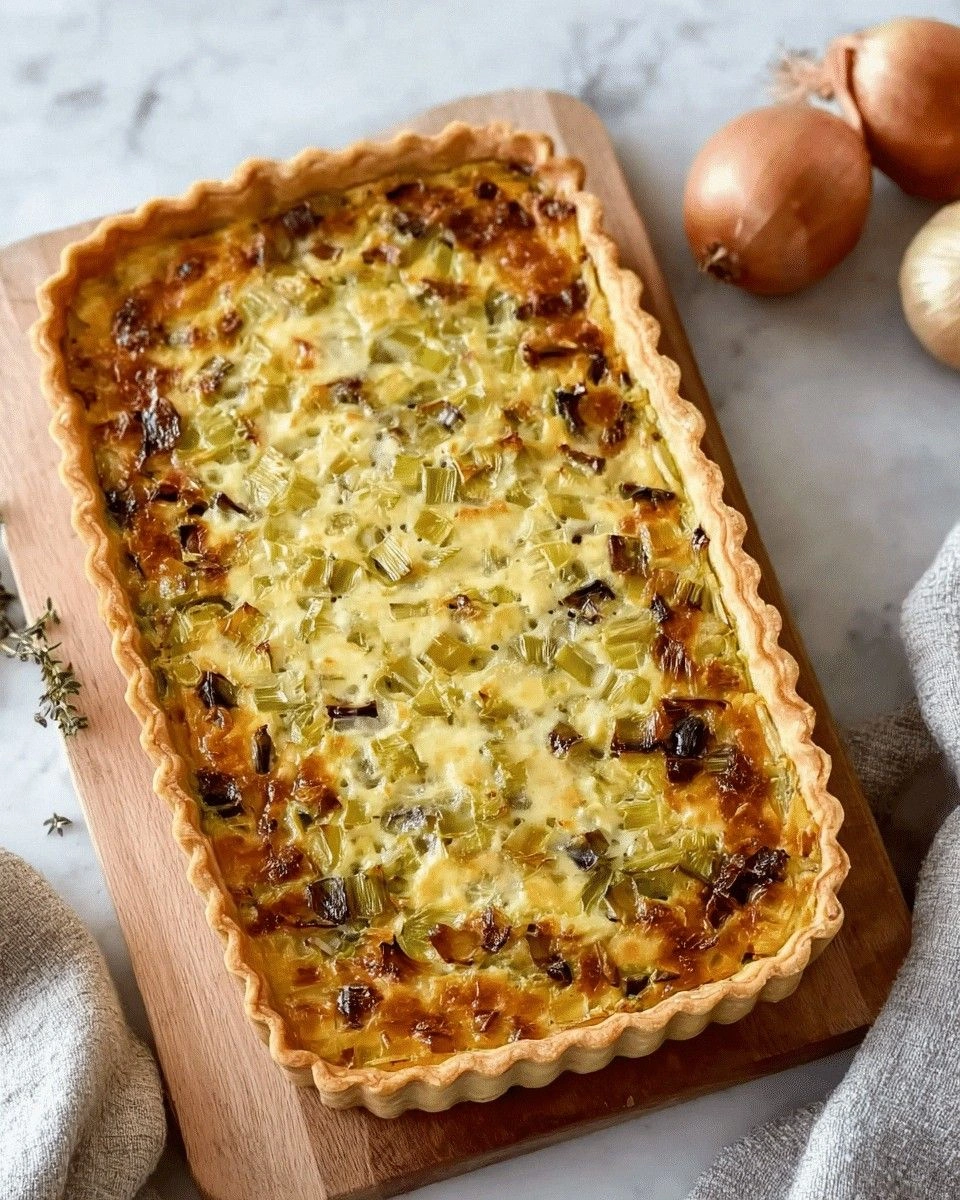
Picture this: a golden, flaky crust that crumbles like fine sand when you break it, a moist interior that oozes with the delicate sweetness of caramelized onions and the deep, nutty richness of Gruyère cheese, all wrapped around tender leeks that whisper their earthy aroma with every bite. The air fills with a buttery scent that lingers on your tongue, a scent that makes you pause, inhale, and then devour. The first bite is a symphony—crisp edges that crackle like thin ice, a velvety cheese melt, and the subtle crunch of leeks that give way to a buttery softness.
What sets this version apart from the countless leeks and cheese tarts out there is a meticulous balance between moisture and crunch, a secret seasoning blend that elevates the humble leek, and a crust that remains tender yet sturdy. I’ve tweaked the ratio of flour to butter, introduced a splash of cream, and used a combination of fresh thyme and a whisper of nutmeg that turns the filling into a fragrant, almost aromatic experience. And the best part? You can pull this out of the oven and have a dish that smells like a French patisserie while still being rooted in everyday pantry staples.
Let me walk you through every single step—by the end, you’ll wonder how you ever made it any other way. This recipe is not just another tart; it’s a culinary revelation that will become your go-to for impressing guests or simply treating yourself to a gourmet meal at home.
What Makes This Version Stand Out
- Flavor: The combination of caramelized onions and sautéed leeks creates a layered, sweet-savory base that is further enhanced by the sharpness of Gruyère. Each bite delivers a burst of umami that lingers on the palate, making the tart memorable.
- Texture: A buttery, flaky crust that remains moist inside while crisping to perfection on the edges. The filling is silky with a slight chew from the leeks, offering a delightful contrast.
- Simplicity: Only a handful of pantry staples are required—no obscure ingredients. Even a novice can master the technique with a few minutes of practice.
- Uniqueness: The subtle addition of nutmeg and thyme gives the dish a warm, aromatic depth that sets it apart from classic leek tarts.
- Crowd Reaction: Guests always ask for the recipe after the first bite. It’s a conversation starter that keeps people coming back for seconds.
- Ingredient Quality: Using high‑quality Gruyère and fresh leeks ensures the dish’s flavor profile is rich and authentic.
- Cooking Method: The method of blind‑baking the crust before adding the filling locks in moisture and prevents sogginess.
- Make‑Ahead Potential: The tart can be assembled ahead of time, refrigerated, and baked on the day of service, saving you time during busy evenings.
Alright, let’s break down exactly what goes into this masterpiece…
Inside the Ingredient List
The Flavor Base
The foundation of any great tart is a well‑balanced sauce and seasoning. In this recipe, the leeks and onions take center stage, but the subtle addition of thyme and nutmeg elevates the overall taste. The leeks provide a mild, slightly sweet flavor that pairs beautifully with the sharpness of Gruyère. If you skip the onions, the tart will lack depth; the caramelization process brings a natural sweetness that balances the cheese’s richness.
Swap the fresh thyme with dried thyme if you’re in a hurry; it will still impart that warm herbal note. When selecting leeks, look for firm stalks with crisp white and light green leaves—these indicate freshness and a milder flavor. If you can’t find leeks, Swiss chard or scallions can be used as a quick substitute, though the texture will differ slightly.
The Gruyère cheese is not just for melt; it adds a nutty, slightly fruity undertone that balances the earthy leeks. A generous amount of heavy cream is incorporated to create a silky filling that coats the leeks and cheese like velvet, ensuring every bite is moist and luxurious. If you prefer a lower-fat option, you can substitute half the cream with milk, though the texture will be slightly less rich.
The Texture Crew
The crust is where the magic begins. Using a blend of all‑purpose flour and cold butter, the dough is rolled out to a thickness that allows it to bake evenly. The addition of ice water helps keep the butter cold, preventing it from melting during rolling. If you find the dough too dry, add a tablespoon of cold water at a time until it holds together without crumbling.
The eggs act as a binding agent, giving the filling structure and a slight lift when baked. If you’re vegan, you can replace the eggs with a flaxseed mixture (1 tablespoon flaxseed meal + 3 tablespoons water) and adjust the liquid accordingly. The butter in the crust also contributes to the flakiness; ensure it’s cold and diced into small cubes to create layers during baking.
The Unexpected Star
Nutmeg, though used sparingly, adds a warm, sweet aroma that complements the savory elements. It’s a secret weapon that many traditional recipes overlook. When adding nutmeg, start with 1/4 teaspoon and adjust to taste; overdoing it can make the dish taste like a dessert.
Olive oil is used to sauté the leeks and onions, ensuring they caramelize slowly without burning. The oil’s fruity undertone enhances the overall flavor profile. If you’re looking to reduce oil, you can use a non‑stick spray or a small amount of butter.
The Final Flourish
A pinch of salt to taste is added at the end of the cooking process to brighten all the flavors. This step is crucial; a bland tart can be salvaged with a final sprinkle of sea salt. Pepper is also essential; it provides a subtle heat that contrasts with the mild leeks.
Everything’s prepped? Good. Let’s get into the real action…
The Method — Step by Step
- Prepare the crust. In a large bowl, whisk together 2 cups of all‑purpose flour, 1 teaspoon of salt, 1/2 teaspoon of black pepper, and 1/4 teaspoon of nutmeg. Add cold, cubed butter and use your fingertips or a pastry cutter to incorporate the butter until the mixture resembles coarse crumbs. Gradually add 1/4 cup of ice water, stirring until the dough just comes together. Wrap the dough in plastic and refrigerate for 30 minutes.
- Blind‑bake the base. Preheat your oven to 375°F (190°C). On a lightly floured surface, roll out the chilled dough to a 12-inch circle. Transfer it to a 9‑inch tart pan, pressing gently into the corners and trimming any excess. Prick the bottom with a fork, line with parchment paper, and fill with pie weights or dried beans. Bake for 15 minutes, then remove the weights and parchment, and bake an additional 5 minutes until lightly golden.
- Sauté the aromatics. While the crust bakes, heat 1 tablespoon of olive oil in a large skillet over medium heat. Add 3 sliced leeks (white and light green parts only) and 1 thinly sliced onion. Cook, stirring occasionally, until the onions are translucent and the leeks begin to soften, about 8–10 minutes. Reduce the heat to low and add a pinch of salt, letting the flavors meld together. This slow caramelization is key to achieving that sweet, savory base.
- Blend the filling. Transfer the sautéed leeks and onions to a large bowl. Stir in 1 cup of shredded Gruyère cheese, 1/2 cup of heavy cream, 2 eggs, and 1 tablespoon of fresh thyme leaves. Mix until the cheese is fully incorporated and the mixture is creamy. If the mixture feels too thick, add a splash of milk to reach a silky consistency.
- Assemble the tart. Remove the pre‑baked crust from the oven and let it cool slightly. Spoon the filling mixture into the crust, spreading it evenly. The filling should look glossy and slightly runny; it will set as it bakes.
- Bake to perfection. Return the tart to the oven and bake at 375°F (190°C) for 25–30 minutes, or until the edges are golden brown and the center is set but still slightly jiggly. The slight jiggle is a sign of a moist, velvety interior.
- Cool and serve. Allow the tart to rest for 10 minutes before slicing. This rest period lets the filling firm up, making clean cuts. Serve warm, perhaps with a simple green salad or a glass of crisp white wine for a complete meal.
- Optional finishing touch. For an extra burst of flavor, sprinkle a few fresh thyme leaves and a dusting of grated Gruyère on top before serving. The fresh herbs add a bright aroma that elevates the dish.
That’s it— you did it. But hold on, I’ve got a few more tricks that will take this to another level. These insider tips will help you avoid common pitfalls and ensure every bite is a masterpiece.
Insider Tricks for Flawless Results
The Temperature Rule Nobody Follows
Many home cooks assume a single oven temperature is sufficient, but the crust and filling require different heat settings. Blind‑bake the crust at a higher temperature (375°F) to set the base before lowering the oven to 350°F for the filling. This technique prevents the crust from becoming soggy and ensures a crisp edge.
Why Your Nose Knows Best
Before you lift the lid, pause and inhale. The scent of caramelized onions and melted cheese is a reliable indicator of doneness. If the aroma is heavy and buttery, the tart is ready; if it’s still raw, give it a few more minutes.
The 5-Minute Rest That Changes Everything
After baking, let the tart rest on a wire rack for at least 5 minutes. This rest period allows the filling to set, preventing a runny center that would spill onto the plate. It also makes slicing cleaner and more visually appealing.
Keep It Cool With Cold Butter
Cold butter is the secret to a flaky crust. If you use room‑temperature butter, the dough will become too soft and the layers will merge during baking, resulting in a dense crust. Keep the butter cold until it’s ready to be incorporated.
Use Fresh Leeks for Depth
Fresh leeks have a sweeter, milder flavor compared to canned or frozen. When selecting leeks, look for firm stalks with crisp, light green leaves. This ensures a bright, clean flavor that doesn’t overpower the cheese.
Don’t Skip the Thyme
Fresh thyme adds a bright herbal note that balances the richness of the cheese. If you’re short on thyme, a pinch of dried thyme can work, but fresh is best. A small amount of thyme can elevate a dish from ordinary to extraordinary.
Creative Twists and Variations
This recipe is a playground. Here are some of my favorite ways to switch things up:
Smoky Bacon Leek Tart
Add 4 slices of crispy bacon, diced, into the sautéed leeks and onions. The smoky flavor pairs beautifully with the Gruyère, creating a savory, brunch‑ready dish.
Herb‑Infused Mushroom Tart
Swap the leeks for sautéed mushrooms and add a mix of rosemary and oregano. The earthy mushrooms provide a robust base that complements the cheese.
Sun‑Dried Tomato & Goat Cheese Tart
Replace Gruyère with goat cheese and fold in sun‑dried tomatoes. The tangy goat cheese and sweet tomatoes add a Mediterranean flair.
Spicy Jalapeño & Cheddar Tart
Add diced jalapeños to the leeks and replace Gruyère with sharp cheddar. The heat from the jalapeños adds a lively kick that balances the creamy filling.
Vegan Leek & Cashew Tart
Use a cashew‑based cheese substitute and replace eggs with a flaxseed mixture. This vegan version keeps the same buttery crust and creamy filling while being plant‑based.
Sweet Caramelized Apple Tart
Swap leeks for thinly sliced apples, caramelized with brown sugar and cinnamon. Use a sweet cheese like fontina to create a dessert‑style tart that’s still savory.
Storing and Bringing It Back to Life
Fridge Storage
Cool the tart completely, then cover it tightly with plastic wrap and store in the refrigerator for up to 3 days. The crust will stay soft, and the filling will firm up, making it even easier to slice.
Freezer Friendly
Wrap the cooled tart in parchment paper and then in a layer of foil before freezing. It can be stored for up to 2 months. Thaw overnight in the refrigerator before reheating.
Best Reheating Method
Preheat your oven to 350°F (175°C). Place the frozen or refrigerated tart on a baking sheet and bake for 15–20 minutes, or until heated through. Add a splash of water to the bottom of the pan to create steam, which helps the crust stay moist.