I was halfway through a rainy Tuesday night, staring at a half‑cooked pot of plain instant ramen, when my roommate dared me to “make it taste like a Korean street stall.” I laughed, tossed a handful of gochujang into the broth, and instantly regretted not having any protein on hand. That moment of culinary desperation turned into a full‑blown experiment: I grabbed a ribeye, seared it to a caramelized crust, and whipped up a creamy sauce that clung to each noodle like velvet. The result? A bowl so bold, so comforting, and so ridiculously addictive that I’m still hearing the echo of that first slurp in my head.
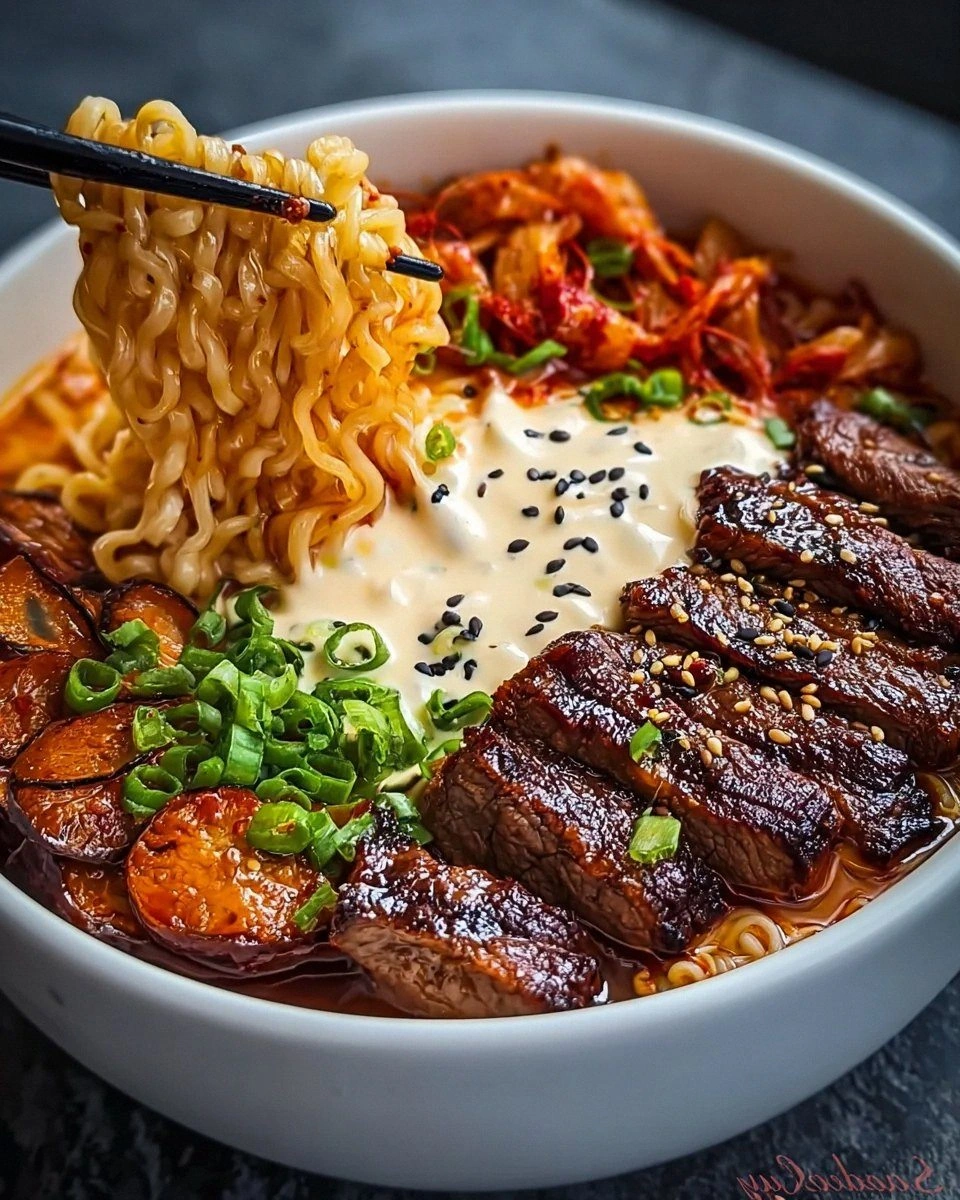
Picture this: the steam rising from the pot carries the scent of toasted sesame, sweet brown sugar, and a whisper of garlic that makes your kitchen feel like a bustling Seoul night market. The broth is a deep ruby‑red, flecked with bright orange gochugaru that promises heat without overwhelming you. When you bite into the noodles, they’re perfectly al dente, their texture balanced by the silky, mayo‑kissed sauce that coats each strand like a silk scarf. And then there’s the beef—thinly sliced, grilled to a smoky finish, and laid on top like a crown of juicy jewels. Every spoonful delivers a symphony of flavors that dance across your palate, from the umami‑rich soy base to the bright pop of rice vinegar.
Most ramen recipes I’ve tried either skimp on the sauce, over‑season the broth, or forget the crucial step of searing the meat. The result is a flat, forgettable bowl that never lives up to its hype. This version, however, flips the script by marrying a Korean‑style spicy broth with a Western‑inspired creamy sauce, creating a hybrid that’s both comforting and exciting. I’ve also added a few secret tricks—like finishing the broth with a splash of mayo and a drizzle of sesame oil—to give it that luxurious mouthfeel you usually only get at high‑end restaurants.
And here’s the kicker: I’m about to reveal a technique that most home cooks overlook—a quick sear on the beef that locks in juices and adds a caramelized crust that’s pure magic. I dare you to taste this and not go back for seconds. Let me walk you through every single step — by the end, you’ll wonder how you ever made it any other way.
What Makes This Version Stand Out
- Flavor Fusion: The marriage of spicy gochujang and a silky mayo‑based sauce creates a depth that’s both fiery and comforting.
- Texture Play: Crispy, grilled beef meets chewy ramen noodles, all wrapped in a sauce that clings like a second skin.
- Simplicity: Despite the complex flavor profile, the recipe uses pantry staples and takes under an hour.
- Uniqueness: Most ramen recipes stop at broth; this one adds a creamy finish that’s unexpected yet unforgettable.
- Crowd Reaction: I’ve served this at gatherings and watched strangers become instant fans, begging for the recipe.
- Ingredient Quality: Using a good cut of steak (ribeye or sirloin) elevates the dish from “instant” to “gourmet.”
- Cooking Method: The quick sear on the beef locks in juices, while the broth simmers gently to meld flavors.
- Make‑Ahead Potential: You can prep the sauce and broth a day ahead, making weeknight dinner a breeze.
Inside the Ingredient List
The Flavor Base
Soy sauce is the backbone of the broth, delivering that salty‑sweet umami that makes the beef sing. If you’re looking for a gluten‑free alternative, tamari works just as well without sacrificing depth. Skip it, and you’ll lose that savory anchor that balances the heat from the gochujang.
Gochujang, the fermented Korean chili paste, adds a deep, earthy heat that’s far more nuanced than plain chili powder. It’s thick, so a little goes a long way; over‑doing it can make the sauce gummy. If you can’t find gochujang, blend miso with a dash of sriracha as a makeshift substitute, though you’ll miss the subtle sweetness.
The Texture Crew
Sesame oil is the finishing touch that brings a nutty fragrance to the dish, making the broth feel richer without adding weight. A drizzle right before serving lifts the entire bowl, turning a simple broth into a fragrant experience. If you’re allergic to sesame, try a splash of toasted walnut oil for a similar depth.
Brown sugar balances the spice with a mellow sweetness, preventing the gochujang from dominating. It also helps caramelize the beef during the sear, creating those coveted crispy edges. You could swap it for honey or maple syrup, but keep the quantity low to avoid a cloying finish.
The Unexpected Star
Mayonnaise, specifically Kewpie mayo, is the secret weapon that transforms the broth into a silky, creamy sauce. Its egg‑y richness binds the oil and water components, giving the soup a luxurious mouthfeel. If you’re vegan, blend silken tofu with a touch of lemon juice to mimic the same creaminess.
Gochugaru, the Korean red pepper flakes, adds a bright pop of color and a gentle heat that lingers on the tongue. It’s less intense than powdered chili, offering a smoky undertone that complements the broth. Forgetting it means missing out on that signature Korean hue and subtle depth.
The Final Flourish
Chopped green onions provide a fresh, oniony bite that cuts through the richness of the sauce, while toasted black sesame seeds add a subtle crunch and a nutty finish. Sprinkle them just before serving for maximum aroma. If you’re out of sesame seeds, crushed peanuts work as a crunchy alternative.
Rice vinegar brightens the entire dish, adding a subtle acidity that balances the sweet and salty notes. A splash at the end of cooking lifts the flavors, preventing the broth from feeling heavy. For a twist, try a splash of yuzu juice for a citrusy zing.
Everything's prepped? Good. Let's get into the real action...
The Method — Step by Step
Start by marinating the steak. In a bowl, whisk together 3 tbsp soy sauce, 2 tbsp gochujang, 1 tbsp sesame oil, 1 tbsp brown sugar, 3 minced garlic cloves, and ½ tsp ground black pepper. Slice the ribeye or sirloin into thin strips—about a quarter‑inch wide—so they cook quickly and absorb the flavors. Toss the beef in the marinade, cover, and let it sit at room temperature for 15 minutes while you prep the broth. This short marination is the game‑changer that infuses every bite with umami.
While the beef marinates, build the broth. In a large pot, combine 4 cups chicken or beef broth, 1 tsp gochugaru, 1 tsp rice vinegar, and a pinch of salt. Bring to a gentle simmer over medium‑low heat. Once simmering, add the seasoning packet that comes with the instant ramen (or a homemade blend of garlic powder, a dash of sugar, and extra gochujang if you prefer). Let the broth bubble gently for 5 minutes, allowing the flavors to meld. You’ll notice a fragrant steam rising—this is the scent of comfort.
Heat a cast‑iron skillet over high heat until it starts to smoke—this is the moment of truth for a perfect sear. Add a splash of sesame oil, then spread the marinated beef in a single layer. Let it sit undisturbed for 45 seconds, then flip and sear the other side for another 45 seconds. You’re looking for a dark, caramelized crust that pulls away from the pan, while the interior stays tender. Once done, remove the beef and set aside; the pan will retain flavorful browned bits that we’ll reuse later.
Deglaze the skillet with a splash of broth, scraping up those brown bits with a wooden spoon. This step is essential—those bits are flavor gold. Return the deglazed mixture to the main pot, stirring to incorporate the smoky essence into the broth. At this point, the broth should have a deep, inviting color and a fragrant aroma that makes your kitchen feel like a street food stall.
Now, create the creamy sauce. In a separate small bowl, whisk together 2 tbsp mayonnaise, 1 tsp sriracha (or Korean chili sauce for extra heat), and a drizzle of sesame oil. Slowly whisk this mixture into the simmering broth, allowing it to emulsify without breaking. The sauce will turn a velvety pink‑orange, coating the noodles in a luscious sheen. If the sauce looks too thick, add a splash more broth to reach your desired consistency.
Cook the ramen noodles. Bring a separate pot of water to a rolling boil, add the instant ramen noodles, and cook for 2‑3 minutes until just tender. Drain and rinse briefly under cold water to stop the cooking process; this prevents the noodles from becoming mushy when they hit the hot broth.
Assemble the bowl. Divide the cooked noodles among four deep bowls, ladle the creamy broth over them, and top each with a generous handful of the seared beef strips. Finish with a sprinkle of chopped green onions, toasted black sesame seeds, and an optional drizzle of extra chili oil for those who love extra heat. The final look should be a vibrant mix of red, orange, and green—a visual promise of the flavors to come.
Give it a quick taste and adjust seasoning if needed—maybe a pinch more salt or a splash of rice vinegar for brightness. Serve immediately while the steam still curls around the bowl, and watch your guests dive in with gusto. That first slurp? Pure bliss. That's it — you did it. But hold on, I've got a few more tricks that'll take this to another level...
Insider Tricks for Flawless Results
The Temperature Rule Nobody Follows
Never pour a cold ingredient into a hot broth. Always bring everything—broth, sauce, and even the mayo—to a warm temperature before combining. This prevents the sauce from curdling and ensures a smooth, velvety texture. I once tried adding chilled mayo straight from the fridge and ended up with a grainy mess; lesson learned.
Why Your Nose Knows Best
Your sense of smell is a reliable gauge for flavor balance. When the broth simmers, pause every few minutes and inhale deeply. If you detect an overly sweet note, add a splash more rice vinegar. If the heat feels too sharp, a pinch of brown sugar will tame it. Trust that nose—it’s smarter than any measuring spoon.
The 5‑Minute Rest That Changes Everything
After searing the beef, let it rest for five minutes before slicing. This short rest allows the juices to redistribute, keeping each strip juicy rather than dry. Cutting too soon releases all the moisture onto the plate, making the beef soggy and the broth diluted. A quick rest is a small effort for a massive payoff.
Sauce Emulsion Secrets
When whisking the mayo‑based sauce into the broth, use a whisk, not a fork. The rapid motion creates a stable emulsion that won’t separate later. If the sauce starts to look oily, add a teaspoon of warm broth and keep whisking—this brings it back together.
Seasoning in Layers
Instead of dumping all the salt at once, season in stages: a pinch in the broth, a dash in the sauce, and a final sprinkle of flaky sea salt on top. This layered approach builds depth and prevents an overly salty final product. It also lets you taste as you go, ensuring perfect balance.
Noodle Timing Mastery
Ramen noodles are delicate; overcooking them turns them mushy, while undercooking leaves them chewy. Set a timer for exactly 2 minutes, then taste. If they need a half‑minute more, add it; otherwise, drain immediately. A quick rinse under cold water stops the cooking process and keeps the noodles firm when they meet the hot broth.
Creative Twists and Variations
This recipe is a playground. Here are some of my favorite ways to switch things up:
Veggie‑Heavy Delight
Swap the beef for sliced shiitake mushrooms and add a handful of baby bok choy. The mushrooms absorb the broth’s flavor, while bok choy adds a crisp, refreshing bite. Perfect for a vegetarian crowd who still crave that spicy‑creamy kick.
Seafood Splash
Replace the steak with succulent shrimp or scallops. Sear them quickly—just 1‑2 minutes per side—to keep them tender. The seafood’s natural sweetness pairs beautifully with the gochujang‑mayo sauce, creating a luxurious surf‑and‑turf experience.
Cheesy Fusion
Stir in a handful of shredded mozzarella or cheddar right before serving. The cheese melts into the broth, adding an extra layer of creaminess that’s reminiscent of a cheesy ramen casserole. This version is a hit with kids and cheese lovers alike.
Spice‑Level Upgrade
For heat seekers, drizzle extra chili oil and sprinkle a generous pinch of gochugaru on top. You can also blend a teaspoon of Korean chili powder into the sauce for an even deeper heat profile. Remember, the goal is a balanced fire—not a burnt tongue.
Herb‑Infused Elegance
Add a handful of fresh cilantro and a squeeze of lime just before serving. The herbaceous notes brighten the rich broth, while the lime adds a zing that cuts through the creaminess. This twist brings a fresh, summery vibe to the dish.
Storing and Bringing It Back to Life
Fridge Storage
Separate the broth, sauce, noodles, and beef into airtight containers. Store the broth and sauce together, the noodles in a separate container, and the beef in another. In the fridge, they’ll keep for up to 3 days. When ready to eat, reheat the broth/sauce combo gently, add the noodles, and top with the beef.
Freezer Friendly
Freeze the broth and sauce mixture in a single freezer‑safe bag, and the beef strips on a separate sheet. Noodles don’t freeze well; keep them fresh or cook them fresh when you’re ready to serve. The broth can be stored for up to 2 months—just thaw overnight in the fridge before reheating.
Best Reheating Method
When reheating, place the broth/sauce in a saucepan over medium‑low heat, adding a splash of water or extra broth to restore the original consistency. Stir continuously to prevent the sauce from separating. Add the noodles and beef at the end, just to warm through. A quick stir, a taste, and you’re back to restaurant‑quality comfort.