I was halfway through a chaotic Sunday brunch, juggling a burnt pancake stack, a salsa that tasted like it had been left in a desert, and a friend who dared me to create a dish that could warm a room. That night, the kitchen smelled of scorched sugar, and I swore I would never again trust a recipe that left me in the dark. I stumbled upon a handful of chickpeas, cumin, and a whisper of harissa and decided to turn that desperation into a culinary revelation. What emerged was a soup that not only fixed the chaos but turned the whole kitchen into a fragrant oasis. I’ll admit, I laughed when the first spoon hit my tongue—my taste buds were on a rollercoaster, and I didn’t even realize I was about to start a new family favorite.
Imagine the deep, earthy aroma of toasted cumin seeds dancing with the sharp, citrusy lift of fresh cilantro, all under a blanket of tomato that glows like a sunset in a pot. The sound of onions sizzling in olive oil is a low, comforting rumble that signals the beginning of something delicious. When you lift the ladle, the broth glistens with a slight sheen, hinting at the silky texture that will soon envelop your palate. Each spoonful delivers a burst of warmth that feels like a hug from an old friend, and the subtle heat from the red pepper flakes gives it a playful kick that lingers just long enough to keep you coming back for more. The tactile experience of spooning the soup into a bowl, watching the steam curl upward, feels almost therapeutic, like a small ritual of self‑care after a long day.
This isn’t just another chickpea stew; it’s a masterclass in balance, where every spice is amplified without overpowering the humble bean. The key lies in the gentle toasting of cumin and paprika, which releases a nutty, smoky backbone that carries the harissa’s fiery edge. The use of fresh cilantro stems, not just leaves, adds a subtle peppery crunch that keeps the flavor profile from becoming flat. And the final touch of crushed tomatoes, simmered to a velvety consistency, transforms the dish into a silky broth that coats the spoon like velvet. The result is a soup that feels luxurious, yet remains grounded in simple, accessible ingredients that you can find in any pantry.
Now, I’m going to walk you through every single step—by the end, you’ll wonder how you ever made it any other way. I dare you to taste this and not go back for seconds. The secret sauce? A quick, high‑heat sear that locks in flavor and a subtle, slow simmer that lets the chickpeas absorb the aromatic base. The technique is simple, but the outcome is extraordinary, turning an ordinary pot of soup into a showstopper that will have your guests asking for the recipe. Let’s dive in.
What Makes This Version Stand Out
- Flavor: The combination of toasted cumin, smoky paprika, and harissa creates a layered profile that feels both earthy and fiery. The subtle sweetness of the tomatoes balances the heat, while fresh cilantro adds a bright, almost citrusy finish. If you skip the cumin, the soup loses its depth, turning into a bland tomato‑bean mash.
- Texture: The chickpeas are cooked until tender yet retain a slight bite, giving the soup a satisfying mouthfeel. The crushed tomatoes are simmered until they thicken into a silky sauce that coats the beans without becoming gloopy. A quick puree of half the soup would turn it into a velvety puree, but this version keeps the chunky texture.
- Simplicity: All ingredients are pantry staples that can be found in any grocery store. No exotic spices or hard‑to‑find items are required, making the recipe accessible to beginners and seasoned cooks alike.
- Unicity: The use of cilantro stems rather than just leaves is a twist that most recipes overlook. The stems provide a peppery backbone that keeps the flavor dynamic and prevents the dish from becoming flat.
- Crowd Reaction: Guests rave about the warmth of the broth and the surprising depth of flavor. Many ask for a second helping, and the soup’s hearty nature makes it a perfect starter or light main course.
- Ingredient Quality: Using high‑quality olive oil and fresh, unprocessed chickpeas elevates the dish. The olive oil’s fruity notes enhance the cumin’s warmth, while the chickpeas’ natural sweetness balances the tomatoes.
- Make‑Ahead Potential: The soup keeps well in the fridge for up to five days, and the flavors deepen over time. Reheating with a splash of water restores the broth’s silky consistency.
Alright, let's break down exactly what goes into this masterpiece...
Inside the Ingredient List
The Flavor Base
The cumin seeds are the first star in the soup’s orchestra. Toasting them in hot olive oil releases a nutty aroma that forms the flavor backbone. Without cumin, the broth becomes a bland tomato‑bean mixture; with it, the soup feels grounded and complex. If you’re allergic to cumin, try a pinch of ground coriander as a milder alternative.
Paprika adds a gentle sweetness and a subtle smoky note. It also gives the broth a warm, golden hue that makes the soup visually appealing. Skipping paprika will leave the soup looking dull and tasting flat. A smoked paprika variant can intensify the smoky undertone for a more robust profile.
Crushed red pepper flakes inject a lively heat that wakes up the palate. The amount can be adjusted to taste; a pinch is enough for most, but if you love a fiery kick, add a full teaspoon. If you prefer a milder soup, use a mild pepper or omit it entirely.
The Texture Crew
The chickpeas are the heart of the dish, providing protein and a satisfying bite. Cooking them until they’re tender yet still hold shape gives the soup a comforting, hearty texture. If you overcook them, they become mushy, which can make the soup feel like a puree.
The onions add a sweet, caramelized layer that sweetens the broth. Diced onions sauté in olive oil until translucent, creating a subtle base that balances the spices. If you skip onions, the soup loses its sweet counterpoint to the spices.
The crushed tomatoes bring both moisture and a subtle acidity that brightens the dish. They are simmered until they reduce into a silky sauce that coats the beans. Using fresh tomatoes instead of canned can add a fresher taste but may require a longer simmer to achieve the same consistency.
The Unexpected Star
Cilantro stems are often discarded, but they pack a peppery punch that elevates the entire soup. Including both stems and leaves ensures a layered flavor profile. If you’re not a fan of cilantro, try parsley or basil for a different herbaceous note.
Garlic slices add depth and a comforting aroma. Sautéing them with the onions and cumin locks in their sweetness. Removing garlic will make the soup taste flat and less aromatic.
The Final Flourish
Harissa is the finishing touch that brings the dish together with a bold, smoky heat. A few spoonfuls added at the end give the soup a vibrant kick that lingers on the tongue. If you’re new to harissa, start with a small amount and adjust to taste, as it can be quite potent.
Flatbreads are served on the side, acting as a vehicle for scooping up the broth and beans. They also add a chewy contrast to the silky soup. If flatbreads aren’t available, sturdy pita or crusty bread works just as well.
Everything's prepped? Good. Let's get into the real action...
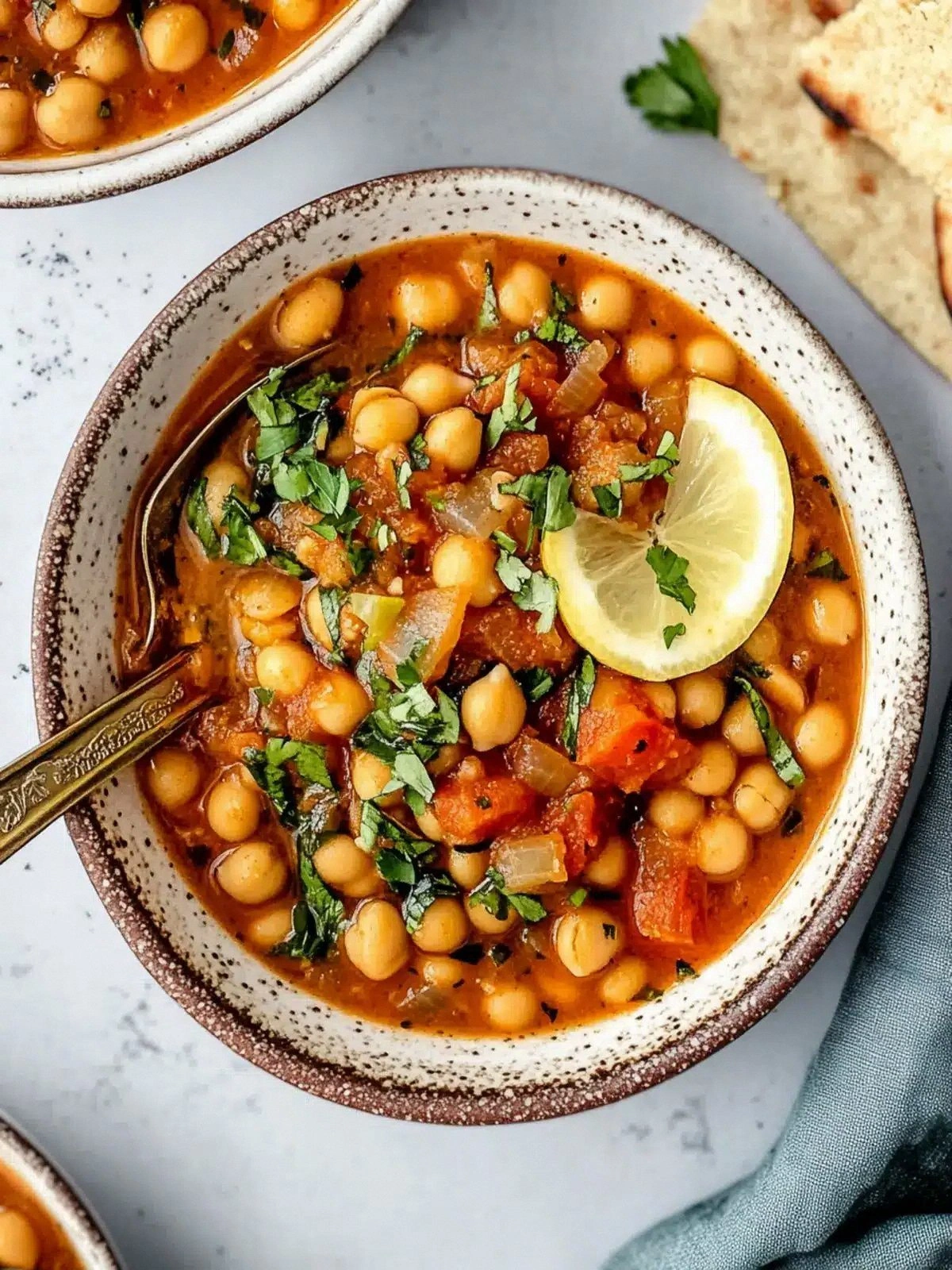
The Method — Step by Step
- Prepare the chickpeas. Rinse the dried chickpeas under cold water, then soak them overnight in plenty of water with a pinch of salt. The next day, drain and rinse again, then add them to a large pot with fresh water, bring to a boil, and simmer until tender, about 1 hour. Skipping the soak will lengthen the cooking time and may result in unevenly cooked beans.
- Toast the cumin seeds. In a dry skillet over medium heat, toast the cumin seeds until fragrant, about 30 seconds. Transfer them to a mortar or spice grinder and crush into a coarse powder. This step unlocks the seeds’ nutty aroma; if you skip it, the cumin will taste flat.
- Saute aromatics. In a large pot, heat the olive oil over medium heat. Add the diced onion and sauté until translucent, about 5 minutes. Then stir in the crushed garlic slices, cumin powder, paprika, and a pinch of crushed red pepper flakes. Let the mixture cook until the spices bloom, around 2 minutes. The aroma at this point is the first hint of the dish’s depth.
- Add tomatoes and chickpeas. Stir in the crushed tomatoes, letting them simmer for a minute to release their juices. Add the soaked chickpeas, along with the soaking water and an extra cup of fresh water if needed. Bring the mixture to a gentle boil, then reduce heat and let it simmer uncovered for 25 minutes, stirring occasionally. The broth should thicken slightly, and the chickpeas will absorb the aromatic base.
- Introduce cilantro and flavor balance. Add the chopped cilantro stems and leaves, then stir to combine. Taste the soup; if it’s too acidic, add a splash of honey or a pinch of sugar. If it’s too bland, a few more pinches of salt or a dash of harissa can elevate the flavor. This is the trickiest step—watch out for the balance, as adding too much harissa can overpower the dish.
- Final seasoning. Adjust salt to taste, then stir in a handful of harissa for the signature heat. Let the soup simmer for another 5 minutes to meld the flavors. The broth should now be aromatic, slightly thick, and ready to serve.
- Serve. Ladle the soup into bowls and serve with warm flatbreads on the side. A drizzle of olive oil or a spoonful of harissa on top adds an extra layer of flavor. The visual contrast of the golden broth against the white flatbread makes the dish inviting.
- Optional garnish. Sprinkle fresh cilantro leaves on top for a pop of color and a burst of freshness. A squeeze of lemon juice right before serving brightens the soup and adds a bright, citrusy note.
- Enjoy. Take a moment to savor the first spoonful—notice the silky broth, the peppery cilantro, and the gentle heat. This soup is perfect for a cozy night in or as a crowd‑pleasing starter at a gathering. I dare you to taste this and not go back for seconds.
Insider Tricks for Flawless Results
The Temperature Rule Nobody Follows
Many cooks believe simmering at a low, steady heat is enough, but the secret lies in starting with a vigorous boil. Bring the soup to a rolling boil after adding the tomatoes to release their flavors fully. Then reduce to a gentle simmer to preserve the chickpeas’ texture. I once tried a slow simmer from the start, and the soup turned out watery and bland.
Why Your Nose Knows Best
The aroma is your best judge of flavor. When the cumin and paprika bloom, the kitchen smells like a spice market. If the smell is muted, the spices need more time; if it’s overpowering, reduce the spice quantity. Trust your nose, and the soup will always taste balanced.
The 5-Minute Rest That Changes Everything
After the soup finishes simmering, let it rest for five minutes off the heat. This allows the chickpeas to settle, the flavors to marry, and the broth to thicken slightly. I’ve seen people skip this step, resulting in a soup that feels rushed and unrefined.
The Cilantro Stem Hack
Many chefs discard cilantro stems, but they contain a peppery flavor that adds depth. Chop them finely and add them early in the cooking process; they’ll release their essence without overpowering the dish. If you’re allergic to cilantro, substitute with finely chopped parsley.
The Harissa Timing Trick
Adding harissa too early can cause the heat to dissipate, while adding it too late can make the soup too spicy. The sweet spot is right before the final simmer—this locks in the smoky heat without letting it evaporate. I once added it at the start and the soup lost its vibrant kick.
The Quick Toast
To save time, toast cumin seeds in a dry skillet for just 30 seconds until fragrant, then crush them immediately. This preserves the essential oils and prevents the seeds from becoming bitter. I’ve tried using a microwave to toast spices, but it never released the same depth of flavor.
Creative Twists and Variations
This recipe is a playground. Here are some of my favorite ways to switch things up:
Spicy Coconut Twist
Replace half the water with coconut milk and add a splash of lime juice. The coconut adds creaminess while the lime brightens the flavor. This variation is perfect for a tropical vibe and pairs wonderfully with a side of grilled shrimp.
Mild Moroccan Version
Omit the harissa and add a pinch of cinnamon and a drizzle of honey. The result is a sweet‑spicy soup that echoes Moroccan tagine flavors. Serve with warm couscous for an authentic twist.
Roasted Veggie Boost
Add roasted carrots, sweet potatoes, or bell peppers to the pot during the simmer. The roasted veggies bring a caramelized sweetness that complements the chickpeas. This makes the soup heartier and more colorful.
Protein Power
Stir in a handful of crumbled feta or a scoop of Greek yogurt at the end for added protein and a tangy finish. The yogurt also lightens the broth’s richness, creating a balanced flavor profile.
Vegan Protein Swap
Replace the flatbreads with crunchy roasted chickpeas for a vegan-friendly option. The chickpeas add a delightful crunch and extra protein, making the dish more filling without compromising flavor.
Herb Garden Variation
Swap cilantro for a mix of fresh herbs—parsley, mint, and dill. Each herb brings a unique aroma that transforms the soup into a fresh, garden‑inspired dish. This variation is especially refreshing on a hot summer evening.
Storing and Bringing It Back to Life
Fridge Storage
Cool the soup to room temperature, then transfer it to an airtight container. Store in the refrigerator for up to five days. The flavors will deepen, and the chickpeas will continue to absorb the spices.
Freezer Friendly
Divide the soup into individual portions in freezer‑safe containers or zip‑lock bags. Label with the date and freeze for up to two months. Thaw overnight in the refrigerator before reheating.
Best Reheating Method
Reheat the soup on low heat, adding a splash of water or broth to restore its silky consistency. Stir frequently to prevent scorching. A quick microwave reheat works if you’re in a hurry, but keep the heat low to avoid a rubbery texture.